Adjusting to Chronic Illness
A handout for people living with a long-term health condition, explaining why adjustment is hard, how the struggle against symptoms and limits can add to suffering, and how acceptance and values-based action support a full life alongside illness.
About this resource
Living with a chronic illness involves losses (of function, roles, certainty and sometimes identity), ongoing symptoms, and a demanding relationship with the health system. Psychological adjustment is a process rather than an event, and a substantial minority of people develop clinically significant depression or anxiety. Acceptance and Commitment Therapy has a growing evidence base in long-term conditions, and its central ideas map closely onto what adjustment requires: reducing the struggle against what cannot be changed, and moving toward what matters despite it.
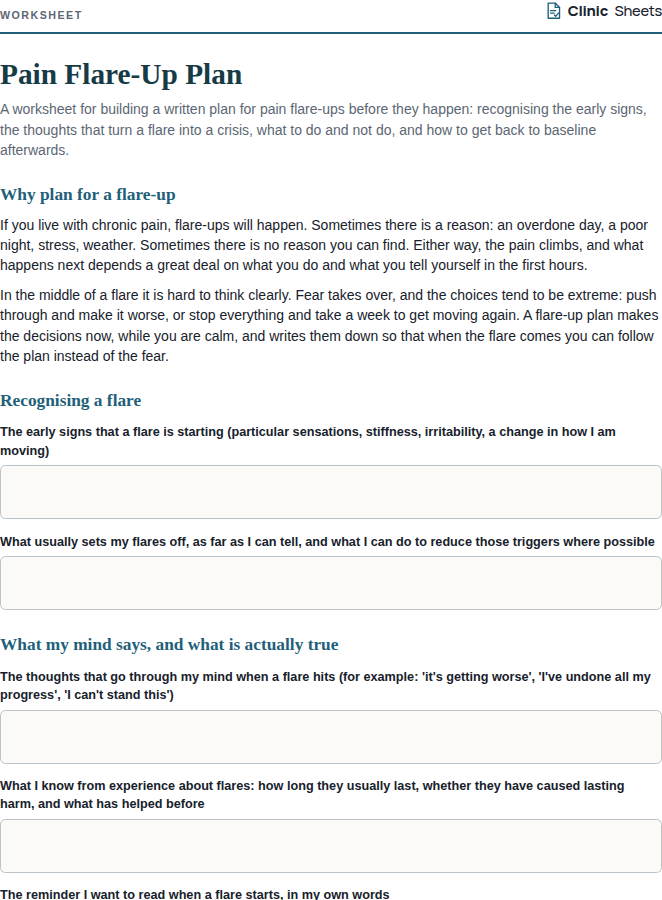
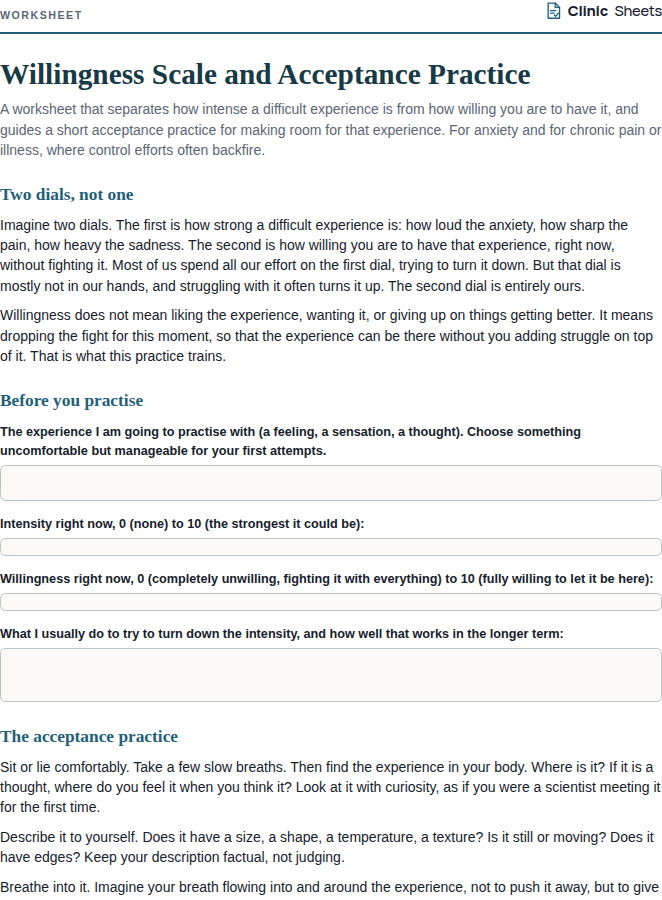
This handout introduces those ideas in plain terms. It normalises the emotional response to diagnosis, describes the difference between the pain of the condition itself and the added suffering created by fighting it, explains experiential avoidance and how it shrinks life, and introduces willingness, values and committed action as the alternative. It also covers the cognitive traps common in illness (all-or-nothing thinking about activity, catastrophising about symptoms, self-blame) and the role of pacing. It closes with a reflection on what matters most.
The professional version adds guidance on distinguishing acceptance from resignation when introducing the model, on working alongside medical teams and treatment adherence, on the overlap with chronic pain approaches, and on assessing for depression that may be masked by or attributed to the physical condition.
How to use it
- Use after the client has described their condition, its history and its impact. Ask what they have been told about the emotional side of the illness, since many clients have received little or nothing.
- Read the section on clean and dirty pain together and ask the client to give their own example of each. This distinction is the core of the handout.
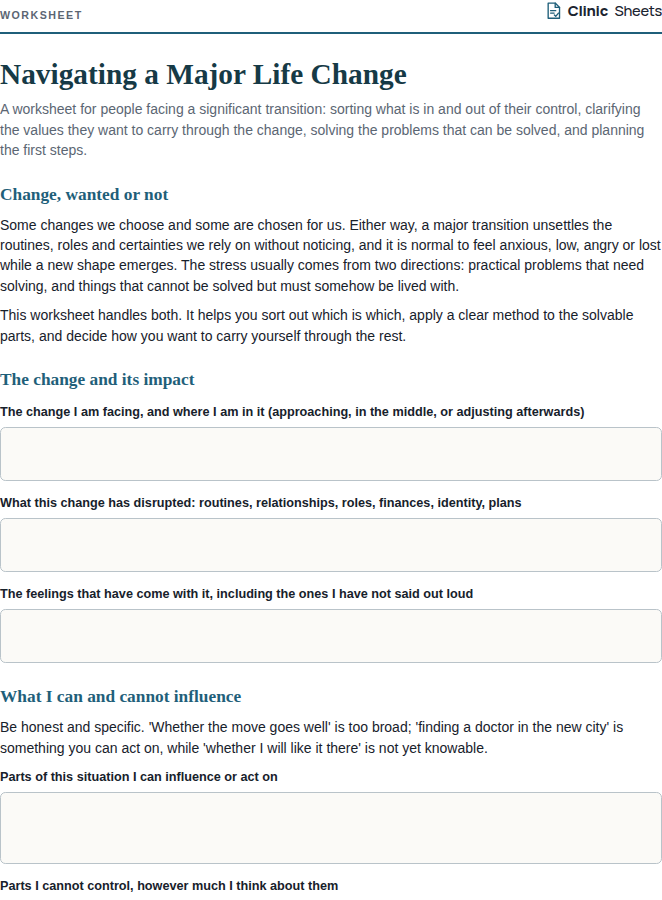
- Explore what the client has stopped doing because of the illness and sort it into what is genuinely impossible, what is possible in modified form, and what has been avoided out of fear or grief.
- Use the values reflection to identify one or two directions that matter and agree a small, pacing-aware step toward one of them before the next session.
- Watch for the client hearing acceptance as giving up. Reframe as often as needed: acceptance is about the struggle, not about ceasing to seek good care.
References
- Graham, C. D., Gouick, J., Krahé, C., & Gillanders, D. (2016). A systematic review of the use of Acceptance and Commitment Therapy (ACT) in chronic disease and long-term conditions. Clinical Psychology Review, 46, 46-58.
- Hayes, S. C., Strosahl, K. D., & Wilson, K. G. (2012). Acceptance and Commitment Therapy: The Process and Practice of Mindful Change (2nd ed.). Guilford Press.
- Moss-Morris, R. (2013). Adjusting to chronic illness: Time for a unified theory. British Journal of Health Psychology, 18(4), 681-686.