Body Image and Social Comparison (for Teens)
A worksheet for teenagers that examines how social comparison and body checking drive body dissatisfaction, tests the thoughts behind it, and plans a reduction in checking and comparison behaviours.
About this resource
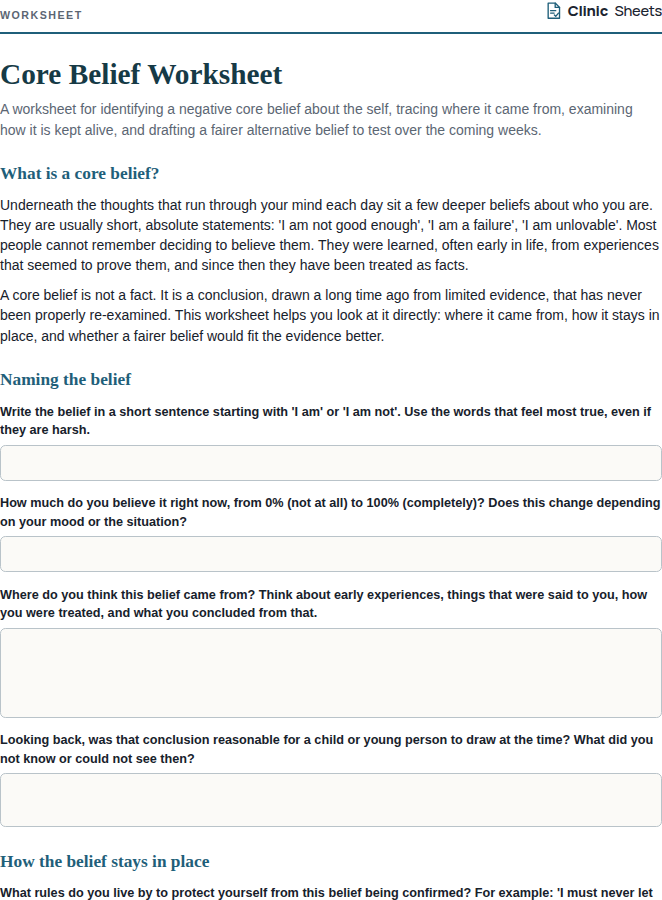
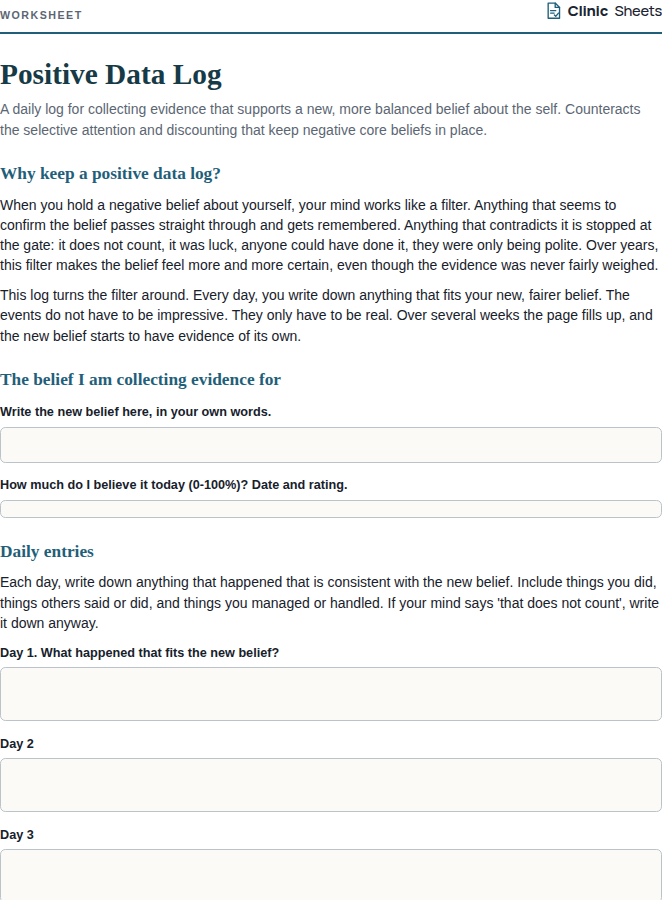
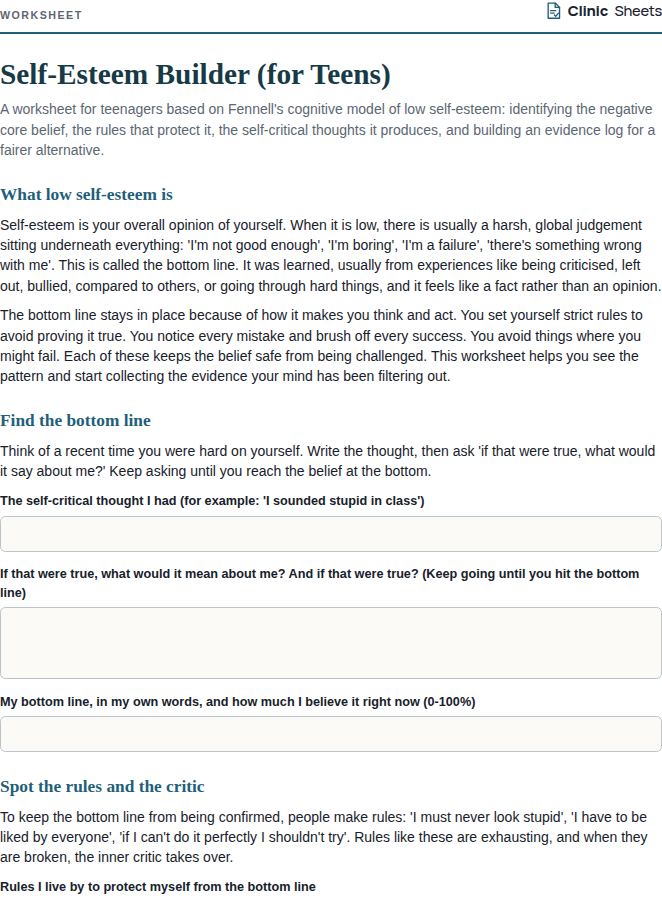
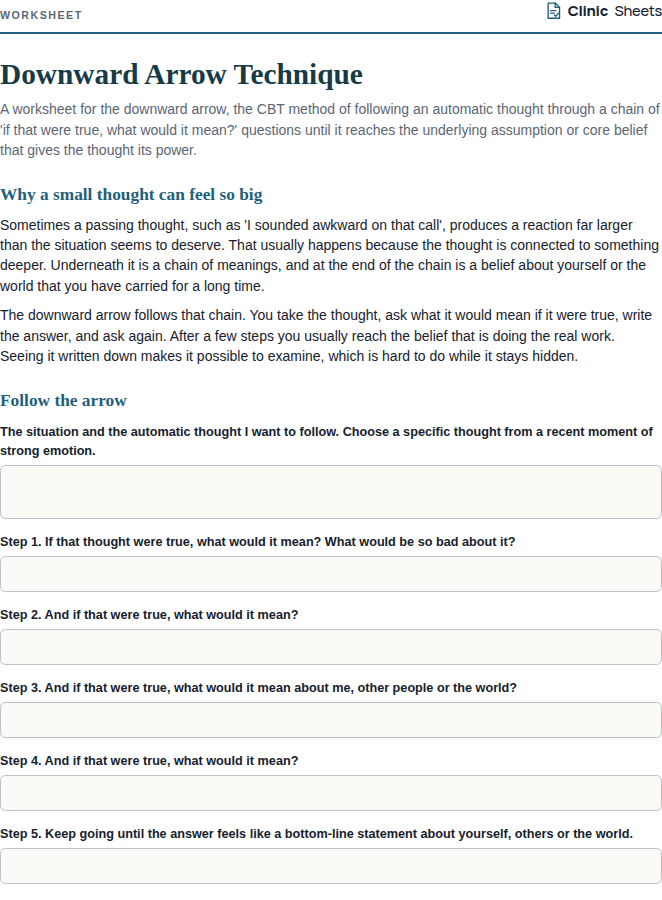
Body image concerns peak in adolescence and are now heavily shaped by image-based social media, where the comparison targets are curated, filtered and often unattainable. Cognitive behavioural models of body image, developed principally by Cash, describe a maintaining cycle in which appearance-related beliefs drive selective attention to perceived flaws, upward comparison with idealised others, and body checking (mirror scrutiny, pinching, weighing, photo comparison). Each of these behaviours briefly reduces uncertainty but strengthens the belief that appearance is central to worth and that one's own body falls short.
This worksheet helps the young person identify their own comparison and checking pattern, examine the thoughts it generates using cognitive restructuring, and plan a graded reduction in checking alongside a change in what they consume. It deliberately avoids weight, shape or diet targets and does not encourage the young person to evaluate their body more positively; the aim is to reduce the investment in appearance as a measure of worth, in keeping with the evidence that this is more durable than appearance-focused reassurance.
The professional version adds guidance on screening for eating disorder symptoms, which require a different and more urgent approach, and on discussing social media without dismissing the young person's world.
How to use it
- Screen for disordered eating, purging, excessive exercise and rapid weight change before using this worksheet. If present, an eating disorder assessment takes priority.
- Start with the young person's own experience of comparison rather than a general discussion of social media. Ask when they last felt bad about their appearance and what they had just been looking at.
- Draw out the checking behaviours specifically; many are automatic and the young person may not have connected them to how they feel.
- Use the thought section to identify the belief about worth that sits under the appearance thought, and test that rather than the appearance judgement itself.
- Agree a small, specific reduction in checking and comparison for the week, and review its effect on mood and preoccupation.
References
- Cash, T. F. (2008). The Body Image Workbook: An Eight-Step Program for Learning to Like Your Looks (2nd ed.). New Harbinger.
- Fardouly, J., & Vartanian, L. R. (2016). Social media and body image concerns: Current research and future directions. Current Opinion in Psychology, 9, 1-5.
- Fennell, M. J. V. (1997). Low self-esteem: A cognitive perspective. Behavioural and Cognitive Psychotherapy, 25(1), 1-25.