Self-Esteem Workbook
A seven-session workbook for adults with low self-esteem that combines Fennell's cognitive model with compassion-focused practices: mapping the bottom line and rules for living, testing anxious predictions, answering self-criticism, collecting evidence of qualities, building a compassionate voice, and writing a new bottom line.
About this resource
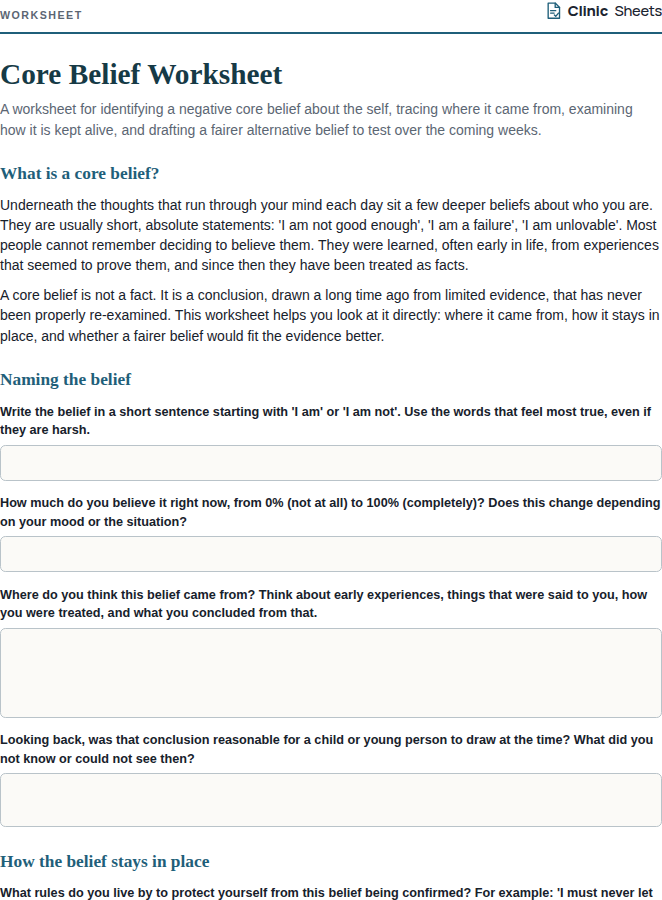
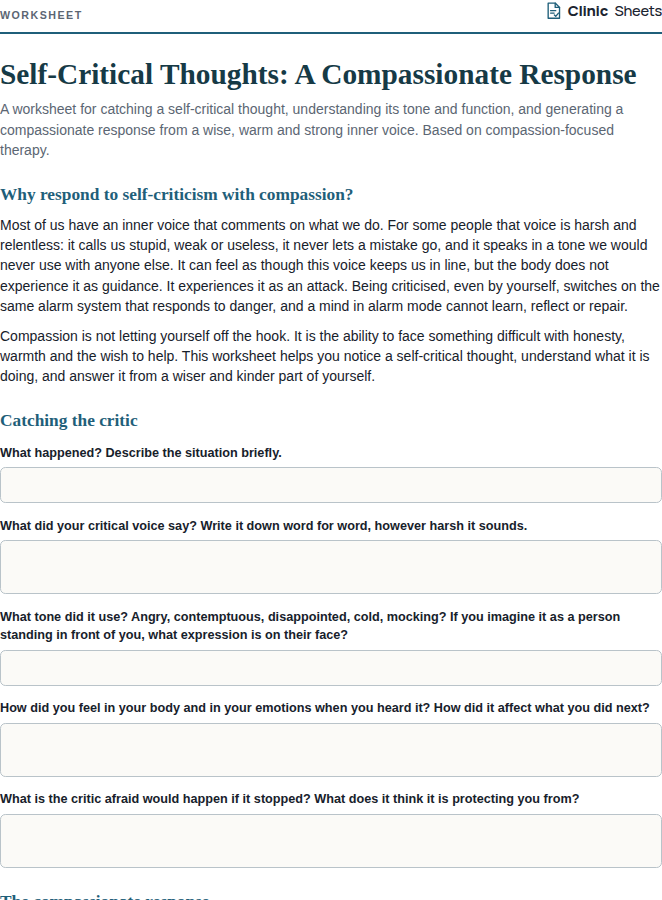
This workbook follows the structure of Melanie Fennell's cognitive model of low self-esteem, in which early experience produces a global negative belief about the self (the bottom line), protected by conditional rules for living. When a rule is at risk of being broken, anxious predictions and safety behaviours follow; when it is broken, the bottom line is activated and self-criticism and low mood follow. Treatment works both on the anxiety side (testing predictions, dropping safety behaviours) and the depression side (catching and answering self-critical thoughts), before addressing the bottom line and rules directly.
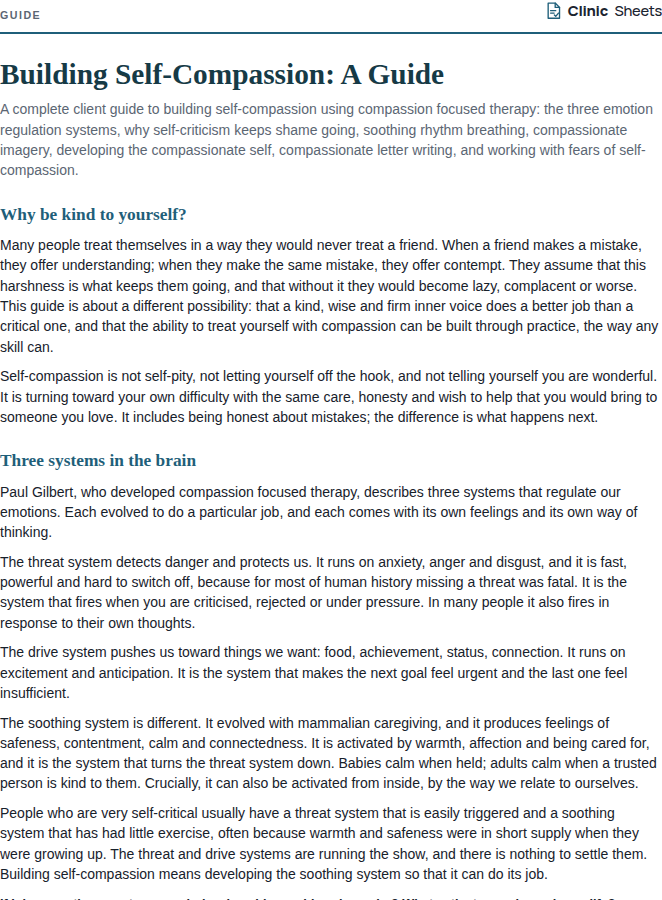
Compassion-focused practices from Gilbert's CFT are woven in because many people with low self-esteem can generate balanced alternative thoughts but do not feel them; the self-critical voice has emotional authority that logic alone does not shift. Sessions 4 and 6 introduce soothing rhythm breathing, the compassionate self and compassionate letter writing as ways of giving the alternative view a warm tone rather than a cold one. The order is designed so that the client has some experience of both the cognitive and the compassionate approaches before the belief-level work in session 7.
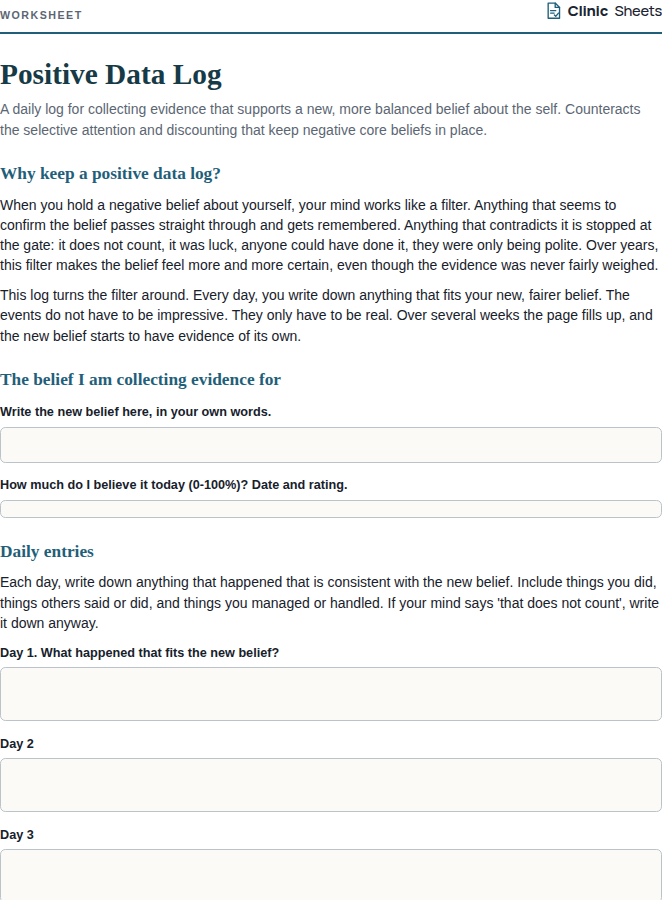
The professional version adds guidance on pacing, on clients whose bottom line is linked to trauma or abuse (where the workbook may need to sit within a longer treatment), and on the common obstacle of clients dismissing positive evidence. Anticipate that the positive data log in session 5 will feel false or uncomfortable at first, and treat that reaction as the belief at work rather than as a reason to stop.
How to use it
- Assess for depression, anxiety disorders and trauma history before starting. Where low self-esteem is secondary to an untreated depression or a specific anxiety disorder, treat that first or alongside.
- Complete session 1 together and help the client build a personal version of the model from their own examples; the rest of the workbook refers back to it.
- Work through one session per week, setting the practice fields as between-session tasks and reviewing them at the start of each session.
- Encourage the client to continue the positive data log from session 5 every day for the rest of treatment and beyond; it is the single most important ongoing task.
- Model the compassionate tone in session. Clients learn the voice partly by hearing it, and a warm, unhurried stance in the room does more than the written exercises alone.
- Use the final session to write a new bottom line and revised rules in the client's own words, and to plan how they will keep collecting evidence for them.
References
- Fennell, M. J. V. (1997). Low self-esteem: A cognitive perspective. Behavioural and Cognitive Psychotherapy, 25(1), 1-25.
- Fennell, M. J. V. (2016). Overcoming Low Self-Esteem: A Self-Help Guide Using Cognitive Behavioural Techniques (2nd ed.). Robinson.
- Gilbert, P. (2009). The Compassionate Mind: A New Approach to Life's Challenges. Constable.
- Gilbert, P. (2010). Compassion Focused Therapy: Distinctive Features. Routledge.