Build Mastery and Accumulate Positives (DBT)
A worksheet for the DBT emotion regulation skills Build Mastery and Accumulate Positive Emotions: planning daily activities that build competence, short-term pleasant events, and longer-term steps toward valued goals.
About this resource
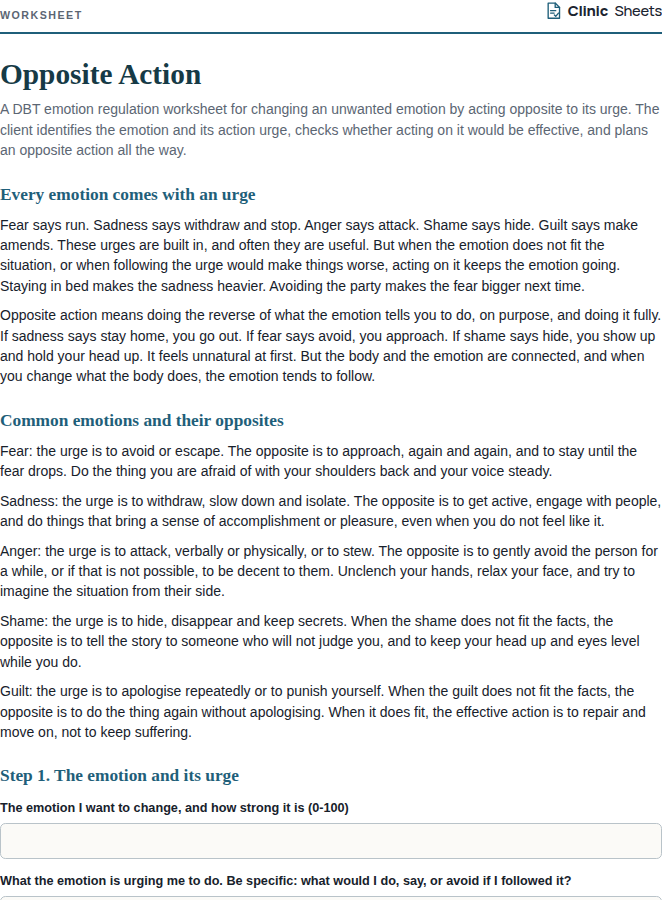
In Marsha Linehan's DBT skills training, the emotion regulation module includes a set of skills for reducing vulnerability to emotion mind, summarised by the acronym ABC PLEASE. The A stands for Accumulate positive emotions, in the short term (doing pleasant things that are possible now) and in the long term (identifying values, setting goals and taking action steps toward them). The B stands for Build mastery: doing things each day that produce a sense of competence and accomplishment, starting at a level that is challenging but achievable and gradually increasing difficulty.
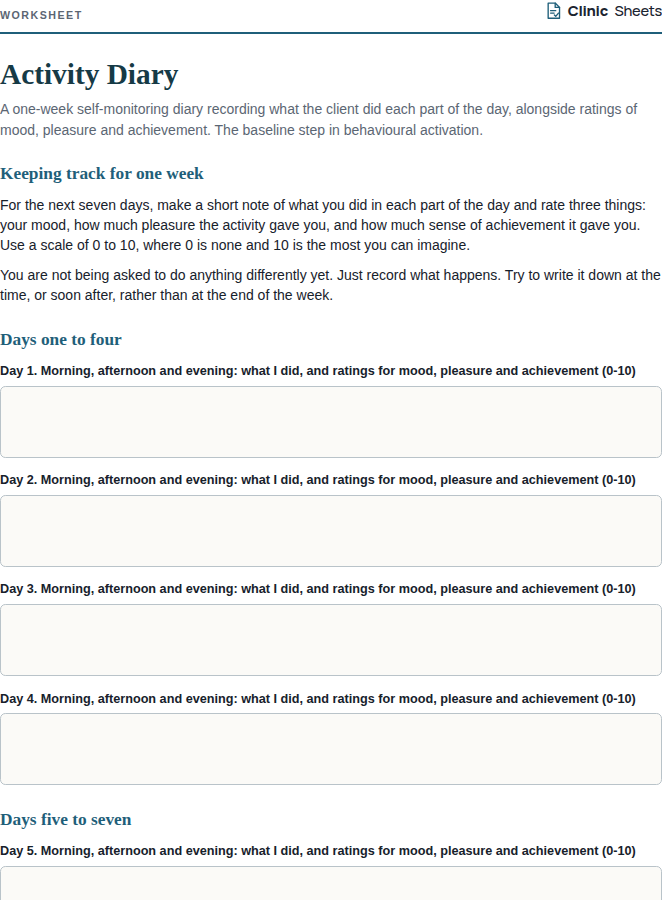
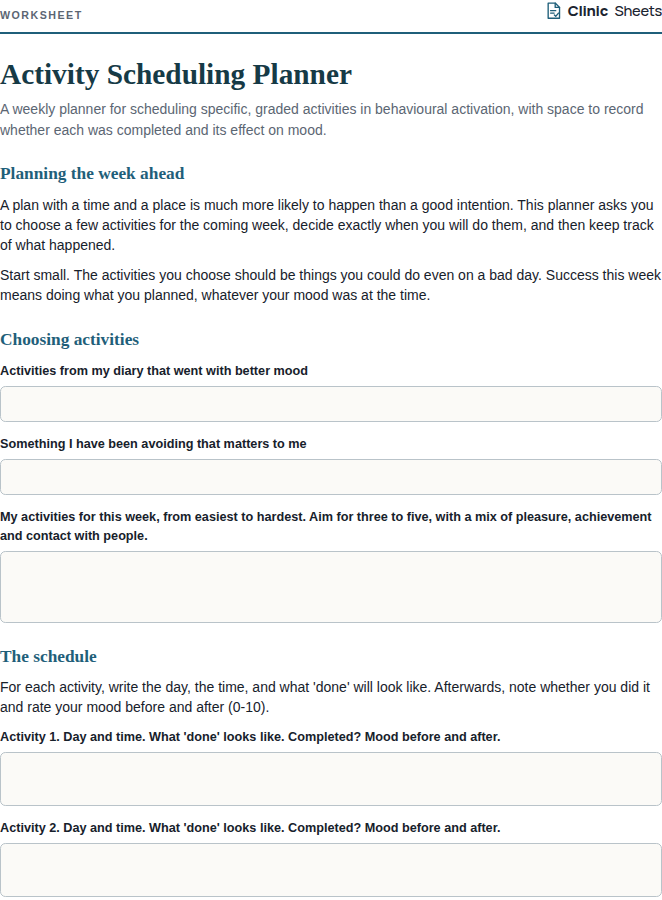
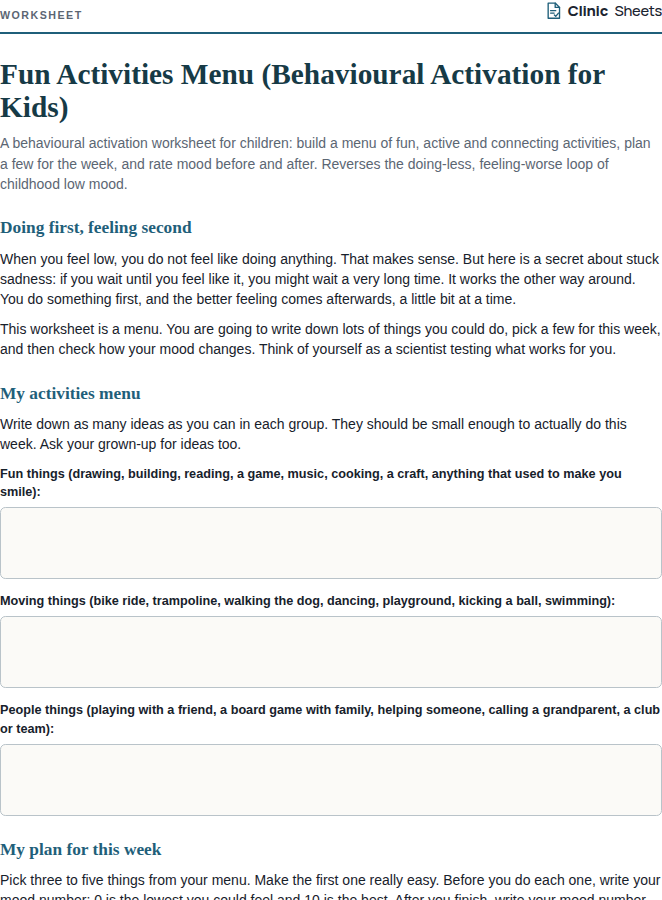
These skills rest on the same principles as behavioural activation for depression: positive emotions are generated by engaging with rewarding activity, not by waiting to feel motivated, and a life with few positive experiences leaves a person more vulnerable to intense negative emotion. This worksheet combines the two skills into a weekly plan, and prompts the client to be mindful of positive experiences when they happen rather than worrying about when they will end.
The professional version adds guidance on calibrating mastery tasks so they are neither trivial nor overwhelming, on troubleshooting clients who dismiss positive events, and on linking long-term goals to the values work elsewhere in DBT.
How to use it
- Introduce the rationale: emotion vulnerability rises when life contains few positive or mastery experiences, and the skills are about deliberately building them in.
- For mastery, help the client choose one task per day that is a little harder than what they currently do comfortably. If depression is severe, the first tasks can be very small, such as making the bed or replying to one email.
- For short-term positives, generate a list of pleasant activities the client can realistically do this week, using a pleasant events list if needed.
- For long-term positives, identify one or two values, translate each into a goal, and break the goal into small action steps. Schedule the first step.
- Coach the client to be mindful during positive events (attend fully, do not multitask) and to notice and let go of worries about the experience ending or not deserving it. Review the log each week.
References
- Linehan, M. M. (2015). DBT Skills Training Manual (2nd ed.). Guilford Press.
- Linehan, M. M. (2015). DBT Skills Training Handouts and Worksheets (2nd ed.). Guilford Press.
- Martell, C. R., Dimidjian, S., & Herman-Dunn, R. (2022). Behavioral Activation for Depression: A Clinician's Guide (2nd ed.). Guilford Press.