CES-D Depression Scale
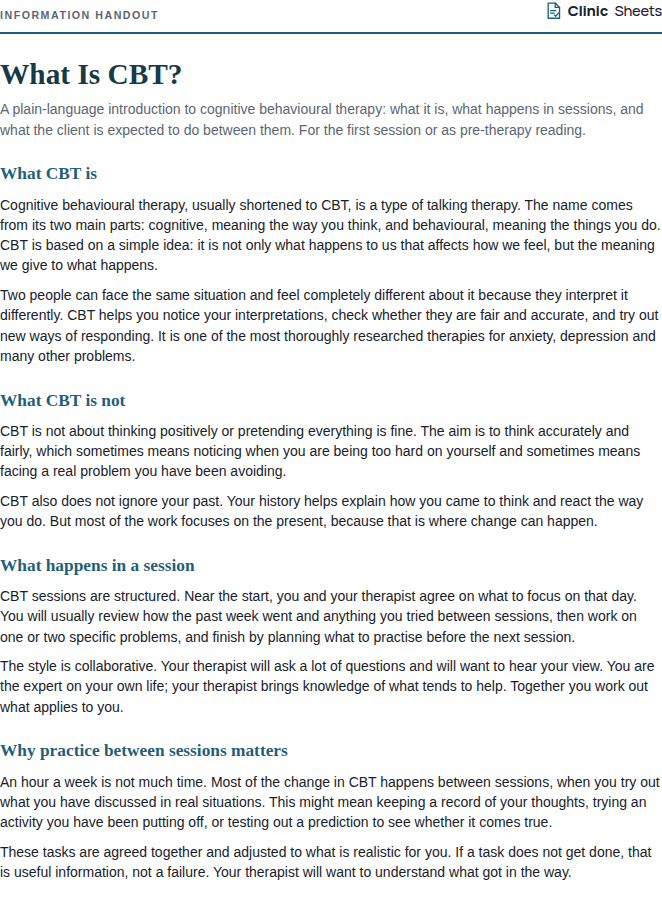
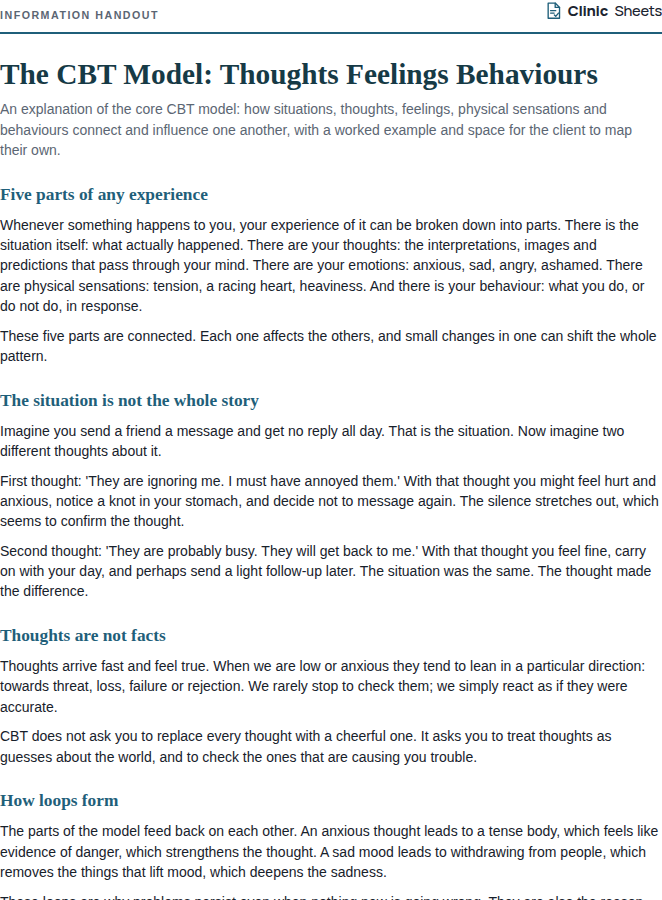
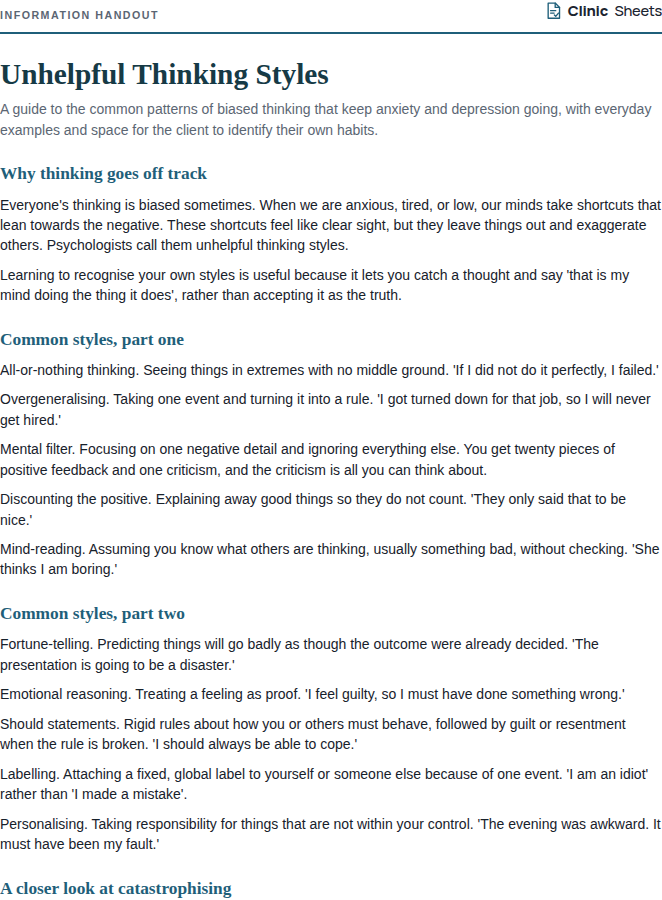
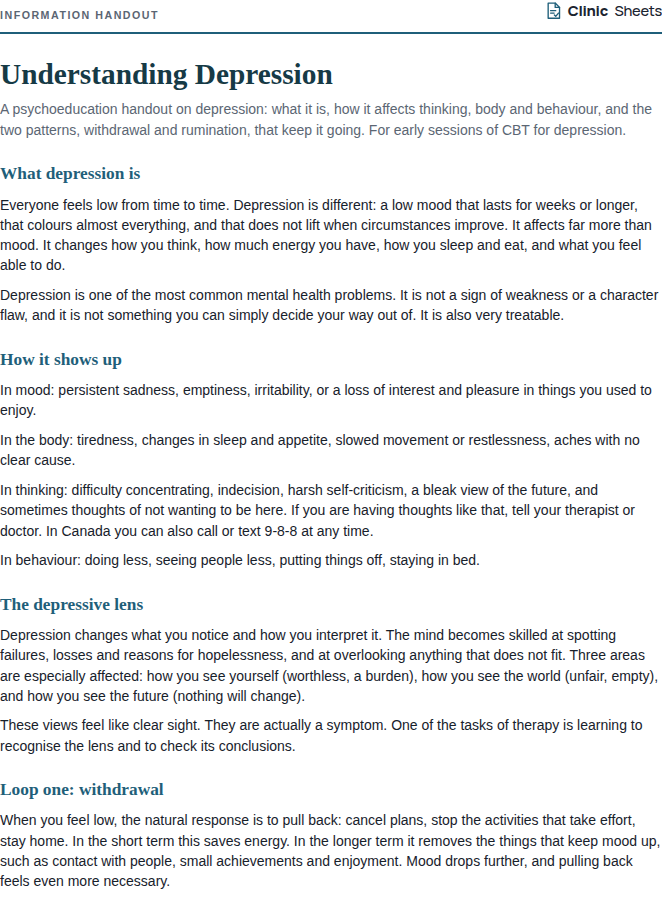
The Center for Epidemiologic Studies Depression Scale (CES-D), the 20-item public domain self-report measure of depressive symptoms over the past week, reproduced in full with its scoring, the conventional cut-off of 16, interpretation notes and source information.
About this resource
The CES-D was developed by Lenore Radloff at the US National Institute of Mental Health and published in 1977. It was designed for use in general population surveys rather than clinical samples, and its 20 items sample the main features of depressed mood: low mood, guilt and worthlessness, helplessness and hopelessness, loss of appetite, poor sleep, and psychomotor slowing. Each item is rated for frequency over the past week on a 0 to 3 scale, giving a total of 0 to 60. Four positively worded items (4, 8, 12 and 16) are reverse scored.
It remains one of the most widely used depression measures in research and is often chosen in settings where a longer, past-week measure is preferred to the past-two-weeks PHQ-9. The conventional cut-off of 16 or more, proposed by Radloff, identifies people with a clinically significant level of depressive symptoms and has been used across many populations, including adolescents, older adults and people with medical illness. It is not a diagnostic tool, and a positive screen should lead to a clinical interview.
The professional version adds the scoring instructions, notes on the reverse scored items, interpretation guidance, and limitations. Because the CES-D contains no item on suicidal thinking, clinicians should ask about safety directly rather than relying on the scale.
The instrument is reproduced here because it was developed by a US government agency and is in the public domain. Item wording follows the original 1977 publication.
How to use it
- Administer at assessment and at regular intervals during treatment. The past-week time frame makes it suitable for weekly monitoring.
- Score each item 0 to 3 according to the frequency chosen. Reverse the scores for items 4, 8, 12 and 16 (so that 'most or all of the time' scores 0 and 'rarely or none of the time' scores 3), then sum all 20 items for a total between 0 and 60.
- Treat a total of 16 or more as a positive screen and follow up with a clinical assessment for major depression. Use the total to track change across sessions rather than to assign a diagnosis.
- Because there is no suicide item, ask directly about thoughts of death, self-harm and suicide at assessment and whenever the score rises, and follow your risk protocol.
- Consider physical illness, grief, sleep disorders and substance use when interpreting raised scores, especially on the somatic items.
References
- Radloff, L. S. (1977). The CES-D Scale: A self-report depression scale for research in the general population. Applied Psychological Measurement, 1(3), 385-401.
- Vilagut, G., Forero, C. G., Barbaglia, G., & Alonso, J. (2016). Screening for depression in the general population with the Center for Epidemiologic Studies Depression (CES-D): A systematic review with meta-analysis. PLoS ONE, 11(5), e0155431.