Understanding Depression
A psychoeducation handout on depression: what it is, how it affects thinking, body and behaviour, and the two patterns, withdrawal and rumination, that keep it going. For early sessions of CBT for depression.
About this resource
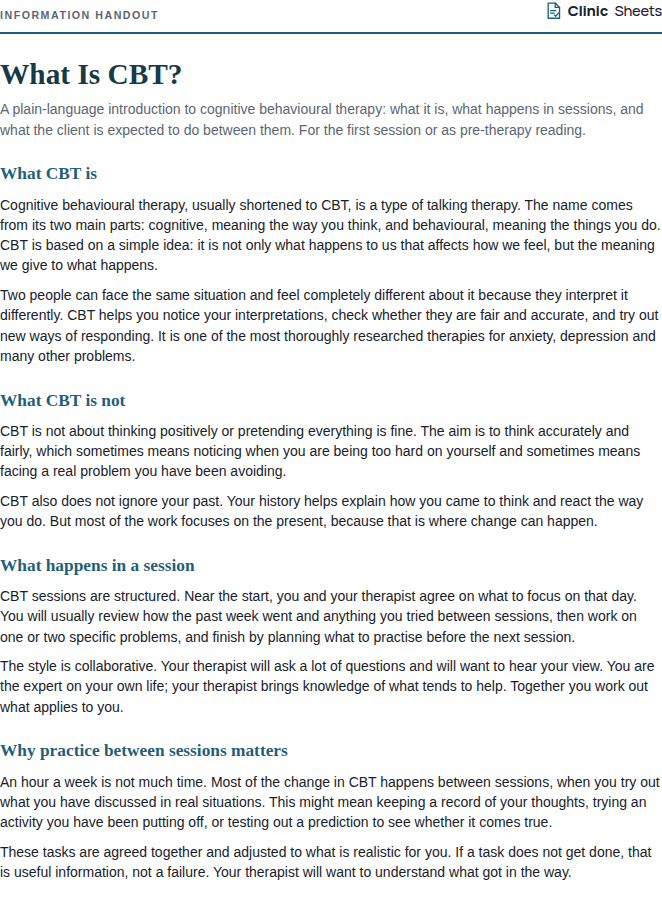
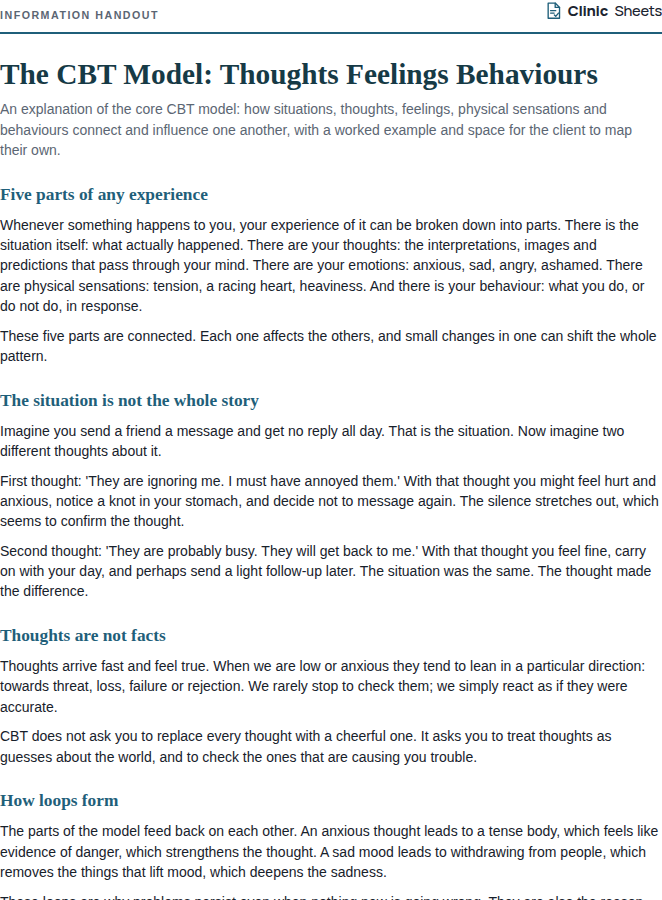
Many clients arrive with a picture of depression as either a chemical fault or a personal weakness. Neither framing gives them anything to work with. This handout offers a third view: depression as a state that affects mood, thinking, energy and behaviour together, and that is maintained by understandable responses to feeling low. Once the client sees the maintaining patterns, the rationale for treatment follows naturally.
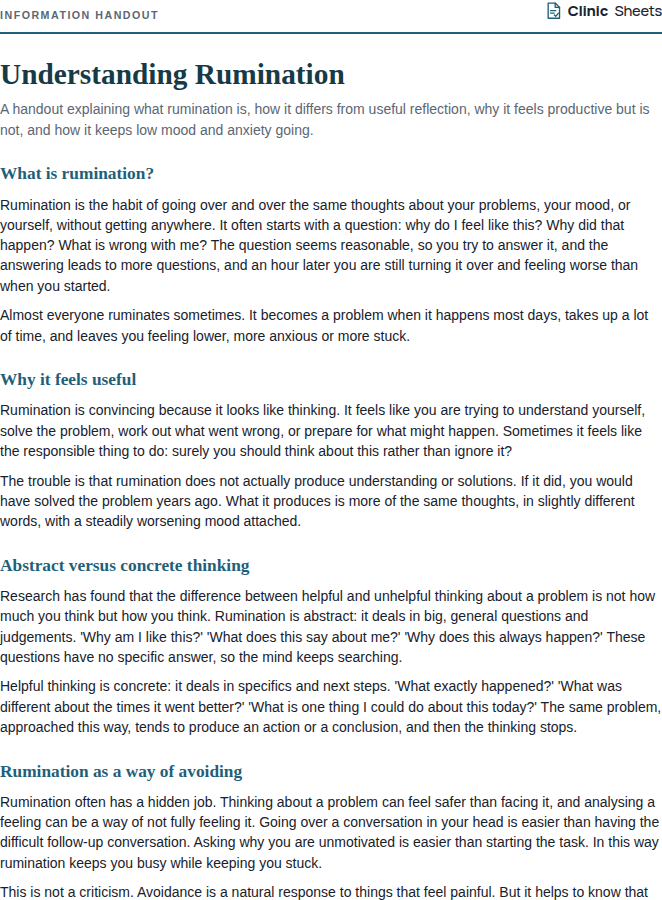
The handout describes the common symptoms without turning into a checklist, then focuses on two maintaining mechanisms with strong evidence behind them. The first is withdrawal and reduced activity, which removes sources of reward and is the target of behavioural activation. The second is rumination, the repetitive, abstract dwelling on problems and their causes, which feels like problem-solving but prolongs and deepens low mood. Both are presented as loops the client can learn to interrupt.
It also addresses the negative bias in depressive thinking, in particular the tendency to see the self, the world and the future through a pessimistic lens, and closes with a short note on prognosis: depression is common, it is treatable, and most people recover.
The professional version adds guidance on introducing the maintaining cycles without the client hearing blame, notes on when to screen further for bipolar features or risk, and suggested wording for clients who are convinced their case is different.
How to use it
- Use in the first or second session after assessment, once the client's main symptoms and patterns are known.
- Read the section on the two loops together and ask the client which one they recognise most. Draw their own version.
- Use the reflection fields to personalise the model. This becomes the start of a simple formulation.
- Follow with Behavioural Activation: Getting Started if withdrawal is prominent, or with rumination-focused work if dwelling is the dominant pattern.
- Return to the handout during relapse prevention to remind the client of the early warning signs they identified.
References
- Beck, A. T., Rush, A. J., Shaw, B. F., & Emery, G. (1979). Cognitive Therapy of Depression. Guilford Press.
- Nolen-Hoeksema, S., Wisco, B. E., & Lyubomirsky, S. (2008). Rethinking rumination. Perspectives on Psychological Science, 3(5), 400-424.
- Martell, C. R., Dimidjian, S., & Herman-Dunn, R. (2010). Behavioral Activation for Depression: A Clinician's Guide. Guilford Press.
- Watkins, E. R. (2016). Rumination-Focused Cognitive-Behavioral Therapy for Depression. Guilford Press.