Coping with Bullying
A handout for children, teenagers and their parents on what bullying is, why it affects mood and confidence, practical steps for staying safe and getting help, and how to protect self-esteem while it is being dealt with.
About this resource
Bullying is repeated, intentional harm by someone with more power, whether that power is physical, social or numerical. It is distinct from ordinary conflict between equals, and the distinction matters because the response is different: conflict can be resolved by the young people involved, whereas bullying requires adult intervention. Longitudinal research shows that being bullied is associated with later anxiety, depression and low self-esteem, and that the effects are not explained by pre-existing difficulties alone. It is a cause of mental health problems, not merely a correlate.
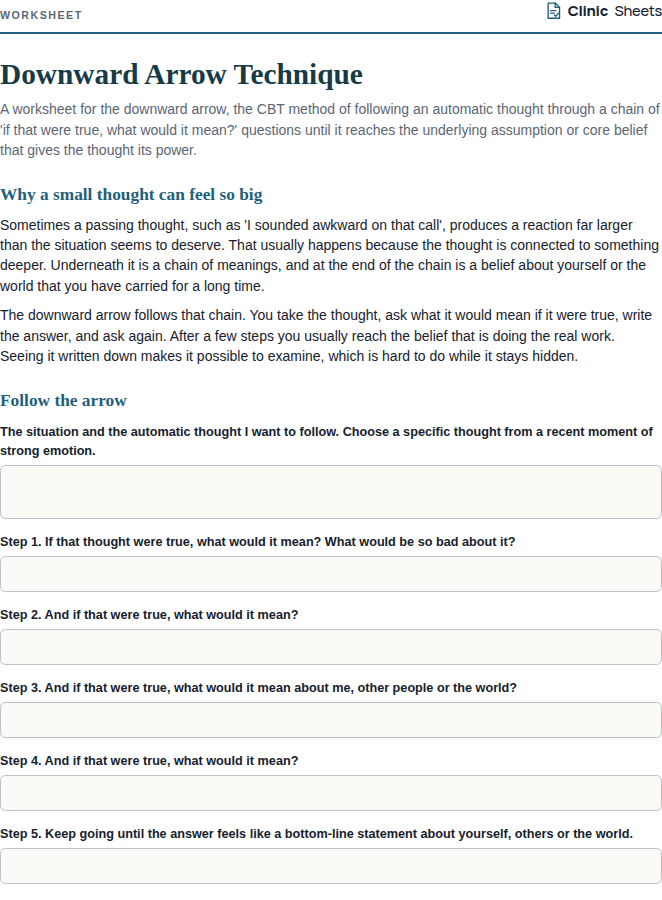
This handout is written to be usable by a child or teenager and their parent together. It defines bullying in plain terms, including online bullying, normalises the emotional impact, and lays out a practical sequence: recording what happens, telling an adult, involving the school, and staying safe. A CBT section addresses the internalised messages bullying leaves behind, since young people commonly conclude that they deserved it or that something about them invites it. A short problem-solving reflection closes the handout.
The professional version adds guidance on assessing severity and safety, on working with schools, on the parent's own distress and urge to intervene directly, and on when the primary treatment target is the young person's beliefs about themselves rather than the bullying itself.
How to use it
- Establish first whether this is bullying or conflict, using the three criteria of repetition, intent and power imbalance. Ask specifically about online harm; many young people will not volunteer it.
- Assess safety. Threats, physical harm, sexual content or harm that follows the young person home online need a same-week response involving the school and, where there is a criminal element, the police.
- Read the handout with the young person and parent. Give the young person control over the plan wherever possible; loss of control is part of what bullying takes away.
- Use the self-esteem section to draw out the conclusions the young person has reached about themselves, and begin gently testing them.
- Complete the problem-solving fields together and agree who does what, including what the parent will and will not do.
References
- Olweus, D. (1993). Bullying at School: What We Know and What We Can Do. Blackwell.
- Arseneault, L., Bowes, L., & Shakoor, S. (2010). Bullying victimization in youths and mental health problems: 'Much ado about nothing'? Psychological Medicine, 40(5), 717-729.
- D'Zurilla, T. J., & Nezu, A. M. (2007). Problem-Solving Therapy: A Positive Approach to Clinical Intervention (3rd ed.). Springer.