DEAR MAN
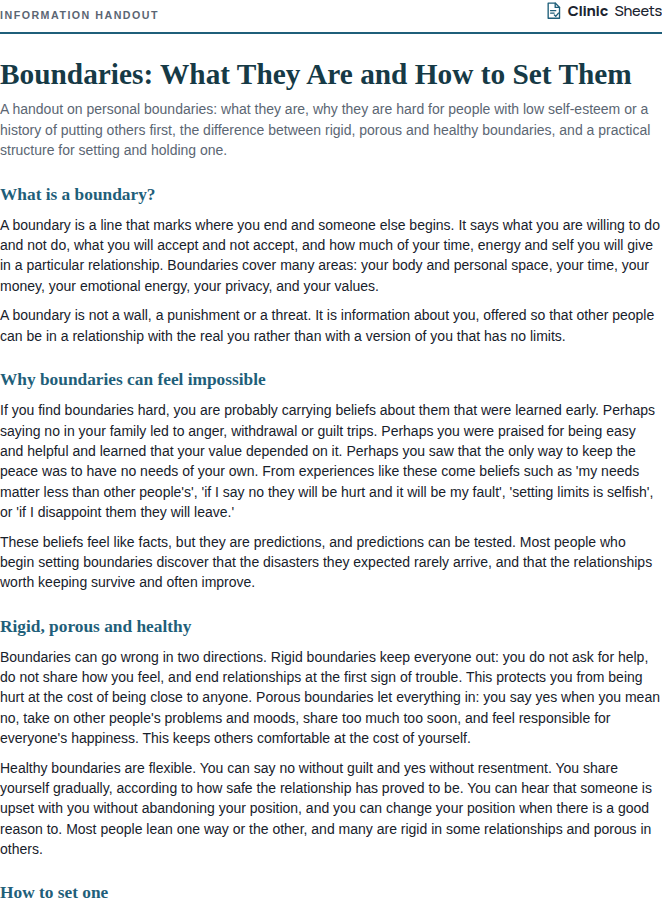
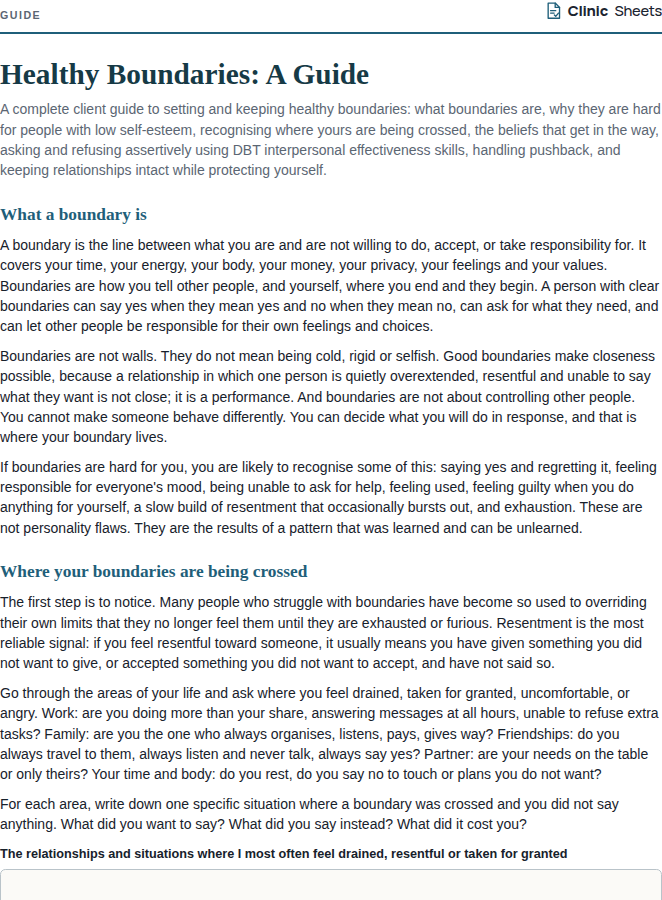
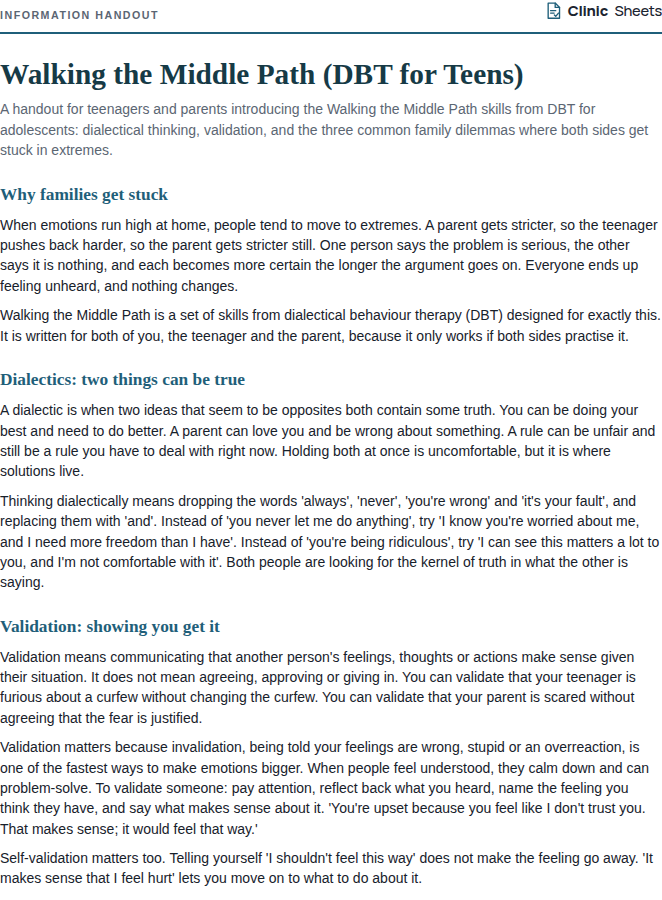
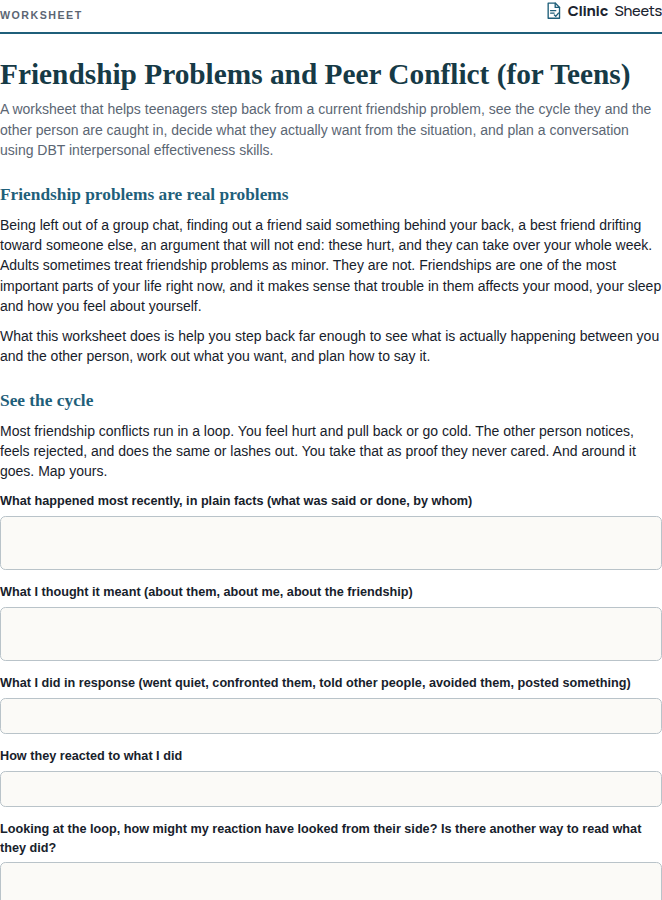
A structured worksheet for planning a difficult conversation using the DBT interpersonal effectiveness skill DEAR MAN: Describe, Express, Assert, Reinforce, stay Mindful, Appear confident, Negotiate. For asking for something or saying no while keeping the relationship intact.
About this resource
DEAR MAN is the objective effectiveness skill from Marsha Linehan's Dialectical Behaviour Therapy. It gives clients a script for situations where they need to ask for something, refuse a request, or set a limit, and where emotion tends to derail the conversation into either avoidance or escalation. The acronym breaks the request into components that can be prepared in advance and delivered in order.
The skill works on two mechanisms. First, it replaces vague, emotionally loaded communication with a concrete description of the facts and a clear statement of what is wanted, which makes it harder for the other person to dismiss or misread. Second, the preparation itself regulates emotion: a client who has written out what they will say is less likely to be swept into an interpersonal cycle of accusation and withdrawal.
Use this worksheet once the client has identified a specific upcoming conversation. It is most useful in DBT skills training modules on interpersonal effectiveness, but works equally well as a standalone tool in individual therapy for relationship difficulties, workplace conflict, or family boundary setting. The professional version adds a worked example, notes on adjusting intensity (how hard to ask or how firmly to refuse), and guidance on rehearsing in session.
How to use it
- Ask the client to pick one real, upcoming situation where they need to ask for something or say no. Avoid starting with the hardest relationship in their life; a moderate situation builds the skill.
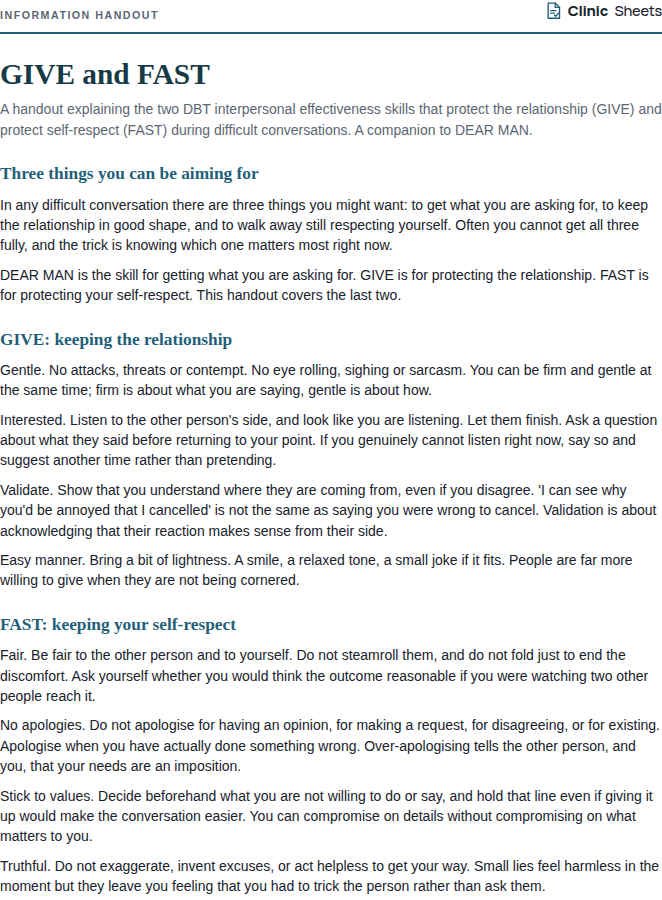
- Clarify the goal first. Which matters most here: getting the objective, keeping the relationship, or keeping self-respect? DEAR MAN is built for the objective. If the relationship or self-respect matters more, pair it with GIVE and FAST.
- Work through Describe, Express, Assert and Reinforce together in session, writing each line as the client would actually say it. Remove judgements from the Describe line and keep the Assert line to one clear sentence.
- Discuss the MAN skills as delivery rather than content: what the client will do if the other person changes the subject, how they will hold their posture and tone, and what compromise they could accept.
- Role play the script with the clinician playing the other person, first cooperatively and then with some resistance. Adjust wording as needed.
- Set the conversation as homework and review it at the next session: what was said, what happened, and what the client would change.
References
- Linehan, M. M. (2015). DBT Skills Training Manual (2nd ed.). Guilford Press.
- Linehan, M. M. (1993). Cognitive-Behavioral Treatment of Borderline Personality Disorder. Guilford Press.
- Rathus, J. H., & Miller, A. L. (2015). DBT Skills Manual for Adolescents. Guilford Press.