Friendship Problems and Peer Conflict (for Teens)
A worksheet that helps teenagers step back from a current friendship problem, see the cycle they and the other person are caught in, decide what they actually want from the situation, and plan a conversation using DBT interpersonal effectiveness skills.
About this resource
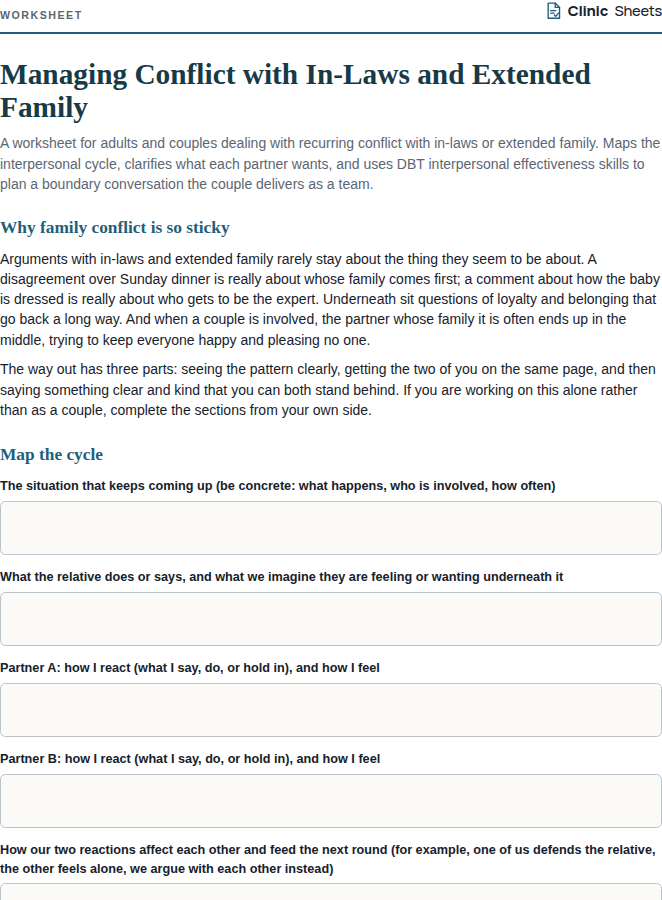
Peer relationships carry enormous weight in adolescence, and friendship conflict is one of the most common precipitants of low mood, anxiety and school refusal in young people presenting to therapy. The difficulties are rarely one-sided. Typically the young person and their friend are caught in an interpersonal cycle in which each person's response to feeling hurt or excluded provokes exactly the behaviour they fear from the other, and social anxiety adds mind reading and avoidance that keep the cycle going.
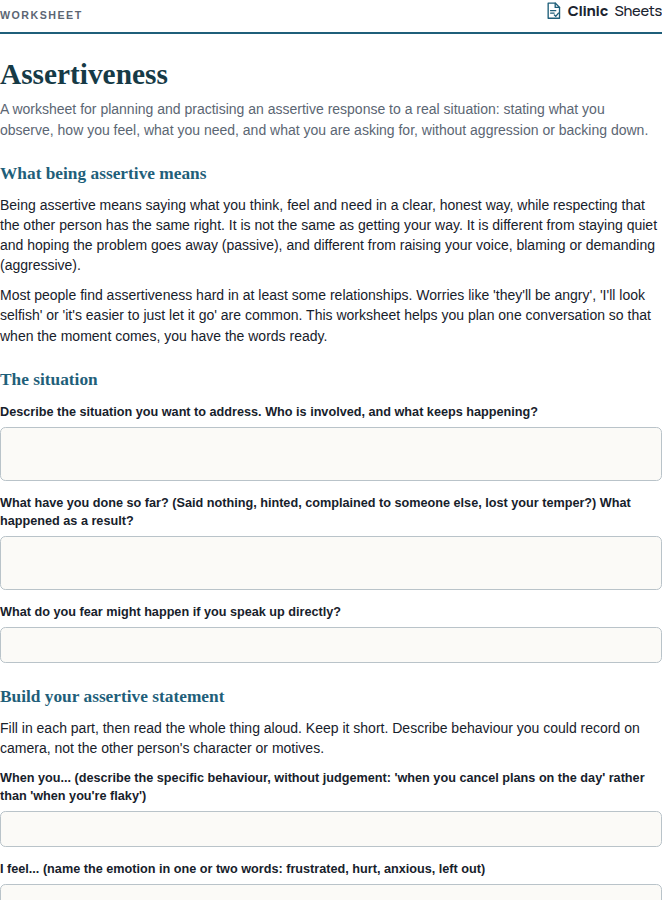
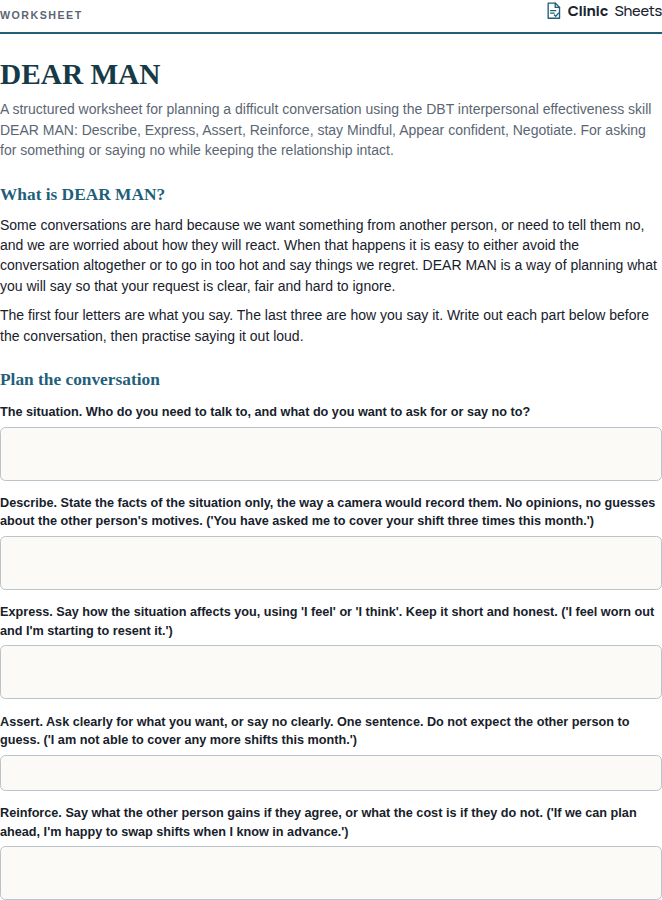
This worksheet combines a CBT interpersonal cycle analysis with the DBT interpersonal effectiveness skills from Rathus and Miller's adolescent manual. The young person maps the cycle, identifies the interpretations driving their side of it, and then clarifies their priorities in the situation: the outcome they want, the relationship, and their own self-respect. A structured plan for the conversation follows, using the DEAR MAN structure (describe, express, assert, reinforce, stay mindful, appear confident, negotiate) and the GIVE skills for keeping the relationship.
The professional version adds guidance on role-playing the planned conversation, on distinguishing ordinary friendship conflict from bullying, and on working with the social anxiety that often sits underneath.
How to use it
- Start with a specific current situation rather than the friendship in general. Ask what happened most recently.
- Map the cycle together on paper, alternating between what the young person did and what the friend did. Look for the point where each person's reaction confirmed the other's fear.
- Draw out the interpretations, particularly mind reading, and gently test them. What else could the friend's behaviour mean?
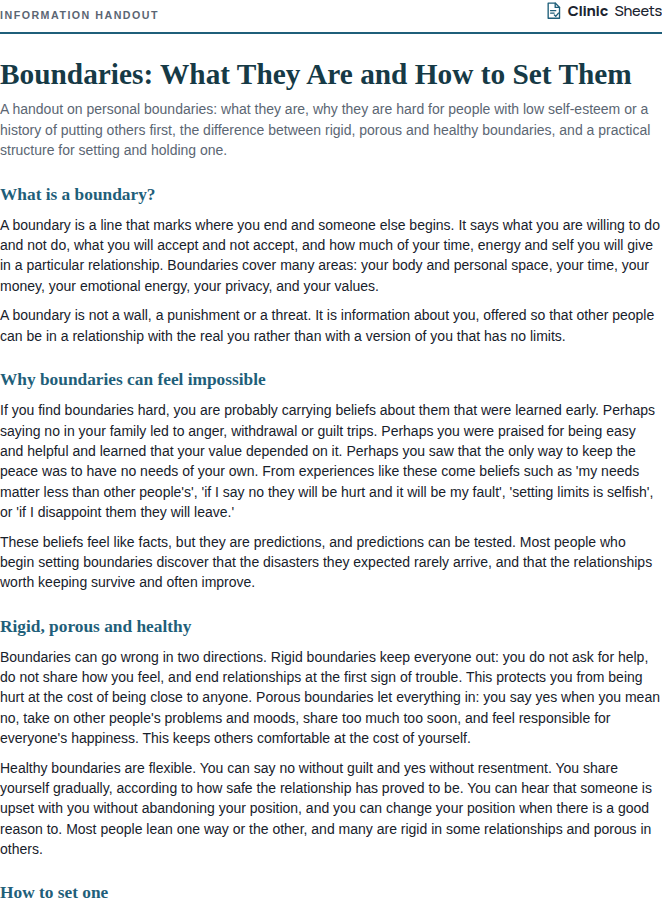
- Clarify priorities before planning the conversation. Whether the goal is to fix the friendship, to be treated differently, or to step back with dignity changes the approach.
- Plan and rehearse the conversation in session using the DEAR MAN and GIVE prompts. Role-play with you as the friend, then swap roles.
- If the situation involves repeated, deliberate harm or a power imbalance, treat it as bullying and involve the appropriate adults; see Coping with Bullying.
References
- Rathus, J. H., & Miller, A. L. (2015). DBT Skills Manual for Adolescents. Guilford Press.
- Linehan, M. M. (2015). DBT Skills Training Manual (2nd ed.). Guilford Press.
- Safran, J. D., & Segal, Z. V. (1990). Interpersonal Process in Cognitive Therapy. Basic Books.