GIVE and FAST
A handout explaining the two DBT interpersonal effectiveness skills that protect the relationship (GIVE) and protect self-respect (FAST) during difficult conversations. A companion to DEAR MAN.
About this resource
In Linehan's DBT model, every interpersonal situation involves three possible priorities: getting what you want (objective effectiveness), keeping or improving the relationship (relationship effectiveness), and keeping your self-respect (self-respect effectiveness). DEAR MAN addresses the first. GIVE and FAST address the second and third, and they are the skills clients most often neglect once they have learned to ask assertively.
GIVE (be Gentle, act Interested, Validate, use an Easy manner) describes how to conduct a conversation so that the other person feels respected even when you disagree with them. FAST (be Fair, no Apologies, Stick to values, be Truthful) describes how to conduct yourself so that you leave the conversation without shame, regardless of the outcome. Together they answer the question many clients raise after DEAR MAN: 'How do I ask for what I need without damaging things, and without giving myself away?'
This handout is written for adults and is suitable for DBT skills groups, individual therapy for relationship difficulties, and clients with a history of either over-accommodating others or losing their temper. The professional version adds discussion prompts for each skill and notes on clients who confuse validation with agreement, or who treat 'no apologies' as permission to be blunt.
How to use it
- Introduce GIVE and FAST after DEAR MAN, framed as the answer to 'what about the relationship?' and 'what about me?'
- Ask the client to think of a recent conversation that went badly and identify which of the three priorities they were actually pursuing, and which one they wish they had protected.
- Go through each letter with a concrete example from the client's own life. Validation is the skill most often misunderstood; practise it in session with a statement the client disagrees with.
- For FAST, explore the client's pattern: do they over-apologise, agree to things that go against their values, or exaggerate to win the argument? Pick one to watch for over the coming week.
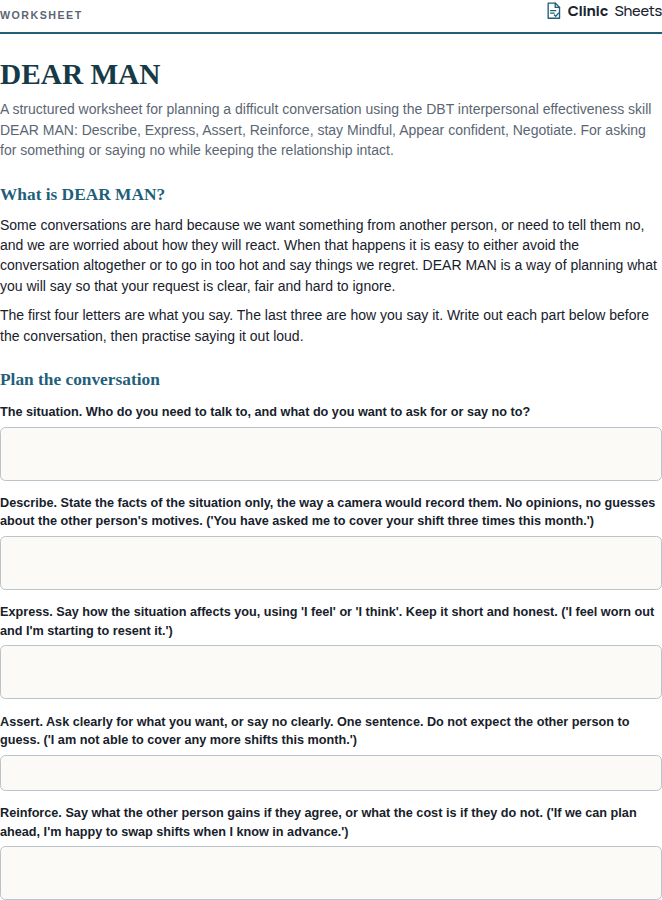
- Pair the handout with the DEAR MAN worksheet so that the client plans both content and manner for a specific upcoming conversation.
References
- Linehan, M. M. (2015). DBT Skills Training Manual (2nd ed.). Guilford Press.
- Linehan, M. M. (2015). DBT Skills Training Handouts and Worksheets (2nd ed.). Guilford Press.
- Fruzzetti, A. E. (2006). The High-Conflict Couple: A Dialectical Behavior Therapy Guide. New Harbinger.