Ending Therapy Well
A client handout for the final phase of therapy: why endings are planned, the mixed feelings that are normal, how to consolidate what was learned, and how to handle setbacks after sessions stop.
About this resource
The ending of therapy is a part of the treatment, not simply the point at which it stops. In CBT the final sessions are spaced out, gains are consolidated into a written blueprint, and the client is prepared for setbacks. In IPT the termination phase is a named stage with its own tasks: reviewing progress, acknowledging the loss of the therapeutic relationship, and identifying the client's own competence. Both traditions agree that an ending handled well protects the gains of therapy, and that one handled badly, whether abrupt or endlessly deferred, can undo some of them.
This handout prepares the client for the ending phase. It normalises the mix of relief, pride, anxiety and sadness that people often feel; explains why sessions may be spaced out toward the end; sets out what the last few sessions will cover; distinguishes a lapse from a relapse; and describes how to decide when to seek help again. It is intended to be given several sessions before the planned ending so that the client has time to raise their reactions in the room.
The professional version includes guidance on clients who want to end early or who avoid ending, on the clinician's own reactions to endings, and on structuring booster sessions.
How to use it
- Give the handout four to six sessions before the planned ending, and put the ending on the agenda from that point on, even briefly.
- Ask the client how they feel about ending. Relief, worry about coping alone, sadness at losing the relationship, and doubt about whether they are ready are all common. Explore these as you would any other thoughts and feelings.
- Space the final sessions out (for example, fortnightly then monthly) so the client can test their independence while support is still available.
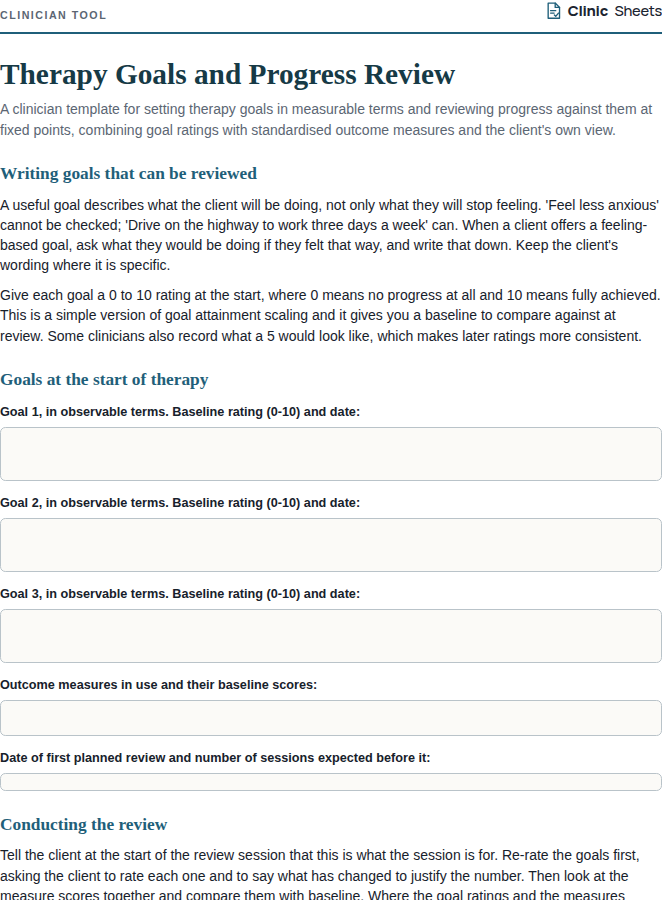
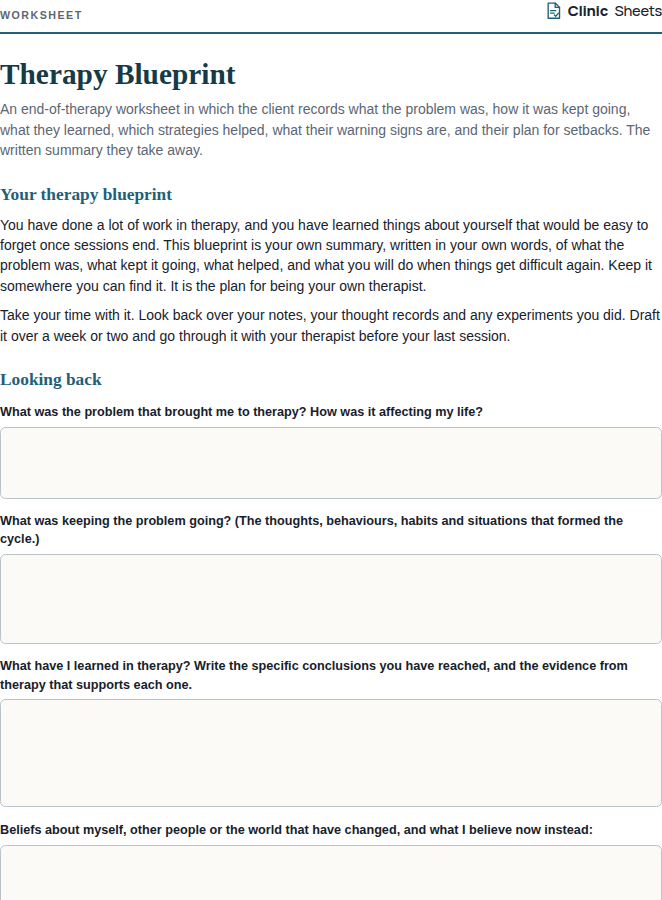
- Use the final sessions to complete a therapy blueprint (see Therapy Blueprint), review the original goals, and rehearse the setback plan.
- Where appropriate, offer a follow-up or booster session at an agreed interval, and be clear about how the client can return if needed.
- Address your own reactions. Clinicians can also find endings difficult, and unexamined reluctance on either side tends to extend therapy past its useful point.
References
- Beck, J. S. (2020). Cognitive Behavior Therapy: Basics and Beyond (3rd ed.). Guilford Press.
- Weissman, M. M., Markowitz, J. C., & Klerman, G. L. (2018). The Guide to Interpersonal Psychotherapy (updated and expanded ed.). Oxford University Press.
- Marlatt, G. A., & Donovan, D. M. (Eds.). (2005). Relapse Prevention: Maintenance Strategies in the Treatment of Addictive Behaviors (2nd ed.). Guilford Press.