Geriatric Depression Scale (GDS-15)
The 15-item short form of the Geriatric Depression Scale (GDS-15), the public domain yes/no screening measure for depression in older adults, reproduced in full with its scoring key, thresholds, interpretation notes and source information.
About this resource
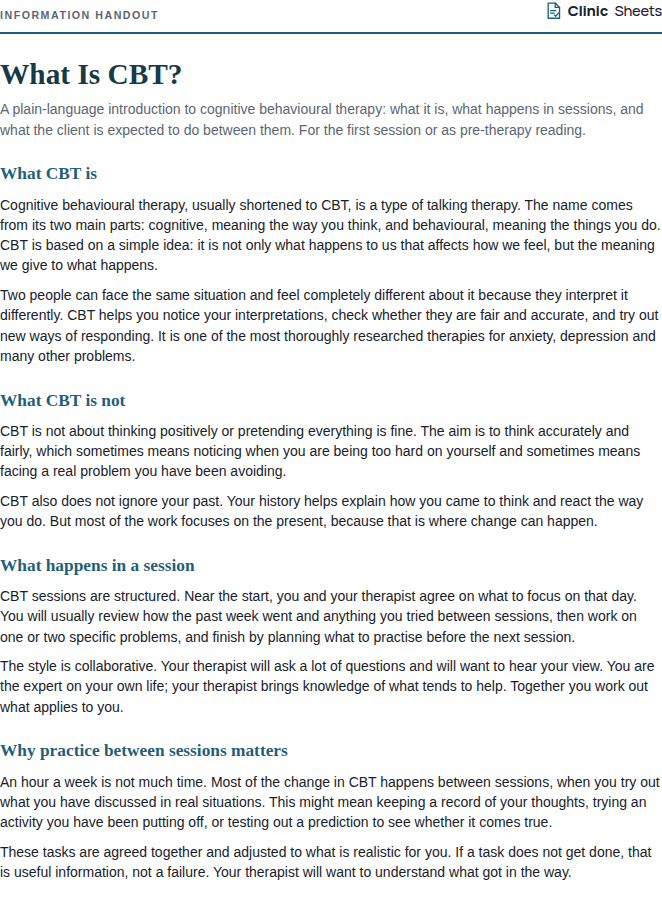
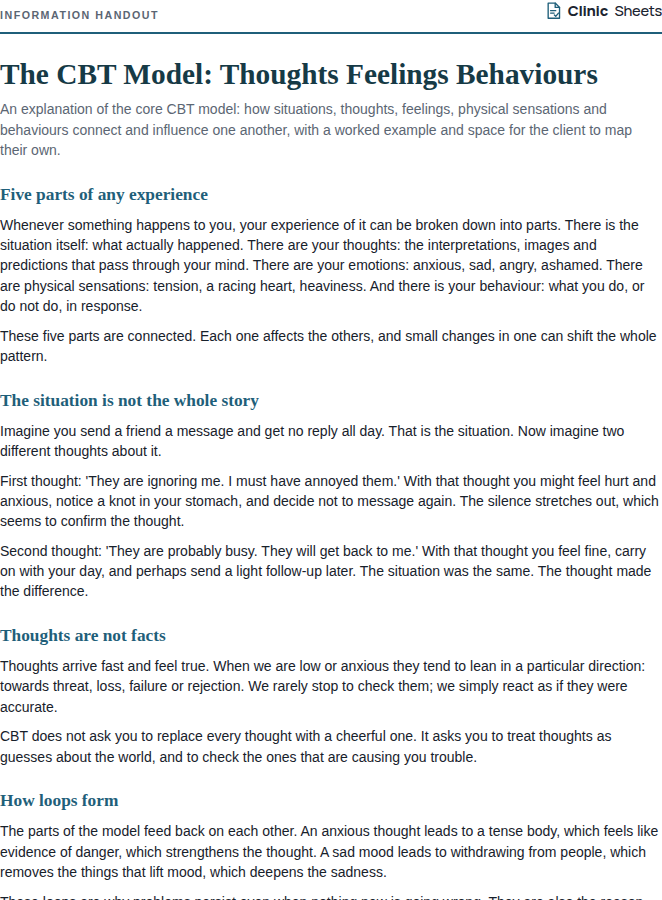
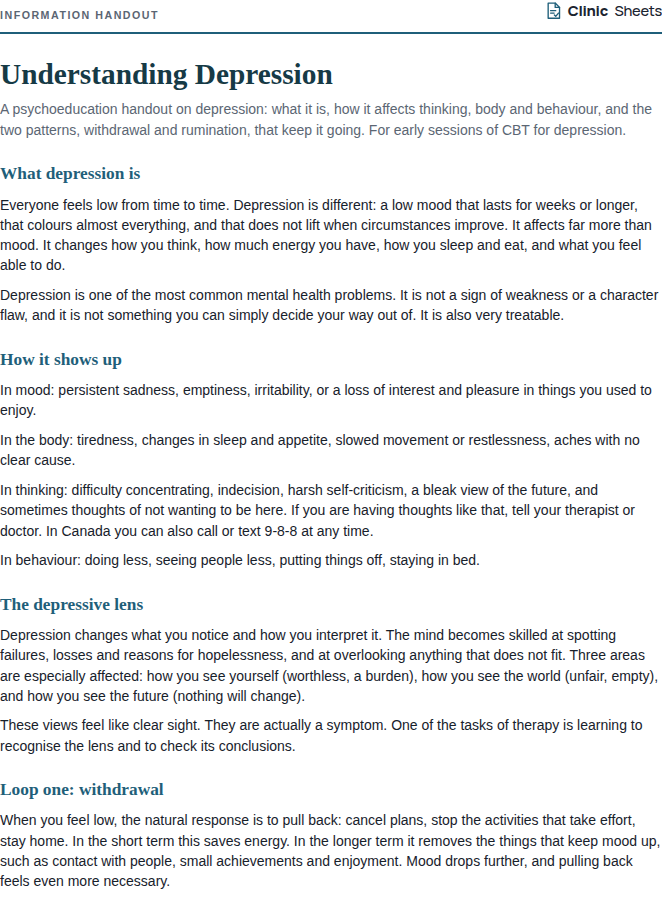
The Geriatric Depression Scale was developed by Yesavage and colleagues in the early 1980s specifically for older adults. The original 30-item version was shortened to 15 items by Sheikh and Yesavage in 1986, and the short form is now the version most often used in primary care, geriatric medicine and community mental health. Its items use a simple yes/no format, ask about feelings over the past week, and deliberately avoid somatic symptoms such as sleep, appetite and energy that overlap with physical illness and normal ageing.
The GDS-15 is designed to be answered by the older person themselves, either on paper or read aloud by the clinician. It takes a few minutes and is well tolerated. Ten items score a point for a 'yes' answer and five (items 1, 5, 7, 11 and 13) score a point for a 'no' answer, giving a total of 0 to 15. A score of 5 or more is the usual threshold for a positive screen, and scores of 10 or more are almost always associated with depression.
The professional version adds the scoring key, thresholds, interpretation guidance, and limitations, including the scale's reduced accuracy in people with moderate to severe cognitive impairment and the absence of a suicide item.
The instrument is reproduced here because the Geriatric Depression Scale is in the public domain and may be used freely. Item wording follows the published short form.
How to use it
- Offer the scale on paper or read the questions aloud, asking the person to answer yes or no according to how they have felt over the past week. Reading aloud is appropriate where eyesight, literacy or fatigue make self-completion difficult.
- Score one point for each answer that matches the depression key: 'no' for items 1, 5, 7, 11 and 13, and 'yes' for all other items. Sum for a total between 0 and 15.
- Treat a total of 5 or more as a positive screen and follow up with a clinical interview. Scores of 10 or more strongly suggest depression.
- Ask directly about thoughts of death, hopelessness and suicide, because the scale does not include a suicide item. Older adults, particularly older men, are at elevated risk and may not volunteer these thoughts.
- Consider cognitive status, physical illness, medication effects, bereavement and social isolation when interpreting the result, and repeat the scale to monitor change during treatment.
References
- Sheikh, J. I., & Yesavage, J. A. (1986). Geriatric Depression Scale (GDS): Recent evidence and development of a shorter version. Clinical Gerontologist, 5(1-2), 165-173.
- Yesavage, J. A., Brink, T. L., Rose, T. L., Lum, O., Huang, V., Adey, M., & Leirer, V. O. (1982-1983). Development and validation of a geriatric depression screening scale: A preliminary report. Journal of Psychiatric Research, 17(1), 37-49.