Hair Pulling and Skin Picking: Habit Reversal
A worksheet that walks through the core components of habit reversal training for hair pulling and skin picking: mapping the chain of triggers and early warning signs, choosing a competing response, planning stimulus control, and enlisting support.
About this resource
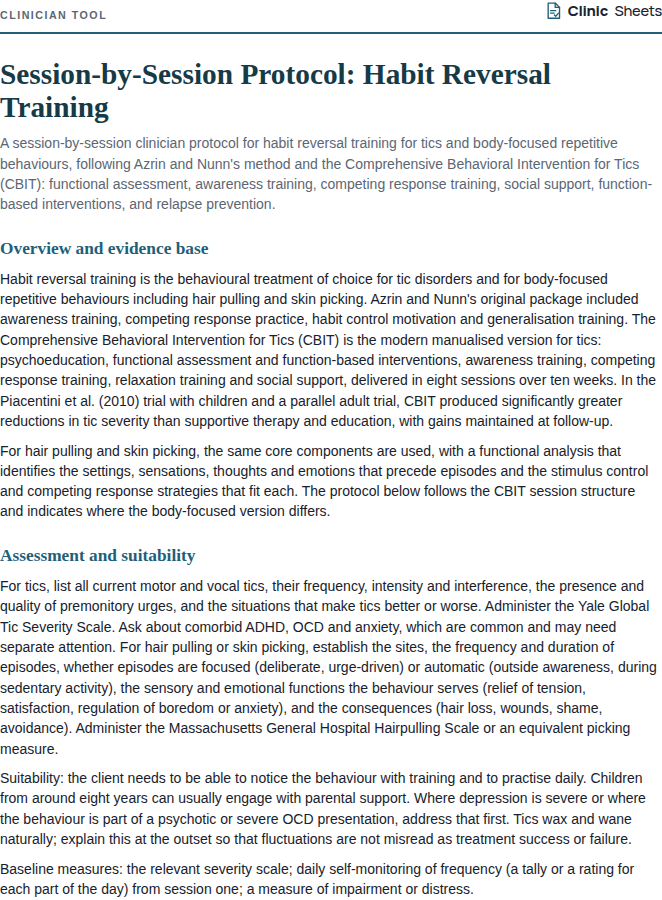
Hair pulling (trichotillomania) and skin picking (excoriation disorder) are body-focused repetitive behaviours (BFRBs). Both are more common than most clients realise, both are often accompanied by considerable shame, and both respond to habit reversal training (HRT), the behavioural treatment first described by Azrin and Nunn in 1973 and refined since. HRT has three core components. Awareness training helps the person notice the behaviour and, more importantly, the moments just before it: the urge, the hand moving, the postures and situations that precede it. Competing response training teaches a physically incompatible action, held for about a minute or until the urge passes, that is used whenever the behaviour or its precursors are noticed. Social support enlists someone to notice and encourage practice. Most modern protocols add stimulus control: changing the environment to make the behaviour harder or less rewarding.
Pulling and picking are often described as having automatic and focused styles. Automatic pulling happens outside awareness, typically during sedentary activities such as reading, screen use or lying in bed. Focused pulling is done deliberately in response to an urge, a sensation, a specific hair or blemish, or an emotional state such as boredom, tension or frustration. Most people do both. Awareness work is most important for the automatic style; competing responses, stimulus control and emotion-focused strategies are most important for the focused style.
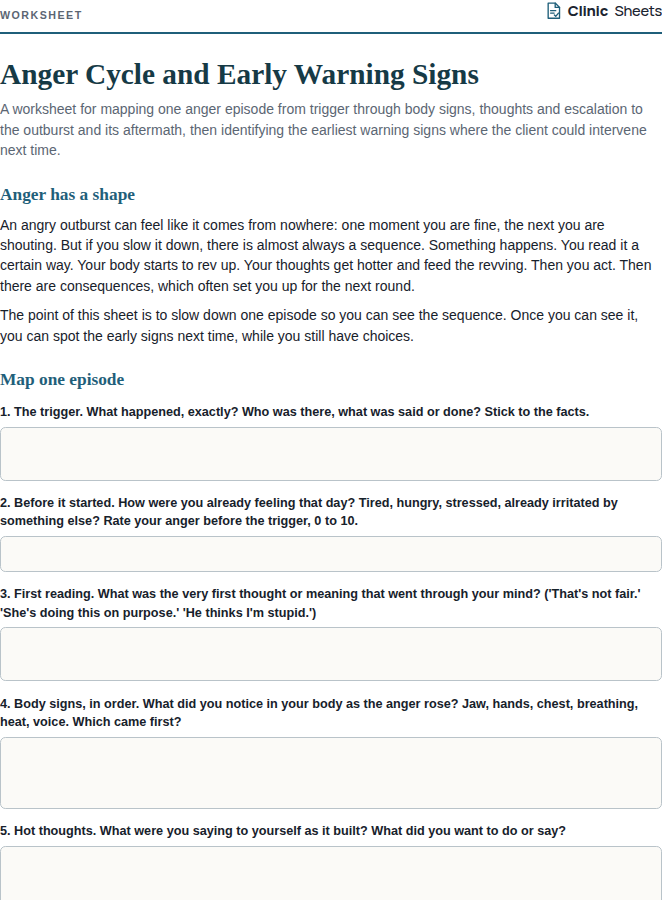
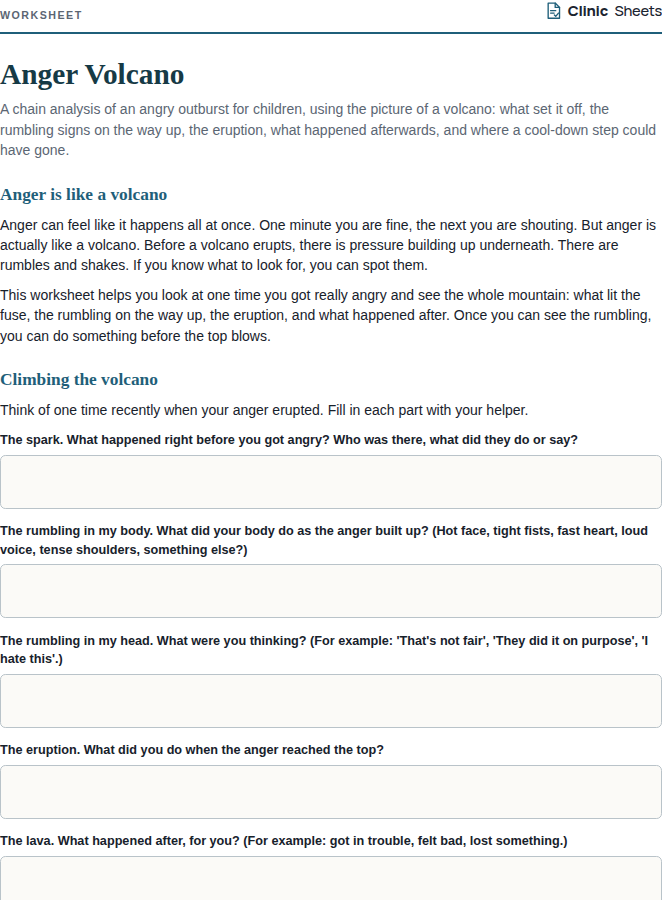
This worksheet uses a chain analysis structure to map a typical episode from setting through to consequences, then plans each HRT component around it. The professional version adds guidance on the functional assessment interview, on why shame-reducing framing matters for engagement, on combining HRT with acceptance-based strategies for urges (as in the ACT-enhanced protocols), and on tracking with a simple daily count.
How to use it
- Complete the chain analysis section together in session, using a specific recent episode rather than a general description. Ask about the setting, the body position, what the hands were doing beforehand, the first moment of awareness, the sensations, and what happened afterwards.
- Choose a competing response that is genuinely incompatible with the behaviour, is inconspicuous, and can be held for about a minute. Clenching the fists, folding the arms, sitting on the hands, or gripping an object are common choices. Have the client practise it in session.
- Plan stimulus control from the chain: barriers (gloves, bandages, hats, fidget objects), removing tools (tweezers, magnifying mirrors), changing lighting, and altering high-risk routines.
- Identify a support person and be specific about what they will do: a neutral prompt when they notice, and praise when they see the competing response used. They should not nag or grab hands.
- Ask the client to keep a daily count and to complete a new chain each time the pattern changes. Review weekly and adjust competing responses and stimulus control as needed.
References
- Azrin, N. H., & Nunn, R. G. (1973). Habit-reversal: A method of eliminating nervous habits and tics. Behaviour Research and Therapy, 11(4), 619-628.
- Woods, D. W., & Twohig, M. P. (2008). Trichotillomania: An ACT-Enhanced Behavior Therapy Approach, Therapist Guide. Oxford University Press.
- Woods, D. W., & Houghton, D. C. (2014). Diagnosis, evaluation, and management of trichotillomania. Psychiatric Clinics of North America, 37(3), 301-317.