Managing Emotions Workbook (DBT Skills)
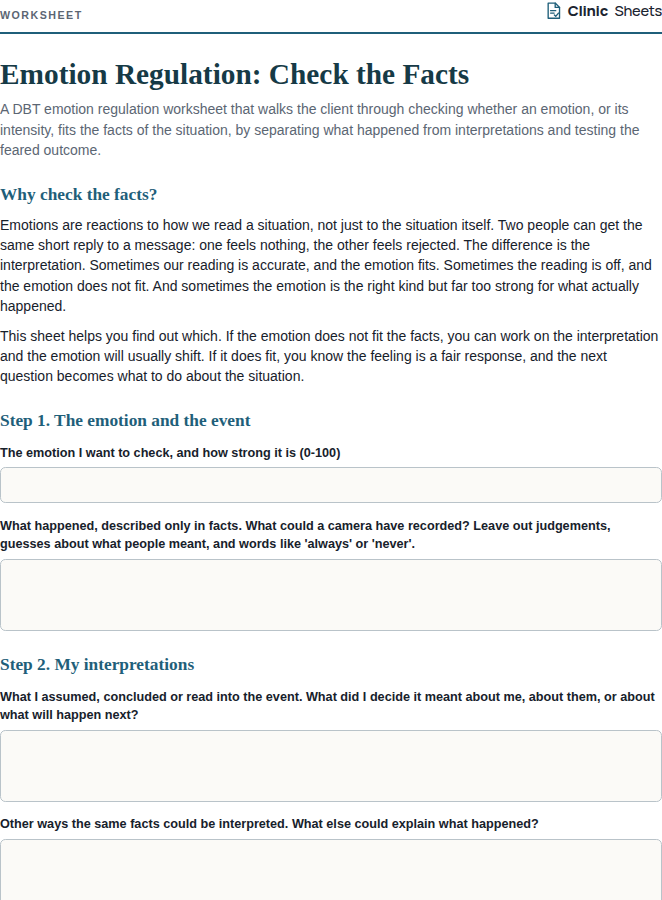
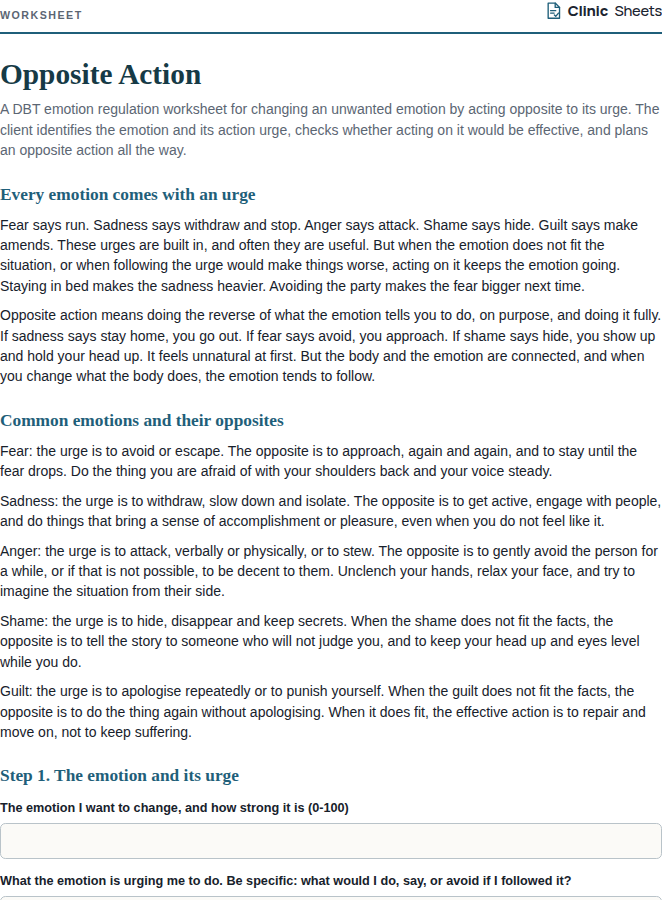
A seven-session workbook teaching the core DBT skills for emotion dysregulation to adults and adolescents: understanding emotions, mindfulness and wise mind, crisis survival skills, radical acceptance, naming emotions and checking the facts, opposite action and problem solving, and reducing vulnerability with the ABC PLEASE skills.
About this resource
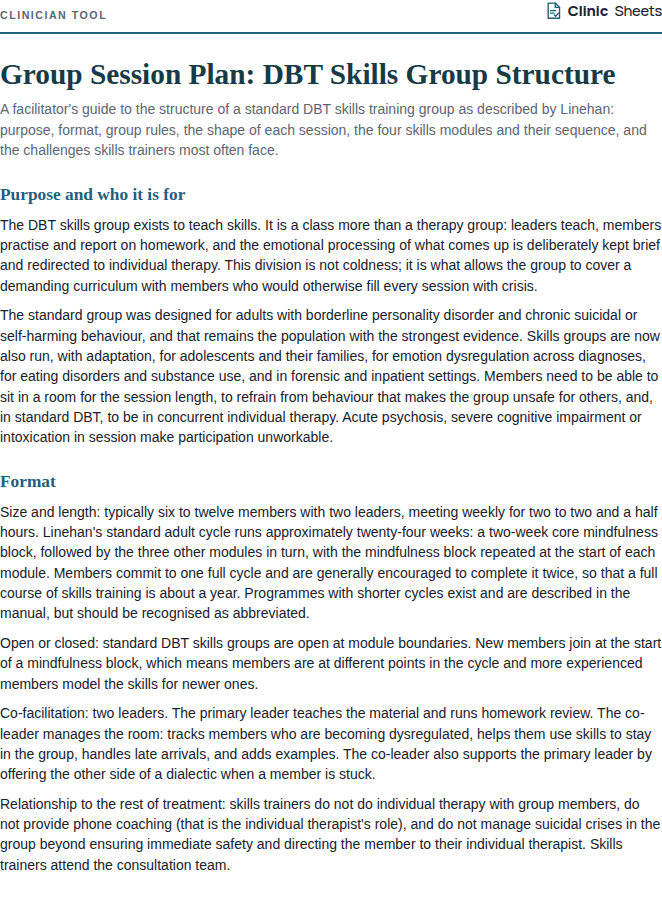
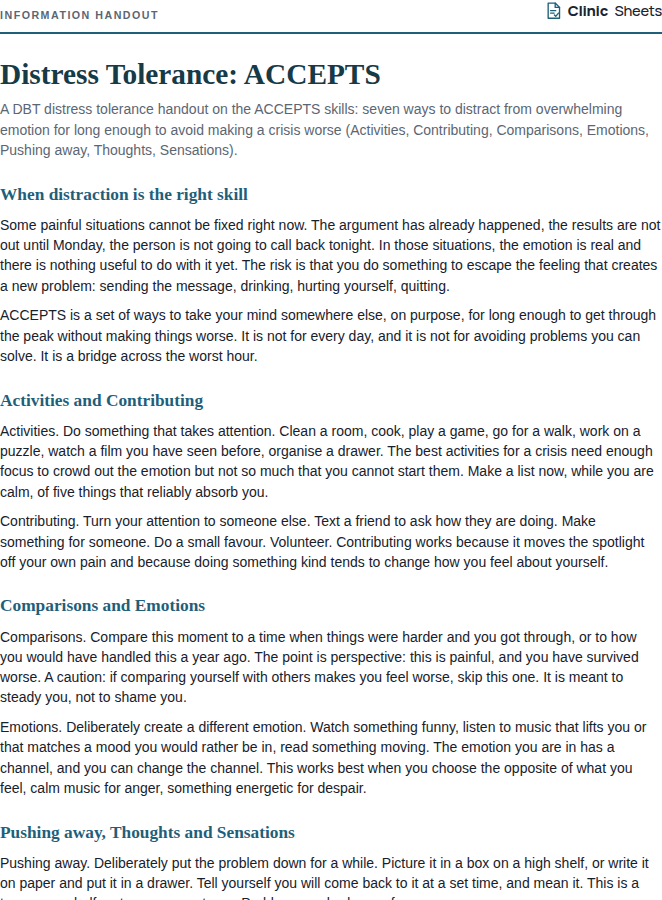
This workbook draws on the skills training component of Marsha Linehan's dialectical behaviour therapy, using the module structure and skill names from the DBT Skills Training Manual. It covers mindfulness (wise mind, the what and how skills), distress tolerance (STOP, TIP, distraction, self-soothing and radical acceptance) and emotion regulation (the model of emotions, checking the facts, opposite action, problem solving and ABC PLEASE). Interpersonal effectiveness is not included, so that the workbook can be completed in seven sessions and stay focused on regulating emotion. The writing is original; the skills and their names are Linehan's and are cited.
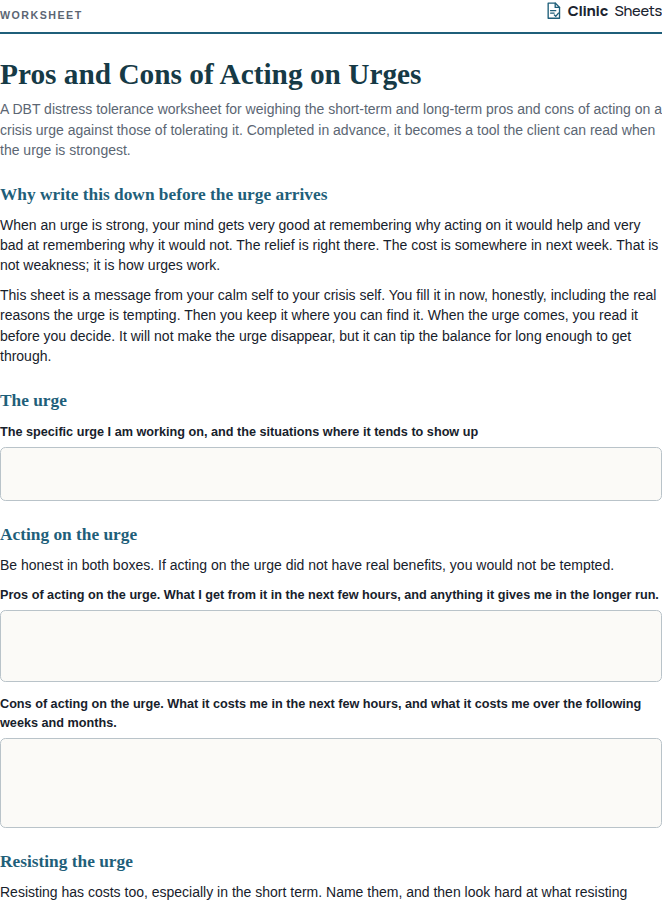
The order follows DBT's own logic: mindfulness first because every other skill depends on noticing what is happening, then distress tolerance so that the client has a way of getting through intense moments without making things worse, then emotion regulation for changing emotions that do not fit the facts or are not effective. Each session has a short explanation, the skill, and practice fields that function as diary cards. The workbook is suitable for adults and for adolescents; the language is direct and avoids slang, and examples are kept general enough to apply across ages.
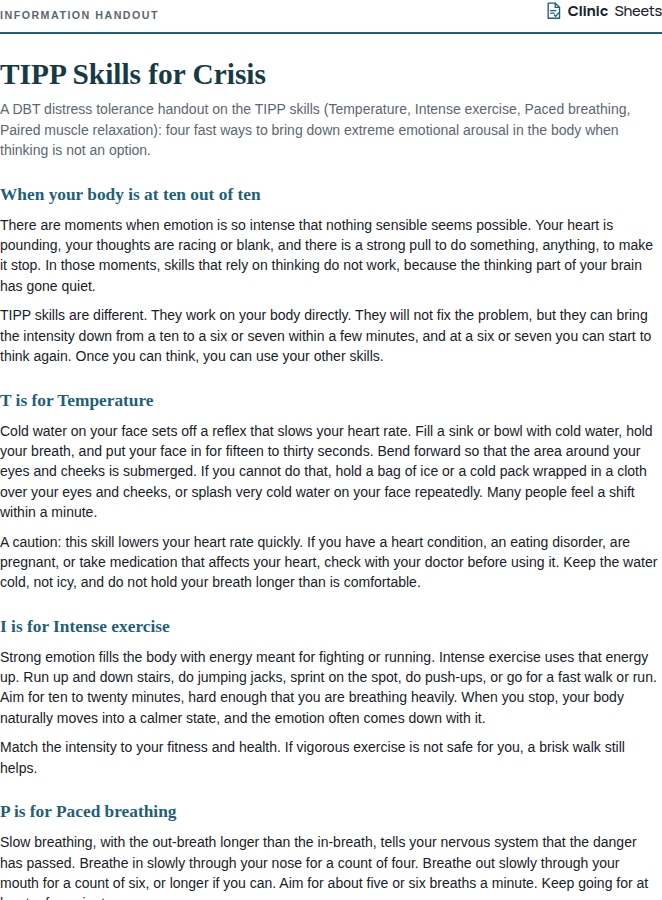
The professional version adds guidance on use as an adjunct to individual therapy or a skills group, on clients with self-harm or suicidal behaviour (the workbook does not replace a safety plan or full DBT), and on the temperature skill, which should be adapted for clients with cardiac conditions, eating disorders or other medical issues after consultation with their physician. The workbook does not describe self-harm and should be introduced alongside risk assessment where relevant.
How to use it
- Assess risk and establish a safety plan before starting if there is any history of self-harm or suicidal behaviour. The workbook is a skills resource, not a substitute for comprehensive DBT where that is indicated.
- Work through one session per week in order, practising the skill in session before setting it as a between-session task. Ask the client to bring a completed practice field to each session and review it first.
- Check the client's health history before teaching the temperature component of TIP, and adapt or omit cold water exposure for anyone with a cardiac condition, eating disorder or other relevant medical issue, in consultation with their physician.
- Return to the mindfulness skills in every session, however briefly, because the emotion regulation skills depend on the client being able to notice and name what is happening.
- For adolescents, involve a parent or caregiver in learning the skills where the young person agrees, so that the skills are reinforced rather than undermined at home.
- Use the final session to identify the three or four skills the client actually uses and to build a personal crisis plan around them.
References
- Linehan, M. M. (2015). DBT Skills Training Manual (2nd ed.). Guilford Press.
- Linehan, M. M. (2015). DBT Skills Training Handouts and Worksheets (2nd ed.). Guilford Press.
- Linehan, M. M. (1993). Cognitive-Behavioral Treatment of Borderline Personality Disorder. Guilford Press.
- Rathus, J. H., & Miller, A. L. (2015). DBT Skills Manual for Adolescents. Guilford Press.