Distress Tolerance: ACCEPTS
A DBT distress tolerance handout on the ACCEPTS skills: seven ways to distract from overwhelming emotion for long enough to avoid making a crisis worse (Activities, Contributing, Comparisons, Emotions, Pushing away, Thoughts, Sensations).
About this resource
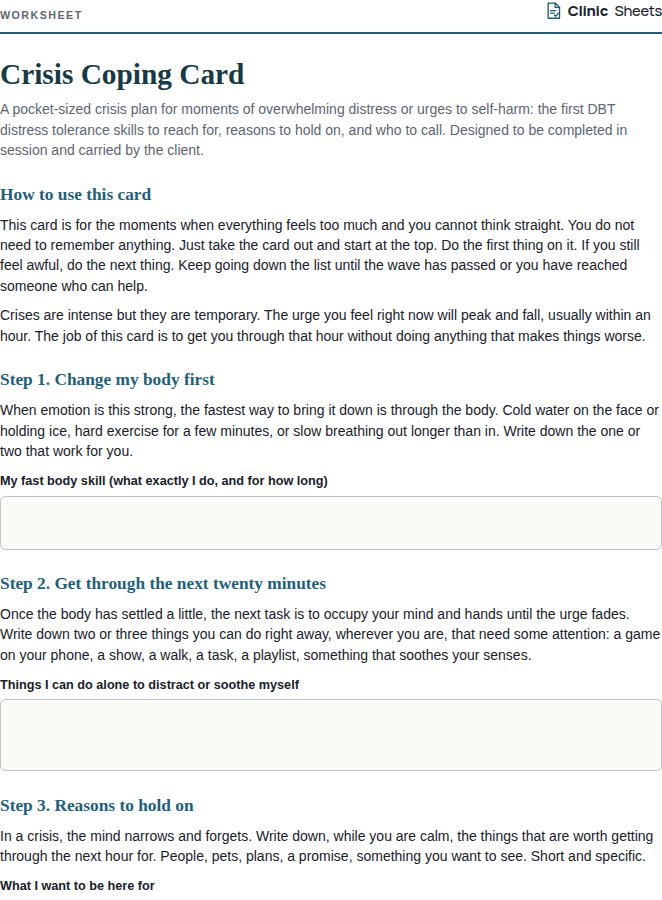
ACCEPTS is a crisis survival skill from the DBT distress tolerance module. Its purpose is narrow and important: to get the person through a period of intense distress without acting on urges that would make things worse, when the situation cannot be changed right now. The acronym lists seven categories of distraction. Distraction has a poor reputation in some therapies because it can become avoidance, and Linehan is explicit that ACCEPTS is not for everyday use or for avoiding problems that can be solved. It is for surviving the peak.
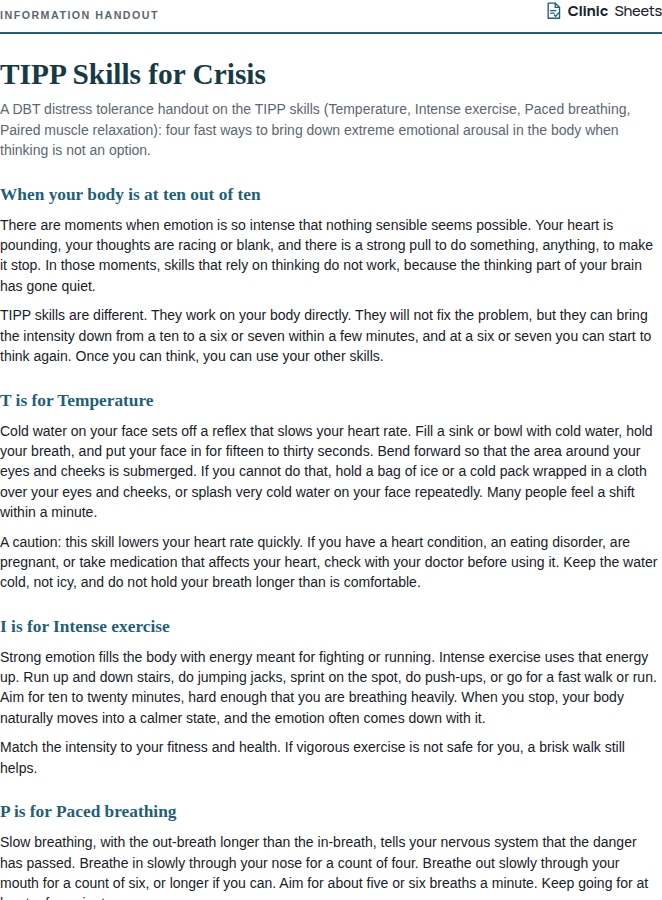
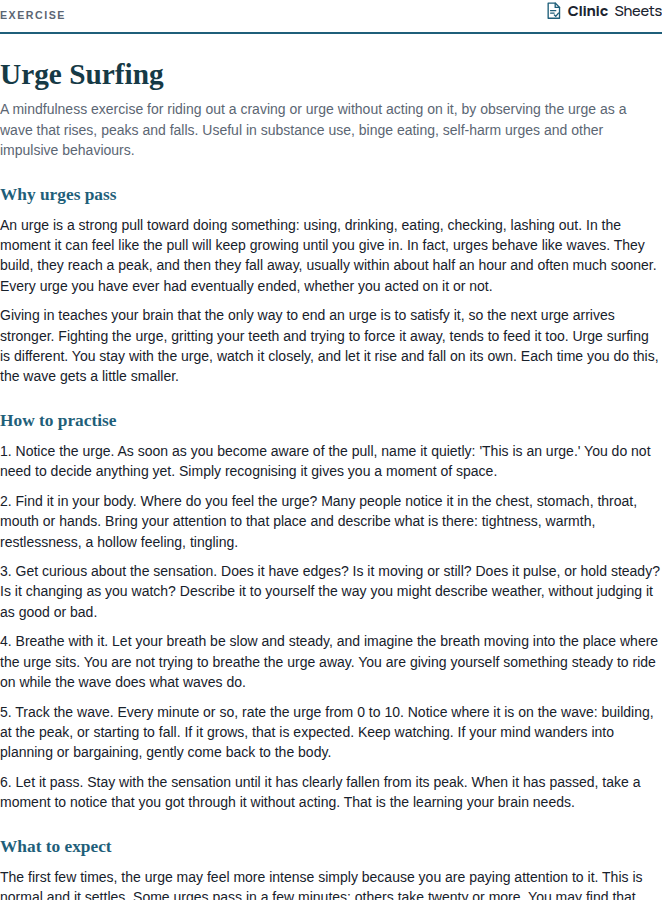
The seven categories give the client a menu rather than a single technique, which matters because what works in one crisis may not work in another. Activities occupy the hands and mind. Contributing shifts attention outward. Comparisons put the present moment in perspective. Opposite emotions change the emotional channel. Pushing away sets the problem aside deliberately and temporarily. Thoughts fill the mind with neutral content. Sensations use strong physical input to anchor attention.
This handout explains when distraction is the right tool, describes each category with concrete examples, addresses the two skills clients most often misuse (comparisons, which can slide into self-criticism, and pushing away, which can become permanent avoidance), and asks the client to build a personal list in advance. It suits adults and adolescents and is usually taught alongside TIPP and self-soothing.
The professional version adds notes on the evidence for distraction as a short-term regulation strategy, guidance on helping clients tell the difference between skilful distraction and avoidance, and a structure for reviewing which items on the personal list actually got used.
How to use it
- Teach ACCEPTS after the client understands the purpose of crisis survival skills: to tolerate pain without making it worse, not to solve the problem or to feel good.
- Go through each letter with examples, and ask the client for their own. Push for specificity. 'Watch something' is weak; 'the cooking show I have saved' is a plan.
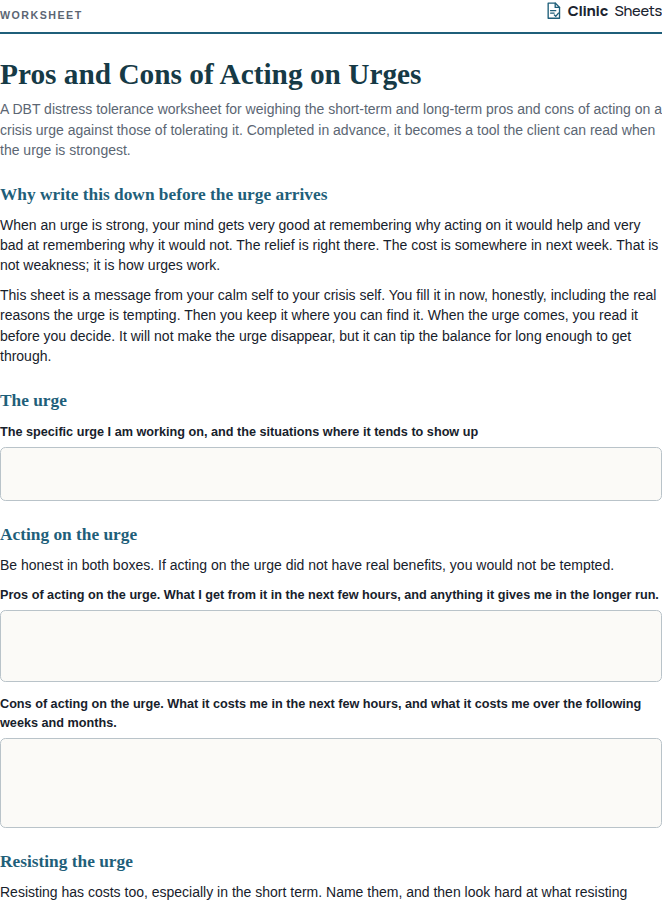
- Discuss the traps explicitly. Comparisons should make the present moment more bearable, not the client more ashamed. Pushing away must have a return date.
- Have the client write a personal ACCEPTS list in session and put it somewhere accessible, such as a phone note. A list made in a crisis is rarely a good one.
- After the client has used the skill, review what worked and what did not, and revise the list. Then link forward: once the crisis has passed, what problem-solving or emotion regulation skill is needed?
References
- Linehan, M. M. (2015). DBT Skills Training Manual (2nd ed.). Guilford Press.
- Rathus, J. H., & Miller, A. L. (2015). DBT Skills Manual for Adolescents. Guilford Press.
- Aldao, A., Nolen-Hoeksema, S., & Schweizer, S. (2010). Emotion-regulation strategies across psychopathology: A meta-analytic review. Clinical Psychology Review, 30(2), 217-237.