Pros and Cons of Acting on Urges
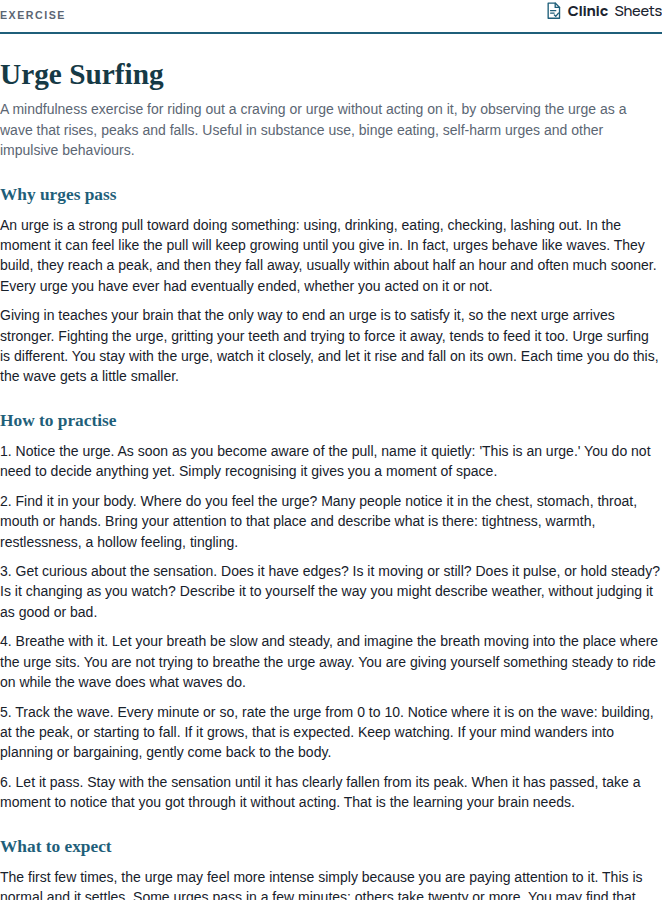
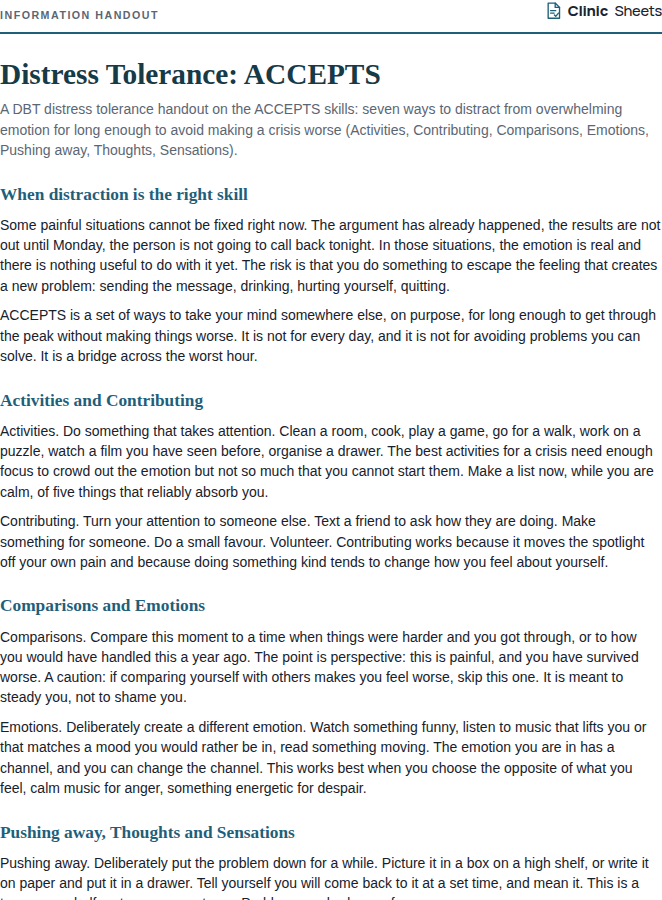
A DBT distress tolerance worksheet for weighing the short-term and long-term pros and cons of acting on a crisis urge against those of tolerating it. Completed in advance, it becomes a tool the client can read when the urge is strongest.
About this resource
Pros and cons is a crisis survival skill from the DBT distress tolerance module, adapted from standard decisional balance methods. Its purpose is to help a person choose not to act on a destructive urge, such as using a substance, self-harming, bingeing, sending an angry message or walking out, at a moment when the urge feels overwhelming and the reasons for resisting it are hard to hold in mind. The core problem in impulsive behaviour is that the immediate benefit of acting is vivid and the delayed costs are abstract. This worksheet makes the delayed costs concrete and puts them on paper where the client can see them.
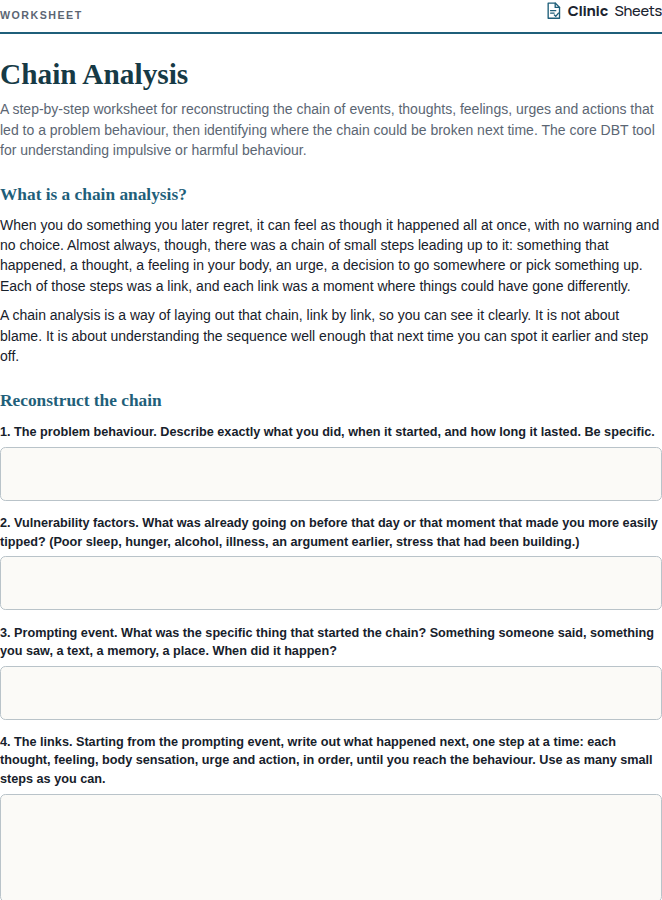
The DBT version differs from a simple two-column list in one important way: it considers four quadrants, not two. The pros and cons of acting on the urge, and the pros and cons of resisting it, are each written out separately, and short-term and long-term consequences are distinguished. This structure prevents the list from becoming a one-sided lecture. Acting on the urge does have real pros, usually immediate relief, and naming them honestly is what makes the client trust the rest of the exercise.
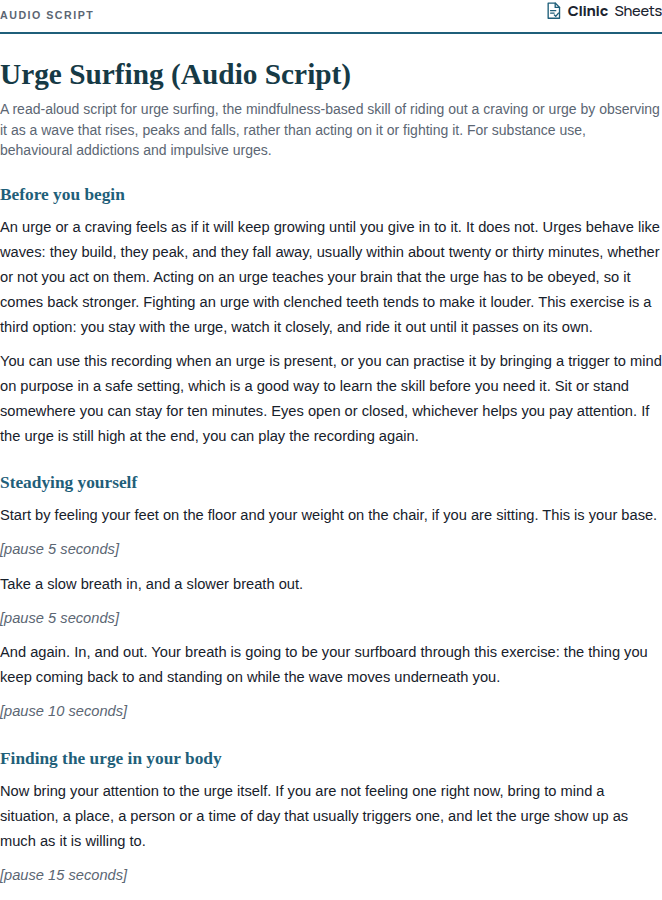
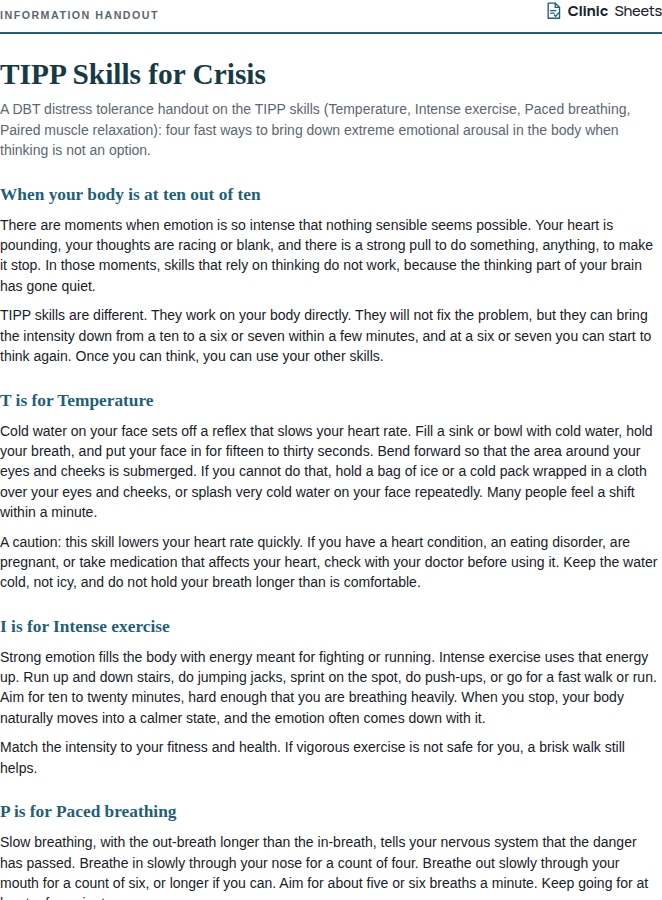
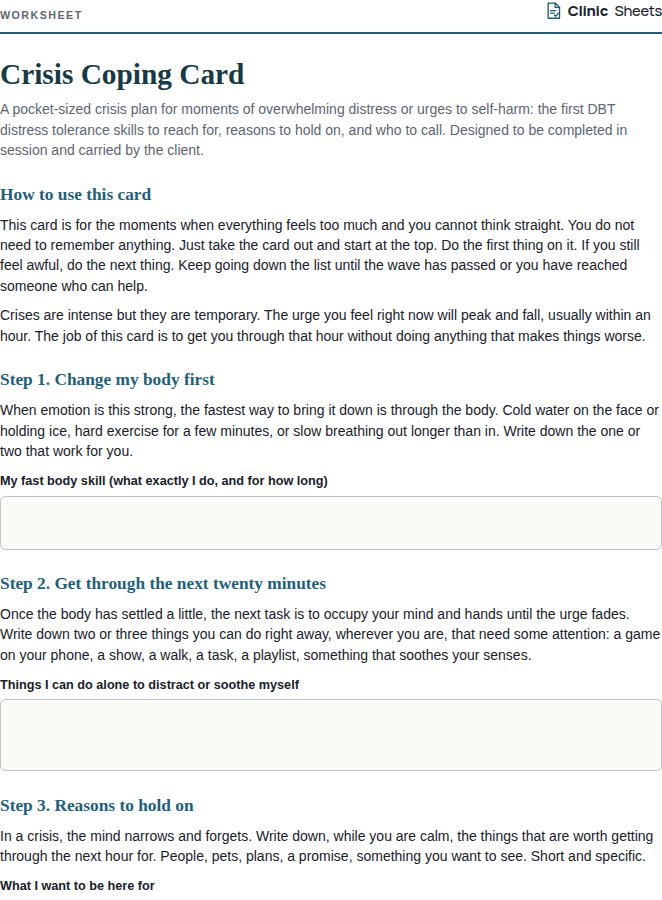
The worksheet is designed to be completed when the client is calm, ideally in session, and then kept where it can be read in a crisis. It suits adults with emotion dysregulation and substance use difficulties, and it pairs naturally with TIPP and ACCEPTS: TIPP brings the arousal down, pros and cons supports the choice, and ACCEPTS gets the person through the next hour.
The professional version includes guidance on completing the sheet without moralising, on helping clients find honest long-term pros of tolerating distress (which they often struggle to name), and on reviewing the sheet after a lapse rather than treating the lapse as evidence the skill failed.
How to use it
- Identify one specific urge with the client, in behavioural terms. 'Drinking when I get home from a bad shift' rather than 'drinking'.
- Complete all four quadrants in session, starting with the pros of acting on the urge. Take these seriously and write them down without comment; the client needs to see that the sheet is honest.
- For each quadrant, distinguish the next few hours from the next few weeks and months. The pattern that emerges, immediate relief versus delayed damage, is the core insight and should be named explicitly.
- Ask the client to rate the strength of the urge before and after completing the sheet. Even a small drop demonstrates that the exercise changes something.
- Have the client photograph the completed sheet or copy the key points into a phone note, and agree on the cue for reading it: at the first sign of the urge, before the decision is made, not after.
References
- Linehan, M. M. (2015). DBT Skills Training Manual (2nd ed.). Guilford Press.
- Miller, W. R., & Rollnick, S. (2013). Motivational Interviewing: Helping People Change (3rd ed.). Guilford Press.
- Dimeff, L. A., & Linehan, M. M. (2008). Dialectical behavior therapy for substance abusers. Addiction Science and Clinical Practice, 4(2), 39-47.