TIPP Skills for Crisis
A DBT distress tolerance handout on the TIPP skills (Temperature, Intense exercise, Paced breathing, Paired muscle relaxation): four fast ways to bring down extreme emotional arousal in the body when thinking is not an option.
About this resource
TIPP skills belong to the crisis survival section of the DBT distress tolerance module. They are used when emotional arousal is so high that the person cannot think clearly, cannot use other skills, and is at risk of acting on urges that will make the situation worse. Rather than working on thoughts or the situation, TIPP skills act directly on the body's physiology to bring arousal down quickly, typically within minutes, so that the person can then use other skills.
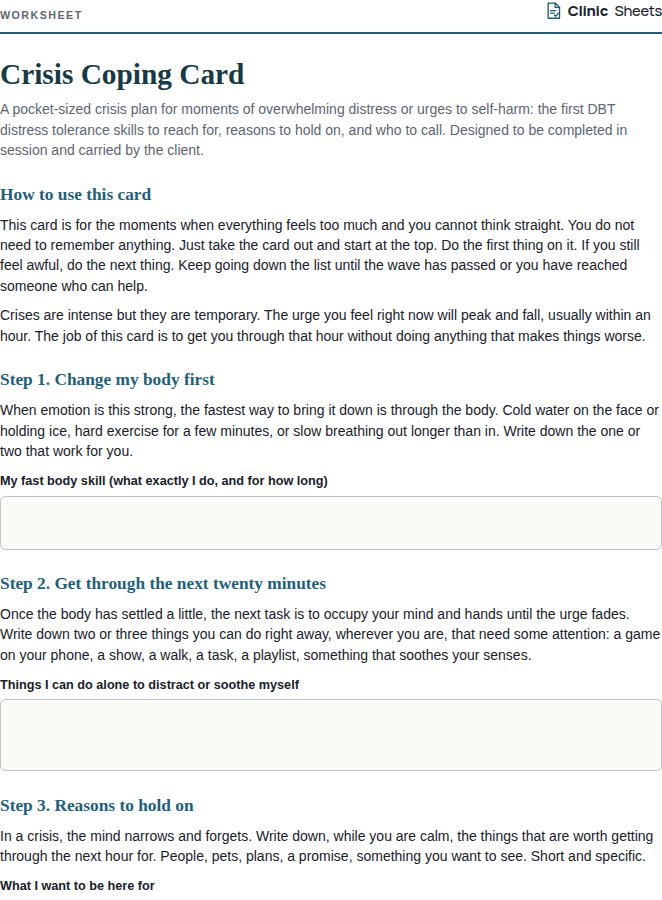
Each skill targets the nervous system in a different way. Cold water on the face triggers the dive reflex, which slows heart rate. Intense exercise burns off the physical energy of the fight-or-flight response. Paced breathing, with the out-breath longer than the in-breath, activates the parasympathetic system. Paired muscle relaxation teaches the body to release tension on cue. None of these solves the problem that caused the crisis. They buy time and lower the temperature so that a solution becomes possible.
This handout describes each skill in enough detail for the client to use it alone, explains why it works in simple terms, includes the necessary safety cautions, and ends with a brief plan for which skill the client will try first. It is written for adults and adolescents and is usually taught early in the distress tolerance module because clients can use it immediately.
The professional version adds guidance on medical screening before recommending cold water and intense exercise (cardiac conditions, eating disorders, pregnancy, certain medications), on practising the skills in session when the client is calm, and on the sequence of TIPP followed by other crisis survival skills.
How to use it
- Before teaching TIPP, screen for medical conditions that make cold water or intense exercise unsafe, and advise the client to check with their doctor if in any doubt. Do not recommend cold water for clients with heart conditions or who are on medication affecting heart rate without medical clearance.
- Present the rationale as body-first: when the emotion is at a nine or ten out of ten, the thinking brain is offline, and skills that need thinking will not work yet. TIPP works on the body so that thinking can come back.
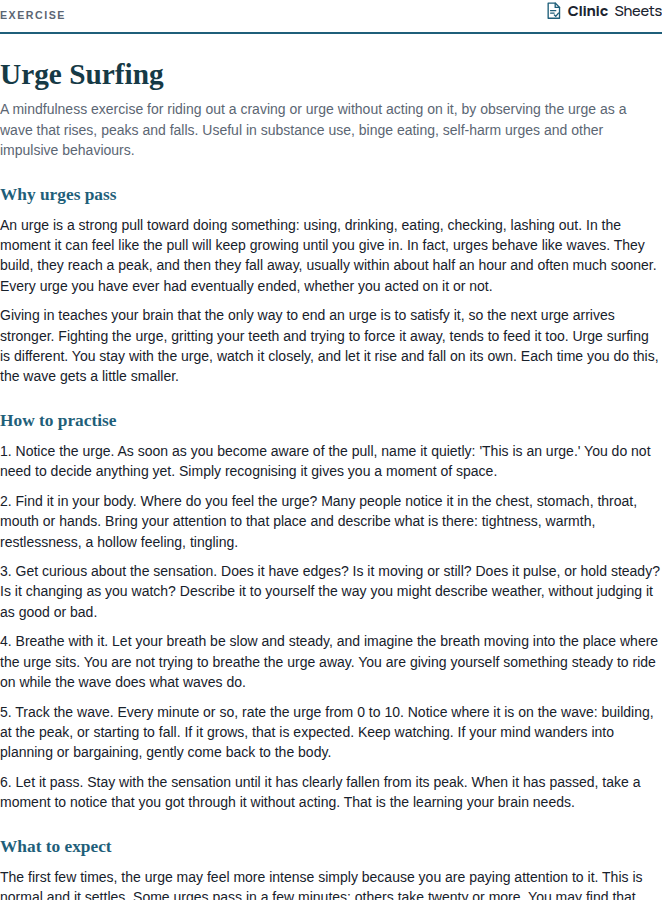
- Practise paced breathing and paired muscle relaxation in session so the client has felt them work when calm. Demonstrate the cold water skill if facilities allow, or ask the client to try it at home and report back.
- Help the client identify the one or two TIPP skills they can realistically use where crises tend to happen (at work, in bed at night, in the car). A skill that needs a gym is not a crisis skill.
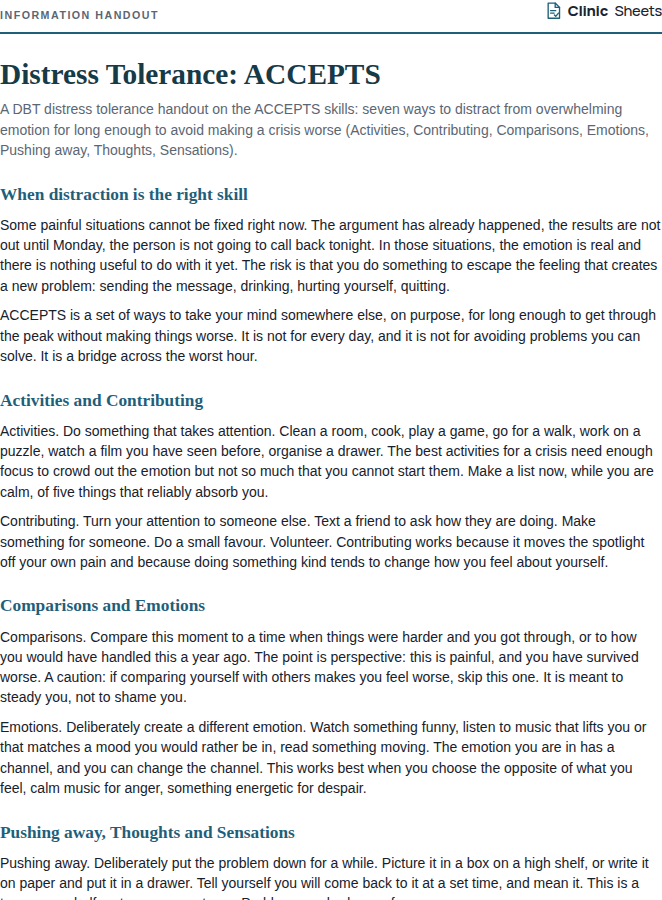
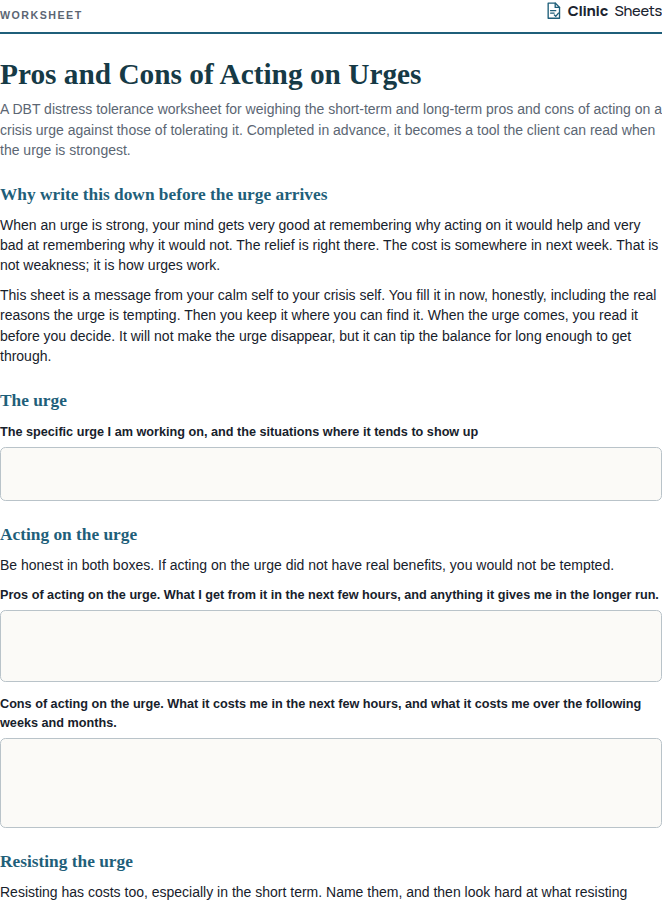
- After a crisis in which TIPP was used, review what happened next. TIPP is the first step, and the client should have a plan for what follows, such as ACCEPTS or a pros and cons list.
References
- Linehan, M. M. (2015). DBT Skills Training Manual (2nd ed.). Guilford Press.
- Rathus, J. H., & Miller, A. L. (2015). DBT Skills Manual for Adolescents. Guilford Press.
- Porges, S. W. (2007). The polyvagal perspective. Biological Psychology, 74(2), 116-143.
- Zaccaro, A., Piarulli, A., Laurino, M., Garbella, E., Menicucci, D., Neri, B., & Gemignani, A. (2018). How breath-control can change your life: A systematic review on psycho-physiological correlates of slow breathing. Frontiers in Human Neuroscience, 12, 353.