Menopause and Mood
A handout on the menopause transition and mental health: why mood, anxiety and sleep often change during perimenopause, how symptoms and thoughts interact, and what cognitive behavioural strategies can help.
About this resource
The menopause transition, or perimenopause, spans several years and is associated for many women with hot flushes and night sweats, disrupted sleep, and changes in mood, anxiety and concentration. Depression and anxiety symptoms are more common during this period, particularly in women with a prior history, and the interaction between vasomotor symptoms, poor sleep and low mood can be difficult to untangle. Menopause is also often a period of accumulated life stress: ageing parents, adolescent or adult children, career pressure, and changing sense of self, all of which contribute.
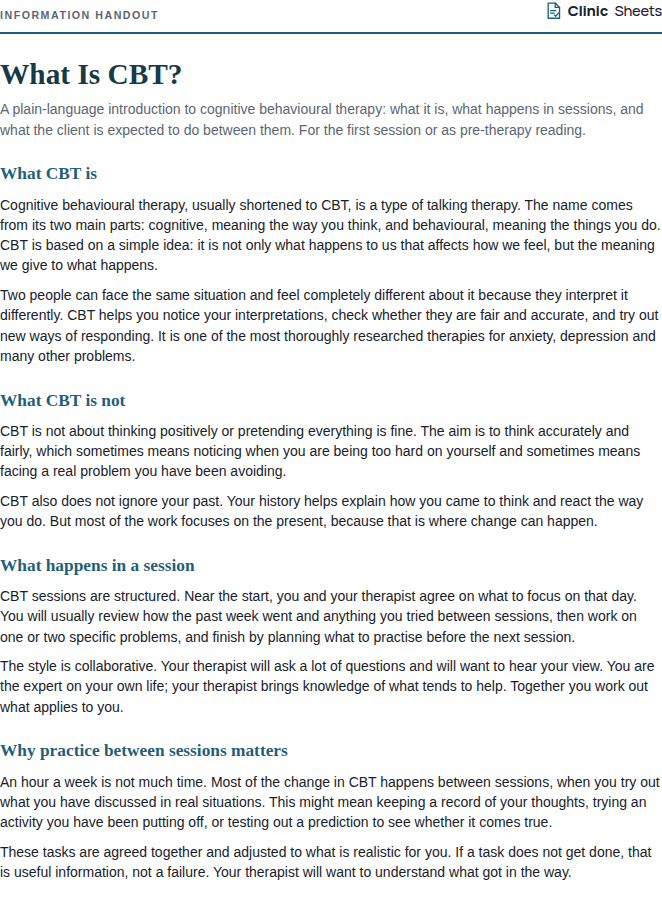
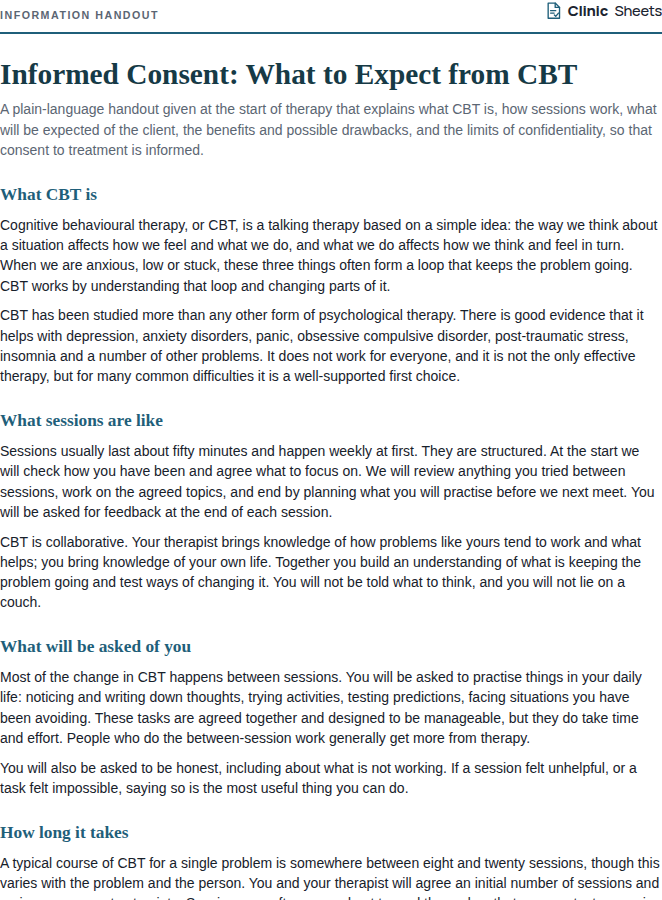
Cognitive behavioural therapy has a specific evidence base for menopausal symptoms. Hunter and colleagues developed a CBT protocol targeting hot flushes and night sweats through psychoeducation, paced breathing, cognitive work on the beliefs that make symptoms more distressing (for example that others are noticing and judging), behavioural strategies, and sleep management. The MENOS trials found that group and self-help CBT reduced the problem rating of hot flushes and night sweats and improved sleep and mood, and CBT is recommended in the North American Menopause Society position statement on non-hormonal management of vasomotor symptoms. This handout adapts the core ideas for clients whose main concern is mood and anxiety during the transition.
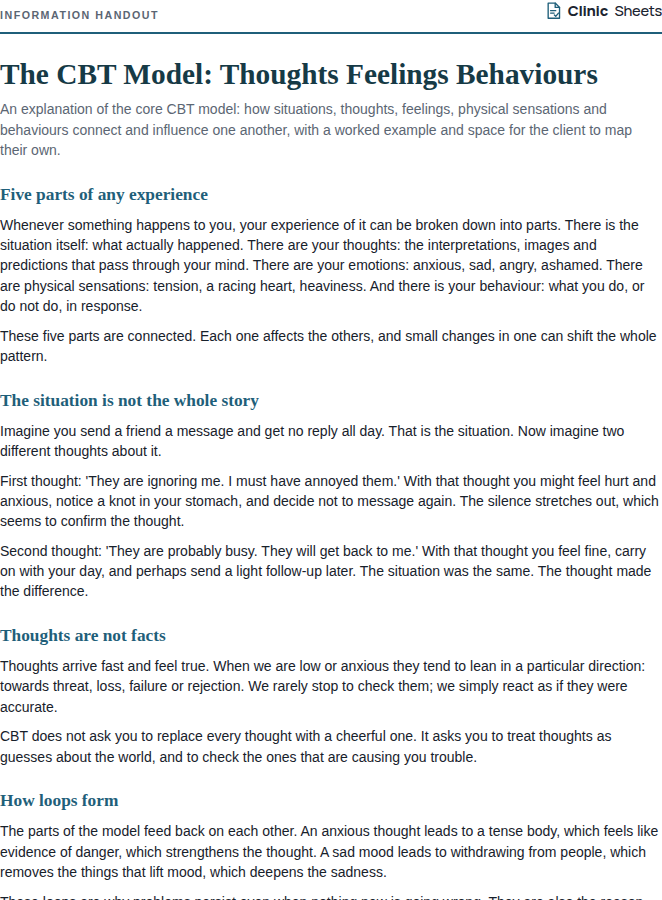
The handout explains the transition, the links between symptoms, sleep and mood, and the cognitive behavioural cycle in which anxious or self-critical appraisals of symptoms amplify them. It then outlines practical strategies: paced breathing during a flush, addressing catastrophic and shame-based thoughts, sleep strategies drawn from CBT-I, and protecting activity and contact when mood dips. It does not give advice about hormone therapy or other medication; those decisions belong with the client's physician. The professional version notes the importance of assessing for a depressive episode that needs treatment in its own right, and of coordinating with medical care.
How to use it
- Use when a client in midlife reports new or worsening mood, anxiety or sleep difficulties that may be linked to the menopause transition. Assess for a depressive or anxiety disorder and treat accordingly; this handout supports that work rather than replacing it.
- Read the cycle section together and ask the client to identify their own version: the symptom, the thought about it, and the response.
- Teach paced breathing and rehearse it in session for use at the onset of a flush or a surge of anxiety.
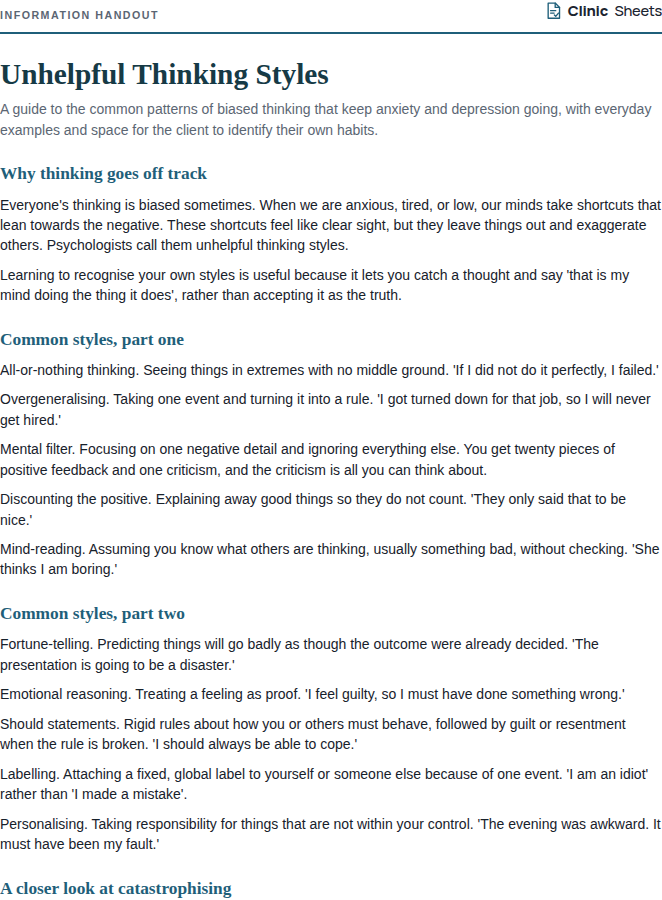
- Target beliefs about symptoms being visible, shameful or a sign of decline with thought records and, where useful, surveys or behavioural experiments.
- Address sleep directly using CBT-I principles, and encourage the client to discuss medical options with their physician without giving medical advice yourself.
References
- Hunter, M. S., & Smith, M. (2021). Managing Hot Flushes and Night Sweats: A Cognitive Behavioural Self-help Guide to the Menopause (2nd ed.). Routledge.
- Ayers, B., Smith, M., Hellier, J., Mann, E., & Hunter, M. S. (2012). Effectiveness of group and self-help cognitive behavior therapy in reducing problematic menopausal hot flush and night sweat symptoms (MENOS 2): A randomized controlled trial. Menopause, 19(7), 749-759.
- The North American Menopause Society. (2023). The 2023 nonhormone therapy position statement of The North American Menopause Society. Menopause, 30(6), 573-590.