Moral Injury
A client handout explaining moral injury: the lasting guilt, shame, anger and loss of trust that can follow doing, failing to prevent, or witnessing acts that violate deeply held moral beliefs. Distinguishes moral injury from fear-based trauma and introduces a compassionate approach to repair.
About this resource
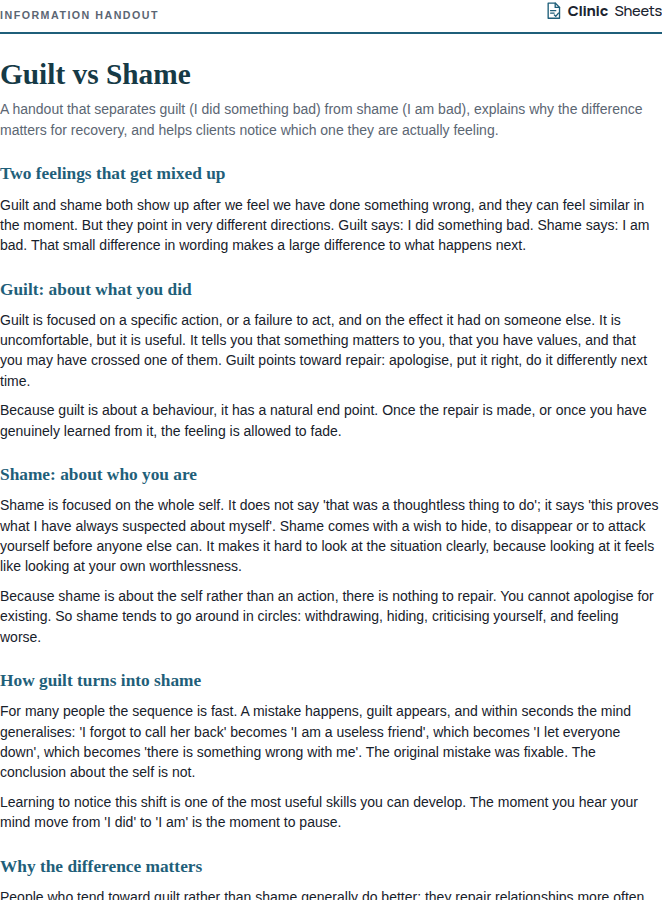
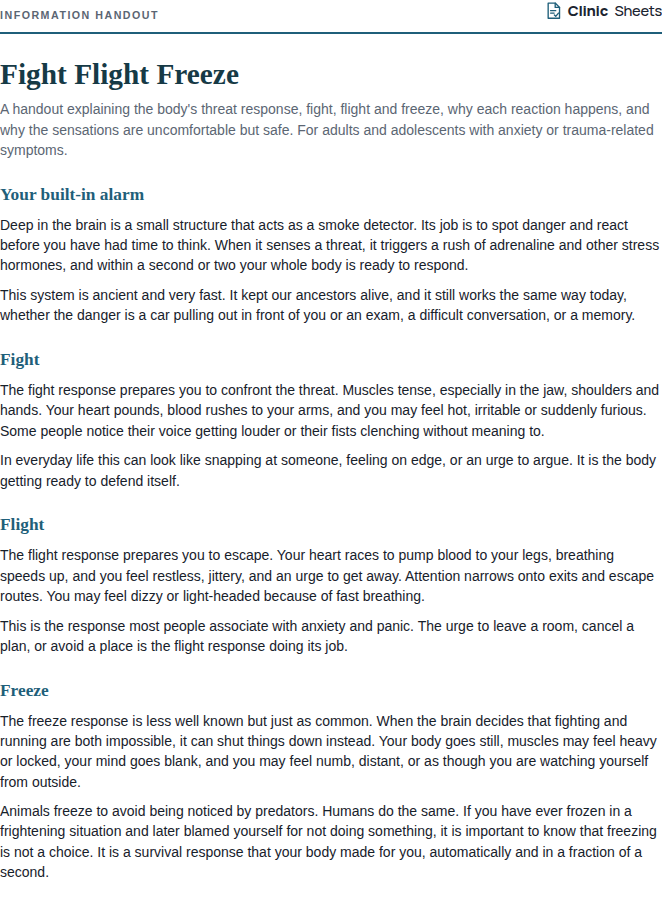
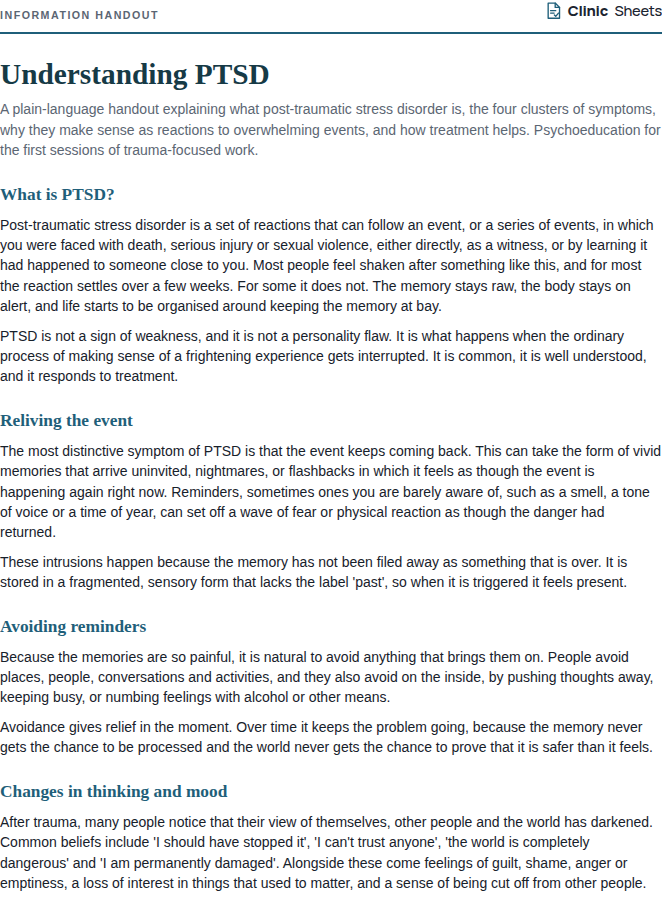
Moral injury describes the psychological, social and spiritual harm that can follow events in which a person perpetrates, fails to prevent, or witnesses acts that transgress their deeply held moral beliefs, or is betrayed by a trusted authority in a high-stakes situation. The concept was developed in work with military veterans, notably by Shay and by Litz and colleagues, and has since been applied to healthcare workers, first responders, and others who make consequential decisions under pressure. It is not a diagnosis. It frequently co-occurs with PTSD but its emotional signature is different: where PTSD is organised around fear and threat, moral injury is organised around guilt, shame, anger and a loss of faith in oneself, others or the world.
Recognising moral injury matters clinically because fear-based interventions on their own may miss it, and because the client's beliefs about their own culpability often need careful, respectful examination rather than reassurance. Litz and colleagues' model proposes that moral injury is maintained by global, internal attributions ('I am a monster'), withdrawal from others, and self-punishment, and that repair involves accurate contextual appraisal of the event, re-engagement with community, self-forgiveness where warranted, and reparative action. Compassion-focused approaches complement this by addressing the shame and self-criticism that block the process.
This handout helps clients name what they are experiencing, understand why guilt and shame persist, and see a path towards repair that neither excuses nor condemns. The professional version notes the importance of not rushing to relieve guilt (which clients may experience as dismissal), the role of chaplaincy or spiritual care where the client wishes it, and the need to assess for suicidal ideation, which is elevated in the presence of moral injury.
How to use it
- Use when a client's distress after an event is dominated by guilt, shame or anger at betrayal rather than fear, or when standard trauma treatment has reduced re-experiencing but left a sense of being irredeemable.
- Read the definitions together and ask the client which kind of event applies: something they did, something they failed to prevent, something they witnessed, or a betrayal. Let them describe it in as much or as little detail as they choose.
- Resist early reassurance. Acknowledge that something real may have happened and that your role is to help them look at it accurately and fully, including context, intent, constraints and what they have done since.
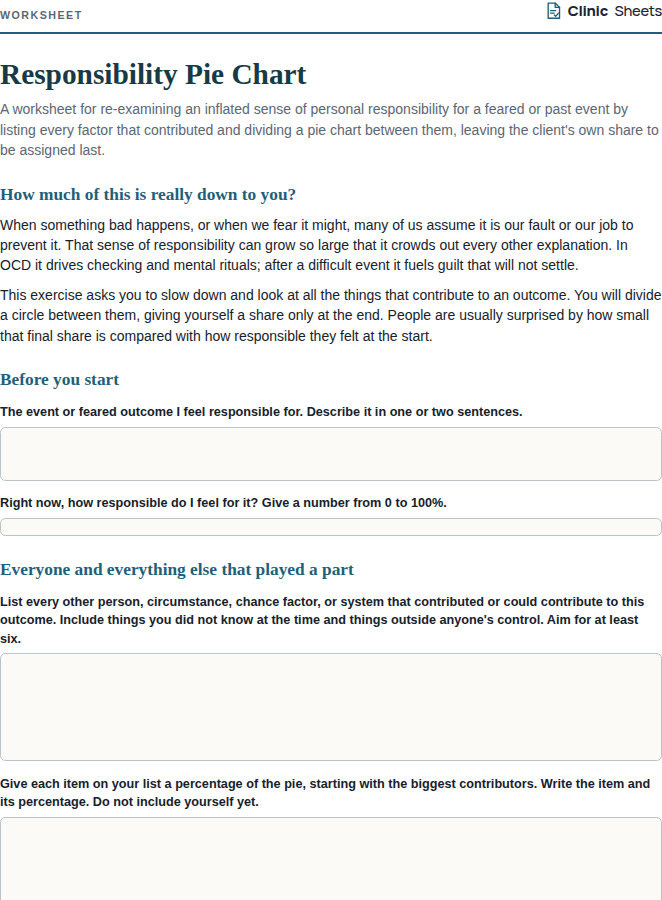
- Use the reflection fields to begin distinguishing between responsibility that is fairly theirs and responsibility that belongs to circumstances, others or systems.
- Assess suicide risk directly. Moral injury is associated with suicidal thinking, and shame can make clients reluctant to raise it. Where relevant, involve chaplaincy, peer support or community structures the client values.
References
- Litz, B. T., Stein, N., Delaney, E., Lebowitz, L., Nash, W. P., Silva, C., & Maguen, S. (2009). Moral injury and moral repair in war veterans: A preliminary model and intervention strategy. Clinical Psychology Review, 29(8), 695-706.
- Shay, J. (2014). Moral injury. Psychoanalytic Psychology, 31(2), 182-191.
- Griffin, B. J., Purcell, N., Burkman, K., Litz, B. T., Bryan, C. J., Schmitz, M., Villierme, C., Walsh, J., & Maguen, S. (2019). Moral injury: An integrative review. Journal of Traumatic Stress, 32(3), 350-362.
- Gilbert, P. (2009). The Compassionate Mind: A New Approach to Life's Challenges. Constable.