My Two Homes Plan
A problem-solving worksheet for a child moving between two homes after parental separation: what works at each home, what is tricky, and a practical plan for the things the child can influence, such as packing, staying in touch, and handling the switch days.
About this resource
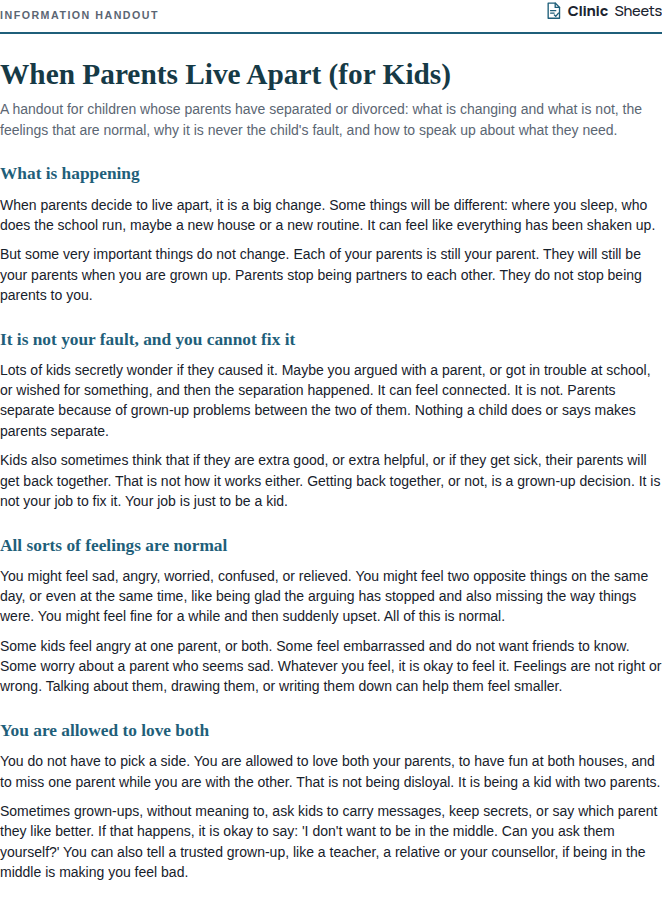
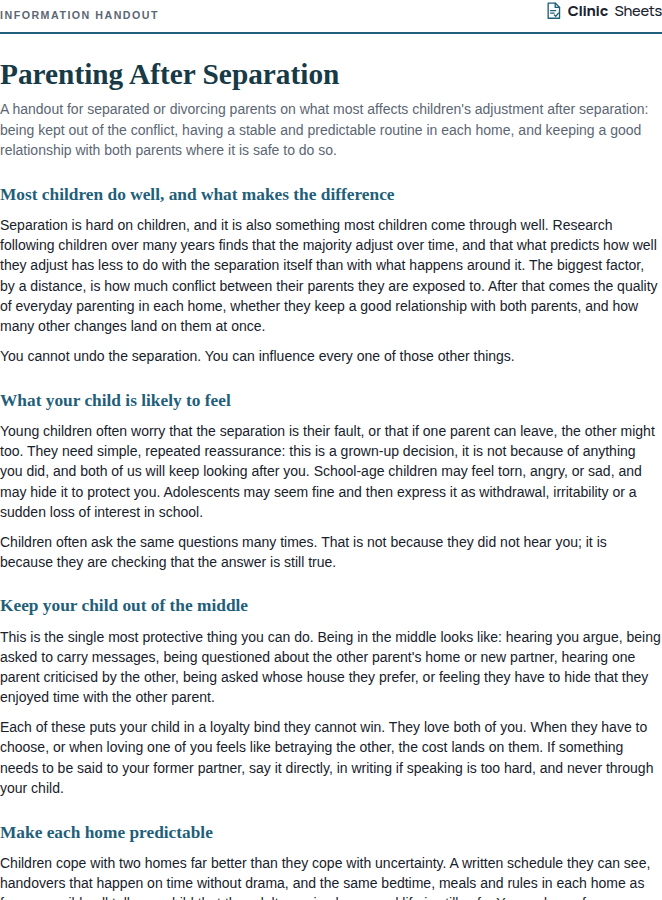
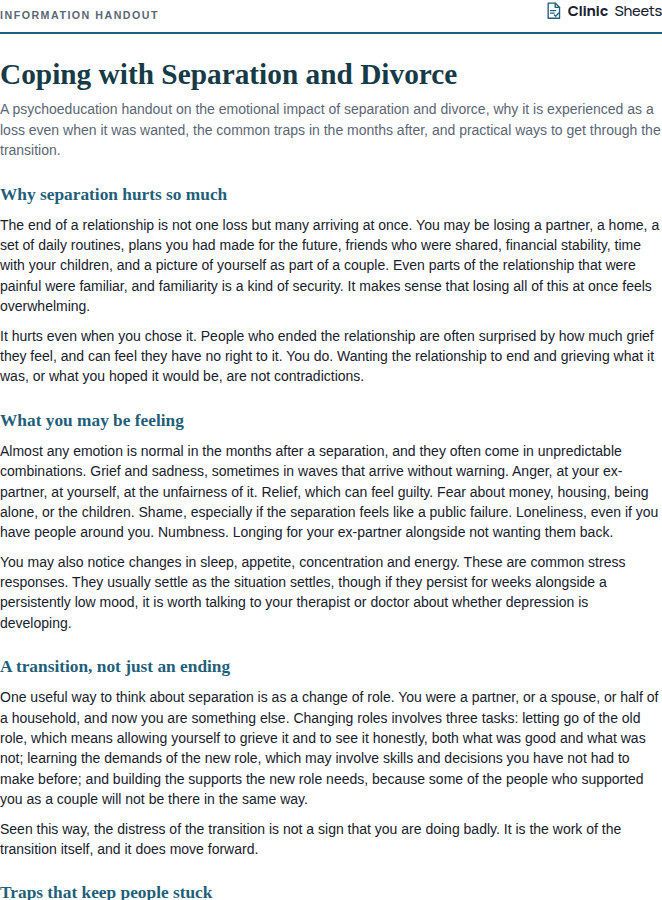
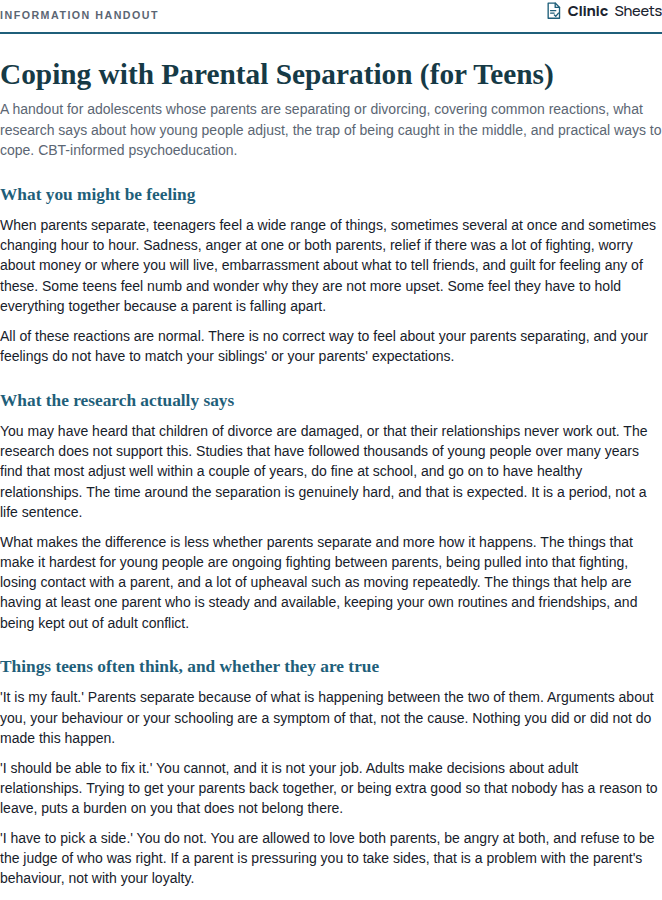
Children living across two homes face a set of practical and emotional problems that adults often underestimate: forgotten homework and belongings, different rules, missing one parent while at the other's house, and the unsettled feeling of transition days. Research on children's adjustment after separation consistently shows that predictability and being kept out of parental conflict are protective, and prevention programs such as Pedro-Carroll's Children of Divorce Intervention Program and the New Beginnings Program include child-focused coping and problem-solving skills alongside parent work. Structured problem solving (define the problem, generate options, choose one, try it, review) is a core CBT skill that children can learn readily when the problems are concrete and their own.
This worksheet gives the child a structured way to sort the two-homes experience into things that are going fine, things that are tricky, and things that are grown-up decisions the child does not control. For the tricky things the child can influence, it walks through a simple problem-solving sequence with a parent's help. It also includes a small section on transitions (how the child likes to say goodbye and hello, and what helps on switch days) and on staying connected with the parent they are not with. It is designed to be completed with a clinician or with one parent, and can be shared with both parents so that the plan is consistent.
The professional version adds guidance on keeping the child's plan focused on what they can control (never on negotiating the custody schedule), on how to share the plan with a high-conflict co-parent without it becoming ammunition, and on recognising when the child's 'tricky things' are actually signs of loyalty conflict or exposure to conflict, which need to be addressed with the parents rather than solved by the child.
How to use it
- Start with the child's map of the two homes: what they like and what feels fine at each. This sets a balanced tone before turning to problems, and often surfaces useful information about routines and relationships.
- List the tricky things without editing. Then sort them together: things the child can do something about (packing, remembering, asking for a call), things the parents need to sort out (schedules, rules, money), and things nobody can change right now. Be clear that the child's plan is only for the first pile.
- Pick one or two problems and walk through the steps: what the problem is exactly, three possible ideas, the best one to try, and how we will know it worked. Rehearse any asking the child needs to do.
- Complete the transitions section. Switch days are often the hardest part of the week. A predictable goodbye ritual and a low-key first hour at the other home help many children.
- With the child's consent, share the plan with both parents, framed as the child's practical requests. Keep parental disagreements out of the child's worksheet; take those up separately.
- Review after two weeks. Celebrate what worked, adjust what did not, and move on to another tricky thing if the child wants to.
References
- Pedro-Carroll, J. (2010). Putting Children First: Proven Parenting Strategies for Helping Children Thrive Through Divorce. Avery.
- Kelly, J. B., & Emery, R. E. (2003). Children's adjustment following divorce: Risk and resilience perspectives. Family Relations, 52(4), 352-362.
- Wolchik, S. A., Sandler, I. N., Millsap, R. E., et al. (2002). Six-year follow-up of preventive interventions for children of divorce: A randomized controlled trial. JAMA, 288(15), 1874-1881.