Caregiver Stress and Burnout
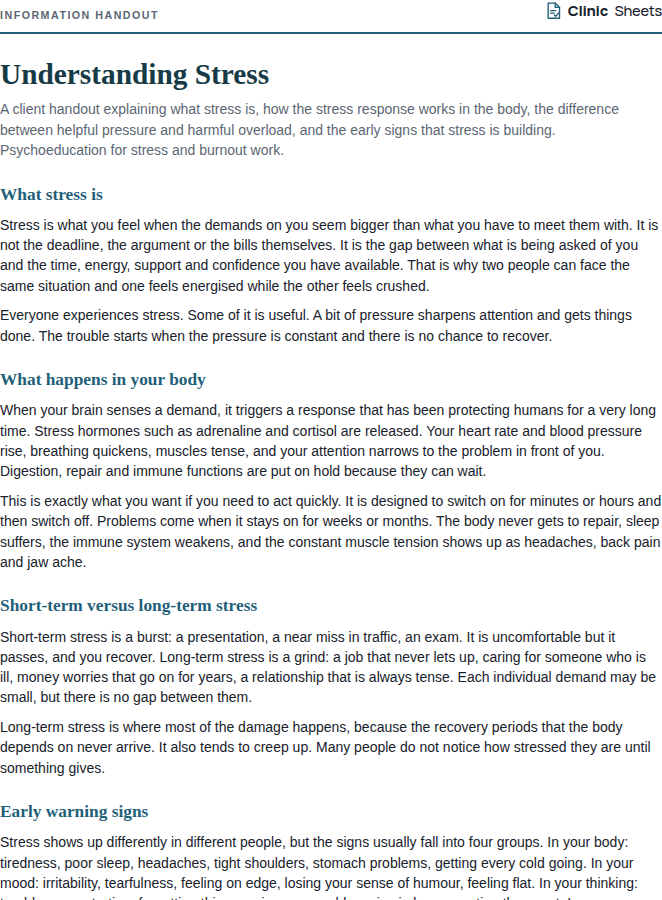
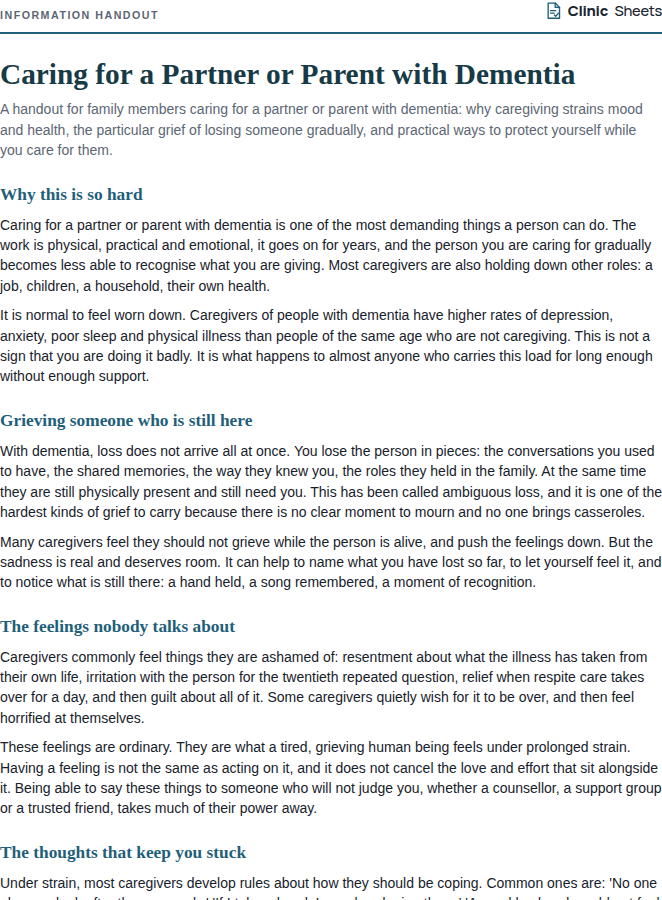
A handout for parents and caregivers on recognising the signs of caregiver stress and burnout, understanding the unrelenting standards that often drive it, and rebuilding the balance between what is demanded and what restores you.
About this resource
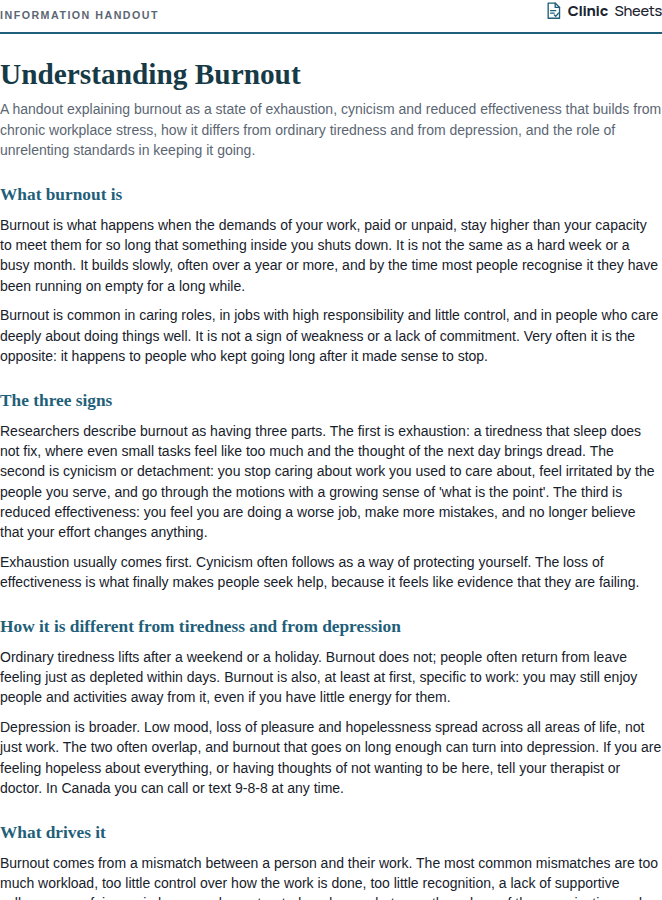
Caregiver burnout, whether in parents of young or high-needs children or in adults caring for an ill or ageing relative, is increasingly recognised as a distinct syndrome rather than simply tiredness. Mikolajczak and Roskam's work on parental burnout describes an exhaustion related to the caregiving role, emotional distancing from the person cared for, a sense of being fed up with the role, and a contrast with how one used to be as a caregiver. Their balance model frames burnout as the result of a chronic imbalance between demands (risks) and resources, and it maps closely onto the classic occupational burnout dimensions of exhaustion, cynicism and reduced efficacy described by Maslach.
This handout helps caregivers recognise burnout in themselves, distinguishes it from ordinary tiredness, and introduces the demands-and-resources balance. It pays particular attention to the internal driver that keeps many caregivers stuck: unrelenting standards, the belief that a good parent or carer should always be patient, always available and never resentful. From a compassion-focused perspective, this self-criticism activates the threat system and depletes the very resources the caregiver needs. The handout closes with practical steps for reducing demands, adding resources, and treating oneself with the same understanding one extends to the person being cared for.
The professional version adds notes on screening for depression alongside burnout, on the link between parental burnout and neglectful or harsh behaviour toward the child (which makes intervention protective for the child as well as the parent), on the guilt that stops caregivers from accepting help, and on when respite or a referral for the cared-for person's needs is the most useful intervention.
How to use it
- Use when a parent or carer presents with exhaustion, irritability, guilt or a sense of going through the motions. Ask about the four features (exhaustion, emotional distance, being fed up with the role, contrast with their former self) in plain language.
- Screen for depression and for risk to the cared-for person. Burnout and depression overlap, and burnout can make harsh or neglectful behaviour more likely.
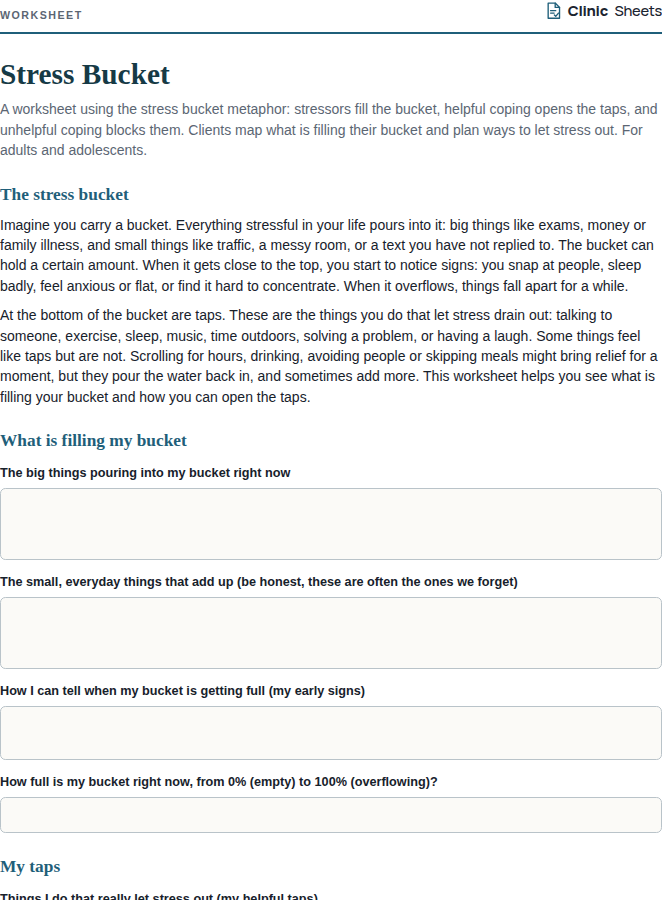
- Complete the demands and resources balance together. Most caregivers can list demands easily and resources with difficulty; the difficulty is itself informative.
- Identify the unrelenting standard. Ask what the client believes a 'good enough' caregiver does, and where that belief came from. Work on it with cognitive or compassion-focused methods as appropriate.
- Agree one concrete reduction in demands and one concrete addition of resources for the coming fortnight. Small and actual beats large and aspirational.
References
- Mikolajczak, M., & Roskam, I. (2018). A theoretical and clinical framework for parental burnout: The balance between risks and resources (BR2). Frontiers in Psychology, 9, 886.
- Maslach, C., Schaufeli, W. B., & Leiter, M. P. (2001). Job burnout. Annual Review of Psychology, 52, 397-422.
- Gilbert, P. (2009). The Compassionate Mind: A New Approach to Life's Challenges. Constable.
- Neff, K. (2011). Self-Compassion: The Proven Power of Being Kind to Yourself. William Morrow.