Pet Loss
A handout on grieving the death of a companion animal, written for adults and for children. It validates the loss, explains why it is often dismissed by others, addresses guilt around euthanasia decisions, and includes a section for parents helping a child grieve.
About this resource
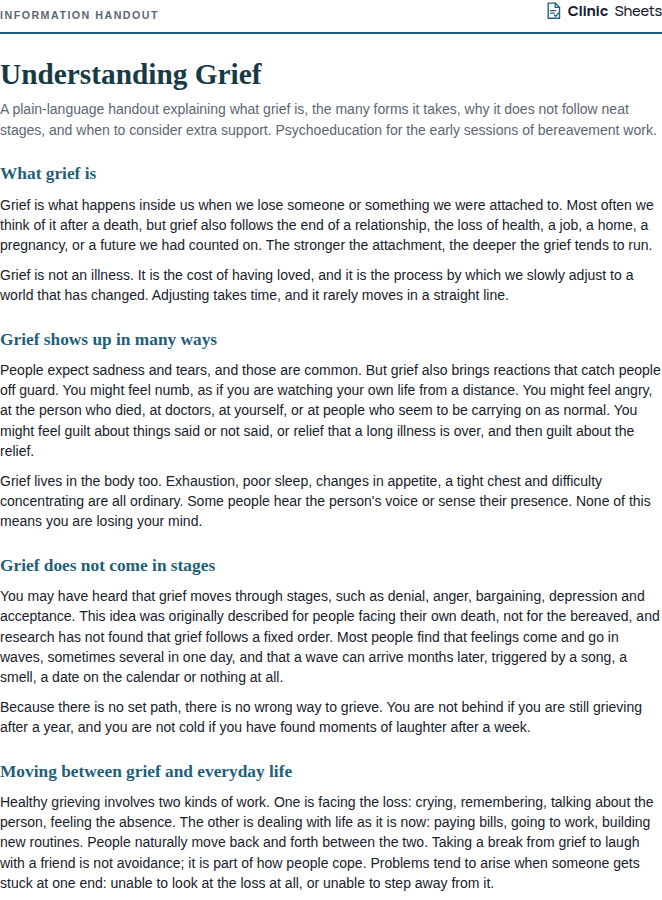
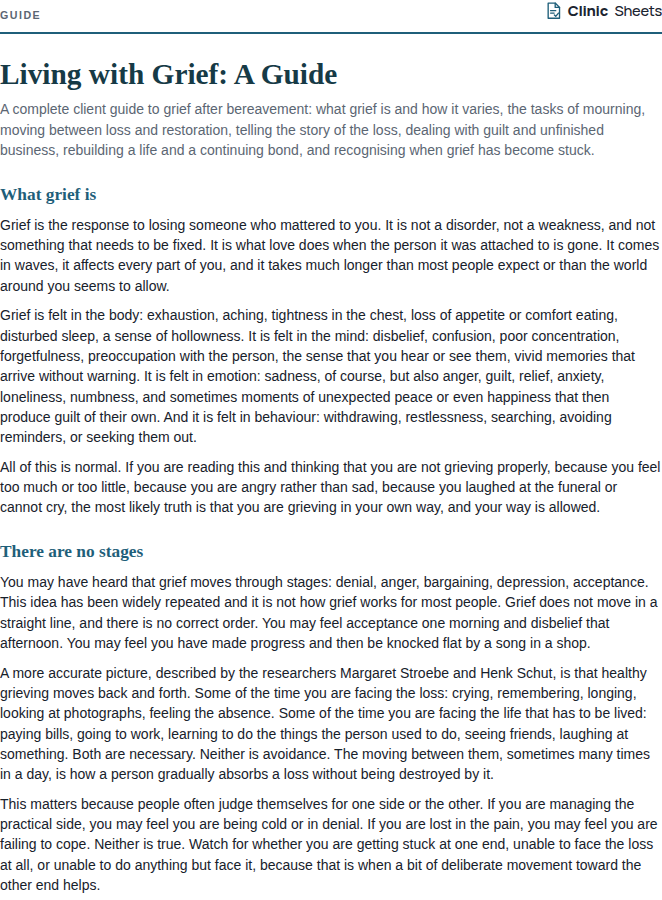
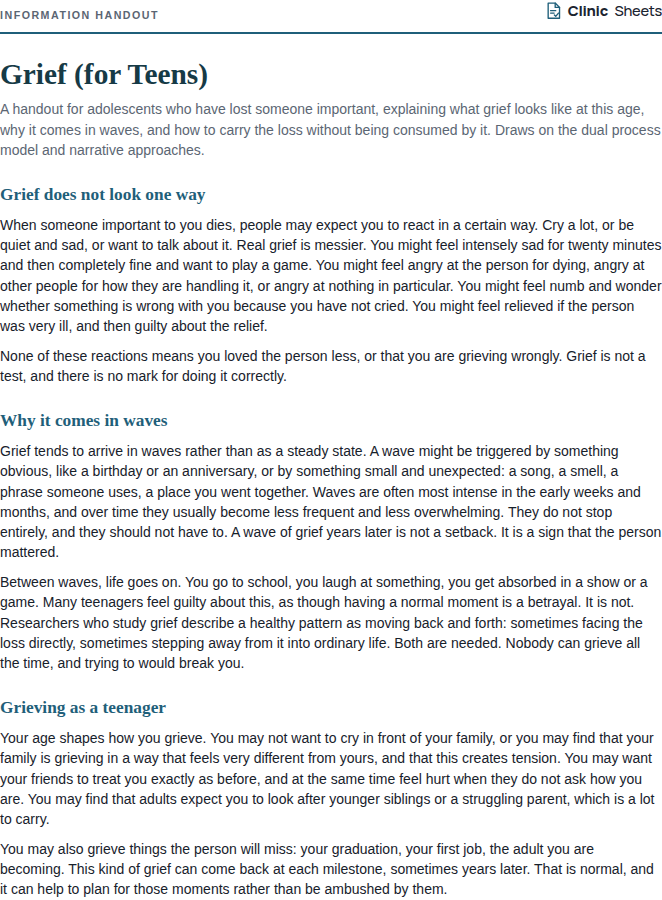
The death of a pet can produce grief that is as intense as grief for a person, particularly where the animal was a daily companion, a source of routine and touch, or a link to another period of life. Because society offers few rituals for animal death and many people regard the loss as minor, pet grief is a classic example of what Doka calls disenfranchised grief: real grief that is not socially sanctioned. Research on continuing bonds after pet loss suggests that maintaining a connection to the animal through memories and objects is associated with adjustment rather than hindering it.
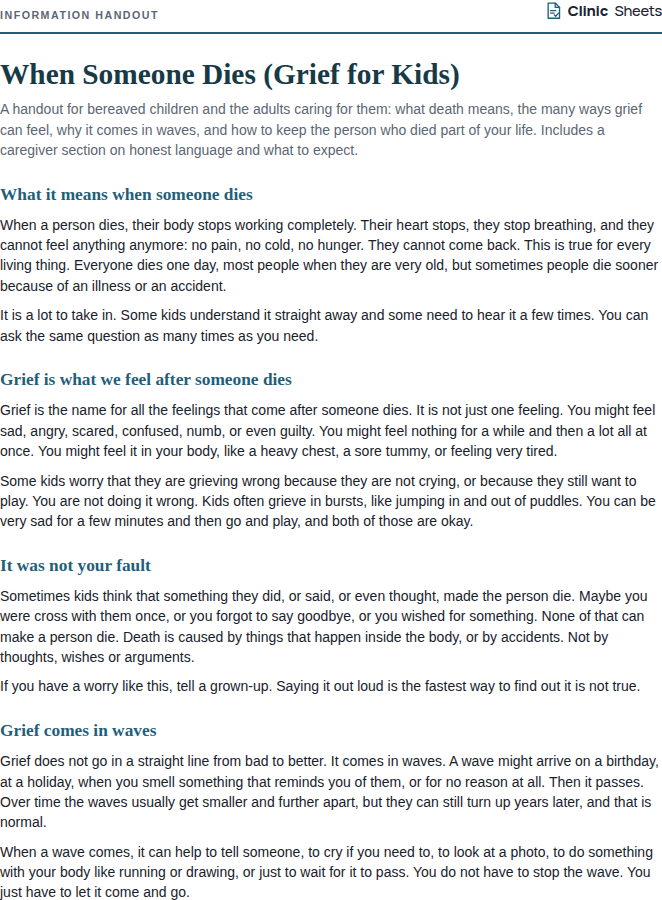
This handout normalises the intensity of the loss, addresses the guilt that commonly follows euthanasia decisions or accidental deaths, discusses the effect on daily routine, and offers ways to remember the animal. It is written so that adults can read it themselves and then use the children's section with a child, and it closes with guidance for parents and caregivers on talking to children about a pet's death.
The professional version adds notes on when pet loss may be reactivating earlier bereavements, and on the particular weight of the loss for people who live alone or for whom the animal was a primary attachment.
How to use it
- Ask about the animal by name and about the role it played in the client's day. Treat the loss with the same seriousness as any bereavement.
- If guilt about a euthanasia decision or a preventable death is present, use the guilt section to draw out the specific belief and examine it against what the client knew at the time.
- For a child client, read the children's section together and let the child lead with questions. Give the parent section to the caregiver.
- Explore whether this loss is connected to earlier losses or to isolation, and adjust the focus of treatment accordingly.
- Encourage a concrete act of remembrance if the client wishes it; the fields at the end can be used to plan one.
References
- Doka, K. J. (Ed.). (2002). Disenfranchised grief: New directions, challenges, and strategies for practice. Research Press.
- Packman, W., Field, N. P., Carmack, B. J., & Ronen, R. (2011). Continuing bonds and psychosocial adjustment in pet loss. Journal of Loss and Trauma, 16(4), 341-357.
- Worden, J. W. (2018). Grief counseling and grief therapy: A handbook for the mental health practitioner (5th ed.). Springer.