Caring for a Partner or Parent with Dementia
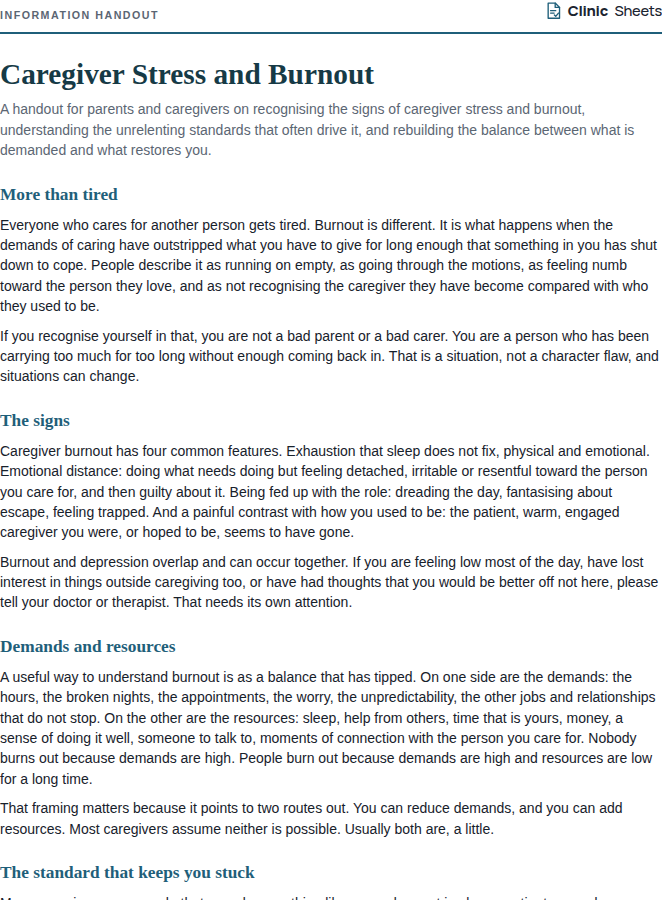
A handout for family members caring for a partner or parent with dementia: why caregiving strains mood and health, the particular grief of losing someone gradually, and practical ways to protect yourself while you care for them.
About this resource
Family caregivers of people with dementia carry a distinctive load. The work is long, often lasting years, and it grows heavier as the illness progresses. Alongside the practical demands there is a form of grief that begins long before death: the person is physically present but changing, and the relationship that used to sustain the caregiver is slowly lost. Caregivers show higher rates of depression, anxiety, sleep disturbance and physical illness than non-caregivers of the same age, and many delay seeking help for themselves because it feels disloyal.
This handout draws on cognitive behavioural work with caregivers, particularly the coping-strategy approach evaluated in the START trial, and on compassion-focused therapy. It normalises the mixed feelings caregivers rarely say aloud (resentment, relief at respite, guilt about both), explains ambiguous loss, and offers a small number of concrete strategies: noticing and answering self-critical thoughts, planning for respite before it is desperately needed, and keeping some activity that belongs to the caregiver alone.
The professional version adds guidance on screening caregivers for depression and burnout, on the risk signs that should prompt a referral to community supports or a physician, and on how to raise respite and future planning without the caregiver hearing it as a suggestion to give up.
How to use it
- Offer this handout when a caregiver presents with low mood, exhaustion or anxiety, or when caregiving comes up as a stressor in a client's own therapy. Read the first two sections together so the caregiver hears that their reactions are expected.
- Screen for depression and burnout directly. The PHQ-9 is adequate for mood; ask separately about sleep, physical health and whether the caregiver has seen their own physician in the past year.
- Work through the section on unhelpful thoughts using one of the caregiver's own recent examples. Caregivers often hold rules such as 'no one else can do it properly' or 'a good daughter would not need a break', and these are the thoughts that block respite.
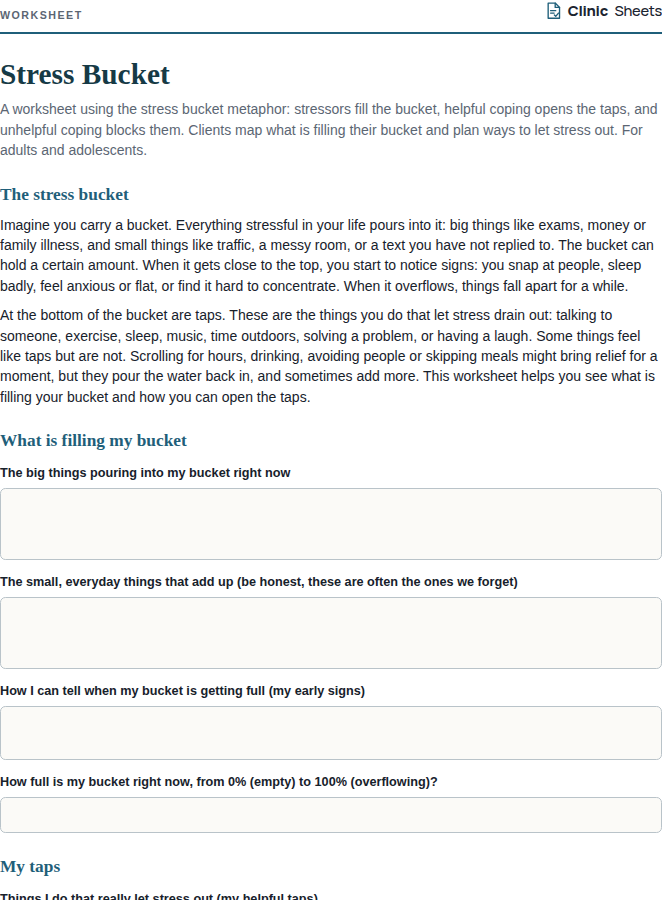
- Help the caregiver name one form of support they will arrange in the next two weeks and one activity of their own they will protect. Write these in the reflection fields and review them next session.
- Refer to the local Alzheimer Society or equivalent community organisation for caregiver education and support groups, and encourage the caregiver to complete power of attorney and care planning while the person with dementia can still participate.
References
- Livingston, G., Barber, J., Rapaport, P., Knapp, M., Griffin, M., King, D., Livingston, D., Mummery, C., Walker, Z., Hoe, J., Sampson, E. L., & Cooper, C. (2013). Clinical effectiveness of a manual based coping strategy programme (START, STrAtegies for RelaTives) in promoting the mental health of carers of family members with dementia: Pragmatic randomised controlled trial. BMJ, 347, f6276.
- Schulz, R., & Sherwood, P. R. (2008). Physical and mental health effects of family caregiving. American Journal of Nursing, 108(9 Suppl), 23-27.
- Boss, P. (1999). Ambiguous Loss: Learning to Live with Unresolved Grief. Harvard University Press.
- Gilbert, P. (2009). The Compassionate Mind. Constable.