Separation Anxiety in Children
A handout for parents and caregivers explaining separation anxiety in children: what is normal at each age, what it looks like when it becomes a problem, how avoidance and reassurance keep it going, and how parents can support gradual, confident separations.
About this resource
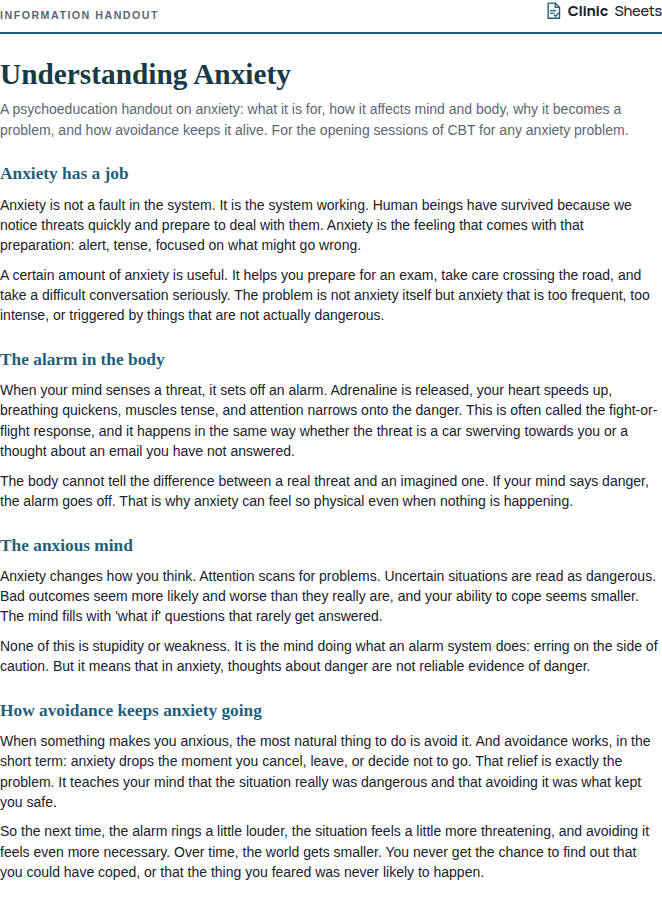
Separation anxiety is a normal developmental stage in infants and toddlers, and mild distress at partings remains common through the early school years. Separation anxiety disorder is diagnosed when the fear is developmentally excessive, persistent, and interferes with school attendance, sleep, social life or family functioning. Children may refuse school, be unable to sleep alone, follow a parent from room to room, worry intensely that harm will come to the parent or to themselves while apart, and produce stomach aches and headaches before separations. Parents naturally respond by staying, returning, reassuring and allowing avoidance, all of which relieve the child in the moment and strengthen the fear over time.
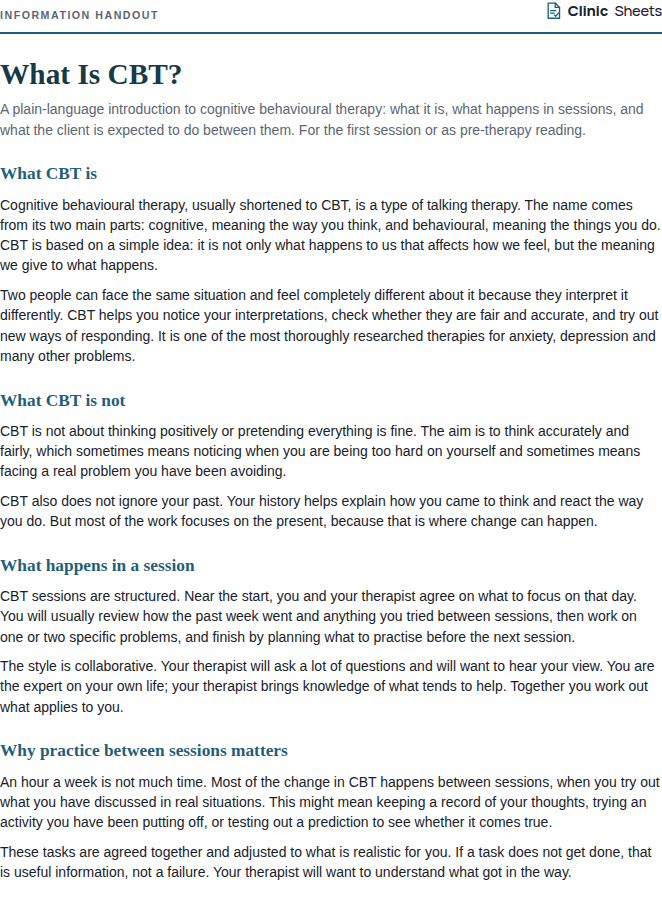
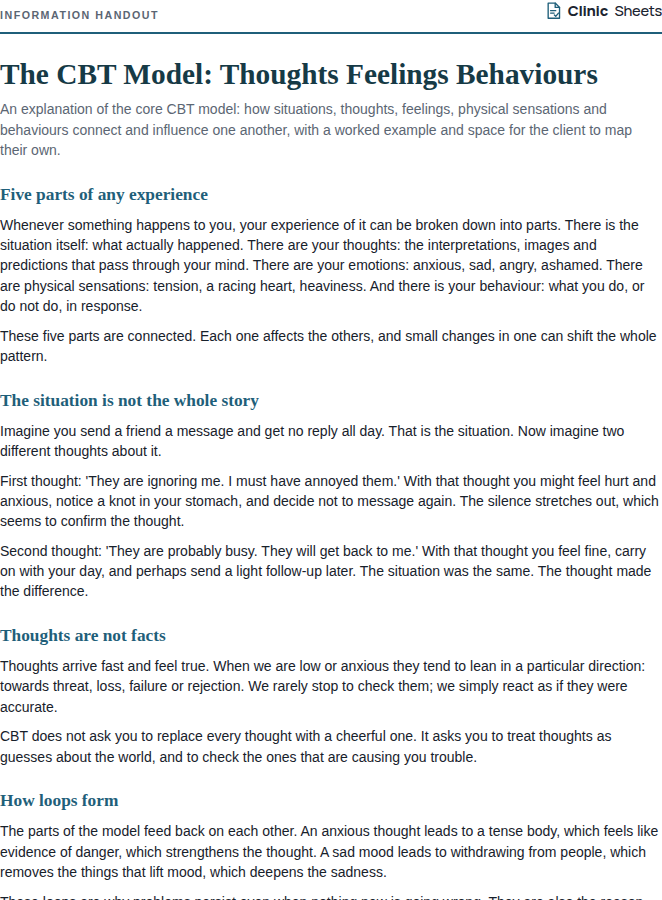
This handout is written for parents and caregivers. It describes the cognitive-behavioural model of child anxiety in plain terms, explains the child's perspective, and sets out the parent-led approach described by Creswell and colleagues and by Rapee and colleagues: helping the child name the worry, building a graded ladder of separations, rewarding brave behaviour, reducing accommodation and reassurance while remaining warm, and modelling calm confidence. It also notes when to seek a fuller assessment.
The professional version adds guidance on distinguishing separation anxiety from school refusal with other causes, on involving schools in a gradual return plan, and on managing parental anxiety, which is often part of the picture.
How to use it
- Use in the first parent session after assessment, once you have a picture of the separations that are difficult and the family's current responses.
- Read the section on the child's perspective together. Parents often swing between frustration and over-protection; understanding the fear as real and the behaviour as a response to it helps them settle in the middle.
- Work through the accommodation and reassurance section and ask parents to identify their own patterns without blame. Most families have several.
- Use the reflection fields to build the first three steps of a separation ladder, and agree the reward and the parting script. Coordinate with the school if attendance is affected.
- Review weekly. Parents need support to stay steady through the temporary rise in protest that follows changes, and to celebrate small steps.
References
- Creswell, C., Parkinson, M., Thirlwall, K., & Willetts, L. (2019). Parent-Led CBT for Child Anxiety: Helping Parents Help Their Kids. Guilford Press.
- Rapee, R. M., Wignall, A., Spence, S. H., Cobham, V., & Lyneham, H. (2008). Helping Your Anxious Child: A Step-by-Step Guide for Parents (2nd ed.). New Harbinger.
- Lebowitz, E. R., Panza, K. E., & Bloch, M. H. (2016). Family accommodation in obsessive-compulsive and anxiety disorders: A five-year update. Expert Review of Neurotherapeutics, 16(1), 45-53.