Sibling Conflict Plan
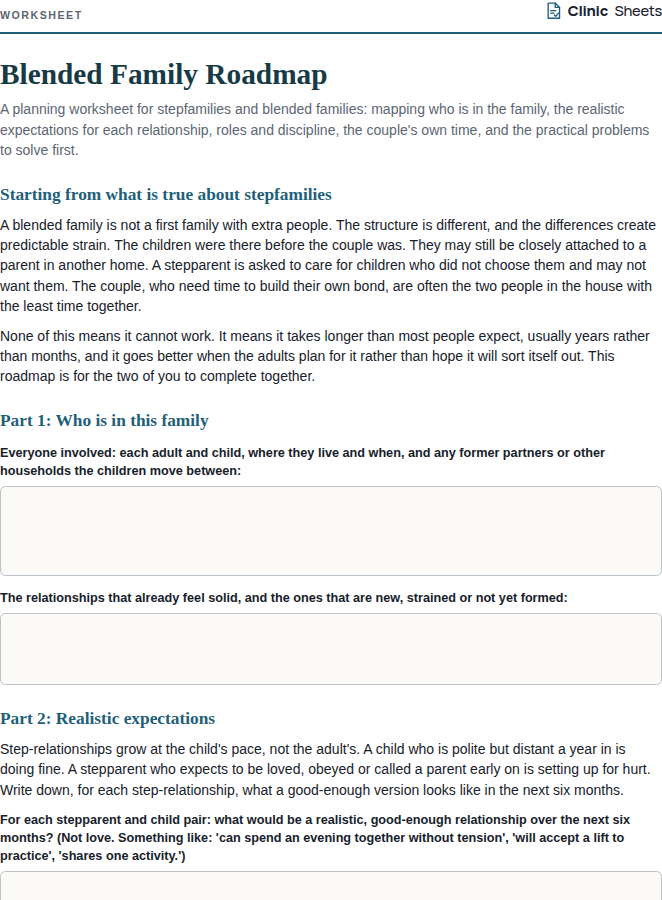
A worksheet for parents to map the pattern behind repeated sibling fights and build a plan that combines clear house rules, coaching the children to solve disputes themselves, and stepping in fairly when it is needed.
About this resource
Sibling conflict is among the most common complaints in families seeking parenting support, and it is also normal: children learn a great deal about negotiation, fairness and emotion from disagreements with a brother or sister. The problem is not conflict itself but conflict that is frequent, escalating, physical, or that the parent is repeatedly pulled into as judge. Research on sibling relationships suggests that the parent's role as referee tends to backfire, because it rewards whoever complains most convincingly and keeps the children from developing their own negotiation skills, whereas coaching children through a simple mediation process improves both the immediate dispute and their later conflict understanding.
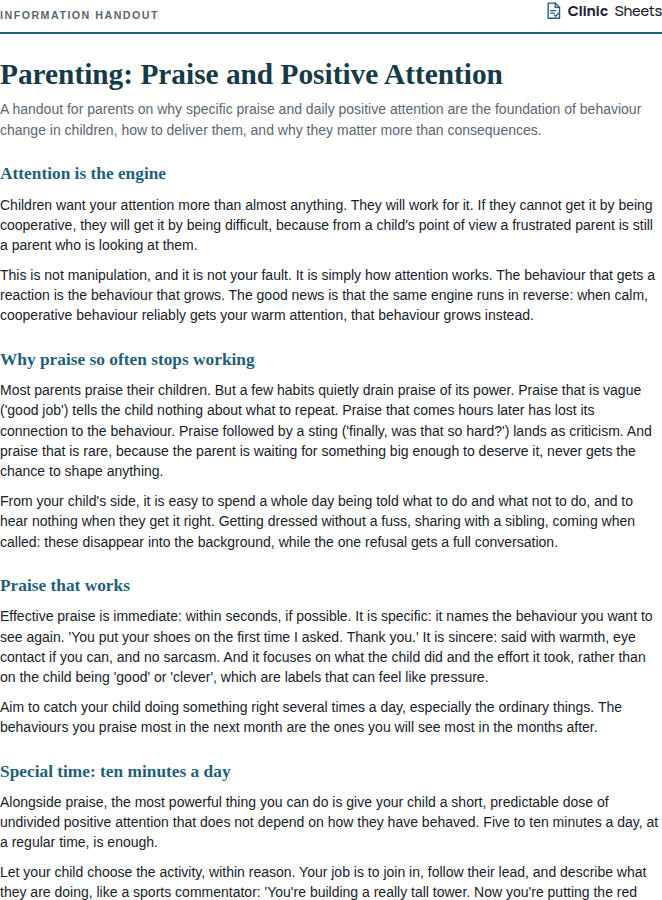
This worksheet takes a problem-solving approach. The parent first records what the fights are usually about and when they happen, then identifies what they currently do and what that teaches. They then set a small number of house rules that apply to everyone, decide which disputes the children can be coached to settle themselves, and plan a fair, boring response for fights that cross a line, so that neither child gains from escalating. A final section plans for the positive side: shared time and individual attention that reduce rivalry.
The professional version adds guidance on avoiding the trap of identifying a 'victim' and an 'aggressor' in a two-way pattern, on managing conflict where there is a large age gap or a child with additional needs, and on when sibling aggression is serious enough to require a more targeted intervention.
How to use it
- Ask the parent to describe two or three recent fights in detail. Look for the pattern: the trigger, the time of day, what each child did, what the parent did, and what each child got out of it.
- Complete the first section together. Help the parent see their own role in the pattern without blame; most parents are refereeing because it seems like the only option.
- Agree on two or three house rules that are the same for every child, phrased as what to do. Keep them short enough that the children can repeat them.
- Teach the coaching steps for low-level disputes: the parent describes the problem neutrally, asks each child what they want, asks them for ideas, and lets them choose one. Rehearse this in session.
- Plan the response for fights that cross a line. The same consequence for both children, delivered without a trial, is usually the fairest and most effective. Review at the next session and adjust.
References
- Kramer, L. (2010). The essential ingredients of successful sibling relationships: An emerging framework for advancing theory and practice. Child Development Perspectives, 4(2), 80-86.
- Smith, J., & Ross, H. (2007). Training parents to mediate sibling disputes affects children's negotiation and conflict understanding. Child Development, 78(3), 790-805.
- Faber, A., & Mazlish, E. (1987). Siblings Without Rivalry. Norton.
- Kazdin, A. E. (2005). Parent Management Training: Treatment for Oppositional, Aggressive, and Antisocial Behavior in Children and Adolescents. Oxford University Press.