Teen Sleep: Why It Is Hard and What Helps
A handout for teenagers and their parents explaining why adolescent sleep is biologically and socially difficult, how trying too hard to sleep makes it worse, and the core CBT for insomnia strategies adapted for teenagers.
About this resource
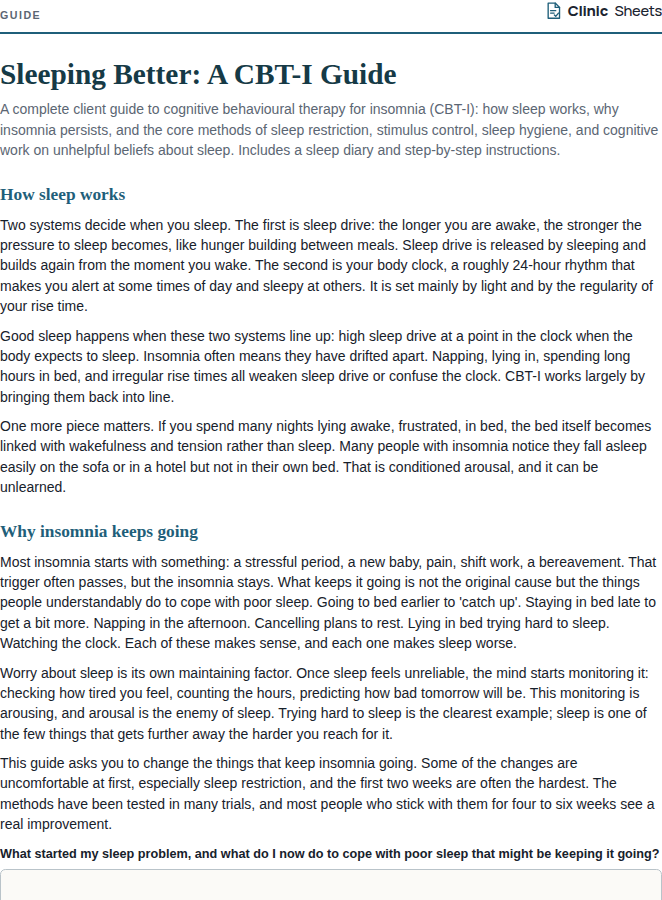
Adolescent sleep problems arise from a collision between biology and timetable. Puberty delays the circadian rhythm so that melatonin release and sleepiness arrive later in the evening, while the homeostatic sleep drive builds more slowly, so teenagers genuinely are not tired at the time younger children are. Early school start times, evening screen use, caffeine and social schedules push bedtime later still, and the resulting sleep debt is paid back with weekend lie-ins that shift the clock further. Carskadon has described this combination as a 'perfect storm'.
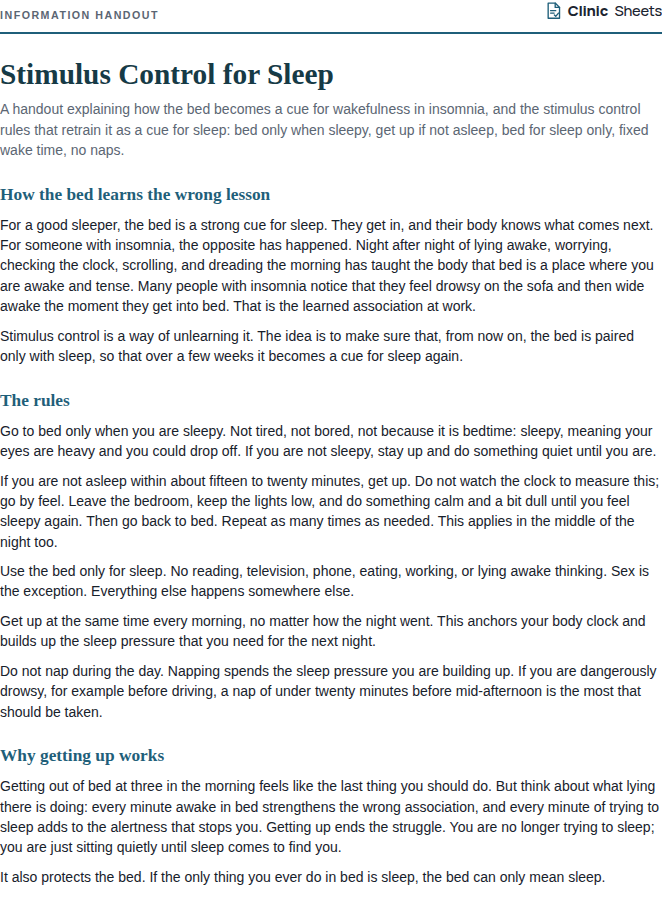
On top of this biological picture, many teenagers with persistent sleep difficulty have developed the pattern seen in adult insomnia: long periods lying awake in bed, worry about not sleeping, and effortful attempts to force sleep that keep the arousal system switched on. This handout explains both layers to the young person and their parents, and introduces the CBT for insomnia strategies of a consistent wake time, keeping the bed for sleep, getting up when not sleeping, and reducing sleep effort, adapted for a teenager's life.
The professional version adds guidance on distinguishing delayed sleep phase from insomnia, on setting realistic wake-time targets that the family can hold, and on when to refer for medical assessment.
How to use it
- Take a sleep history first, ideally with a one-week sleep diary, to distinguish delayed sleep phase, insufficient sleep and conditioned insomnia. Screen for depression, anxiety and substance use, which commonly co-occur.
- Read the biology section with the young person and the parent together. It reframes the problem away from blame on both sides.
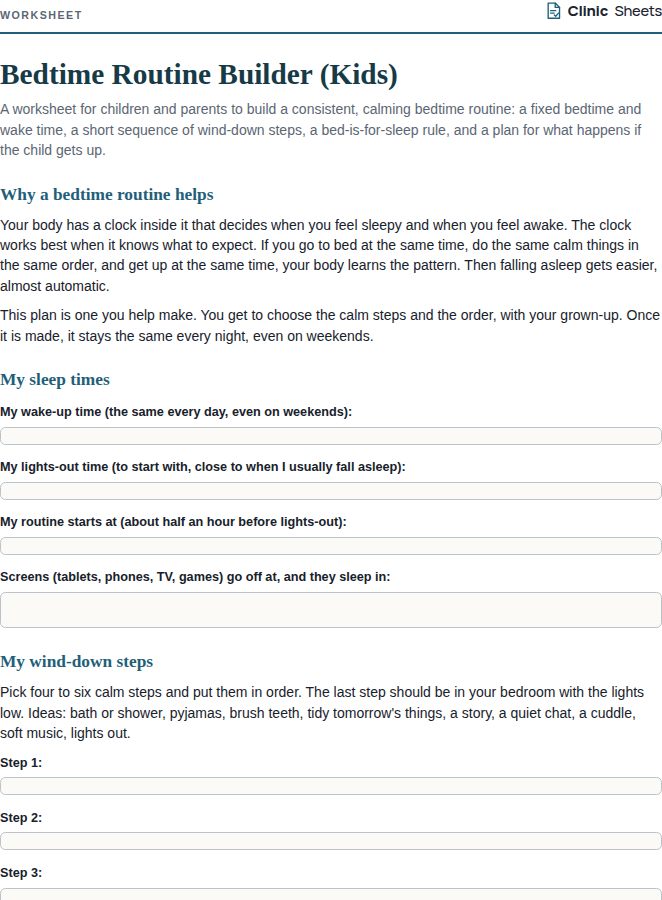
- Agree a fixed wake time seven days a week as the first and most important change. Allow no more than an hour or so of variation at weekends.
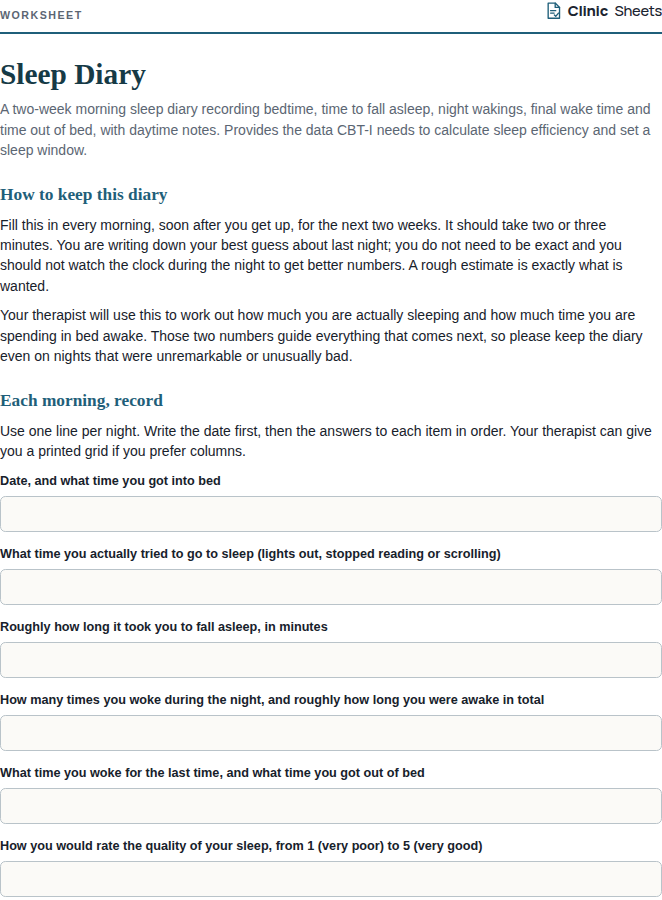
- Introduce the bed-is-for-sleep and get-up-if-awake rules, and problem-solve what the young person can do in the night and where.
- Review with a sleep diary each week. Adjust the bedtime forward gradually as sleep consolidates.
References
- Carskadon, M. A. (2011). Sleep in adolescents: The perfect storm. Pediatric Clinics of North America, 58(3), 637-647.
- Harvey, A. G. (2002). A cognitive model of insomnia. Behaviour Research and Therapy, 40(8), 869-893.
- Bootzin, R. R. (1972). Stimulus control treatment for insomnia. Proceedings of the 80th Annual Convention of the American Psychological Association, 7, 395-396.
- Spielman, A. J., Saskin, P., & Thorpy, M. J. (1987). Treatment of chronic insomnia by restriction of time in bed. Sleep, 10(1), 45-56.