Teen Stress and Anxiety Workbook
A seven-week CBT workbook for adolescents on stress and anxiety: how the stress response works, calming the body with slow breathing and muscle relaxation, spotting thinking traps such as catastrophising, building balanced thoughts, facing avoided situations step by step, reducing stress load with problem solving and basics, and planning for pressure points.
About this resource
Adolescence brings a rise in both everyday stress and anxiety disorders, and cognitive behavioural therapy is the first-line psychological treatment for adolescent anxiety. Adolescent CBT programmes such as Kendall's C.A.T. Project follow the same core sequence as adult and child versions: education about the anxiety response, somatic management through breathing and relaxation, identification and modification of anxious thinking, graded exposure to avoided situations, and relapse prevention. For teenagers, the material has to be delivered with more autonomy and less instruction than for children, and with attention to the realities of school pressure, social evaluation and sleep.
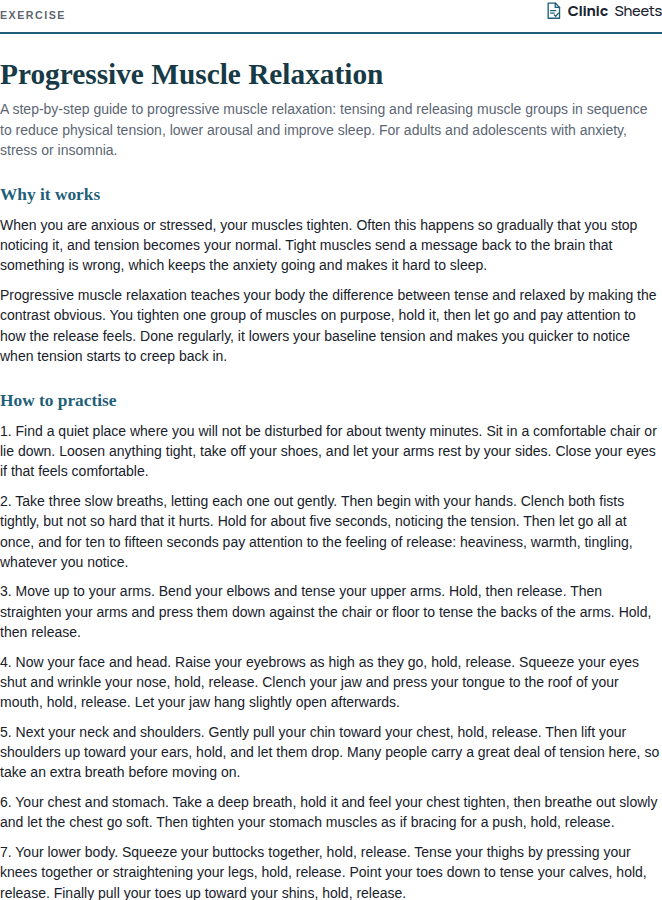
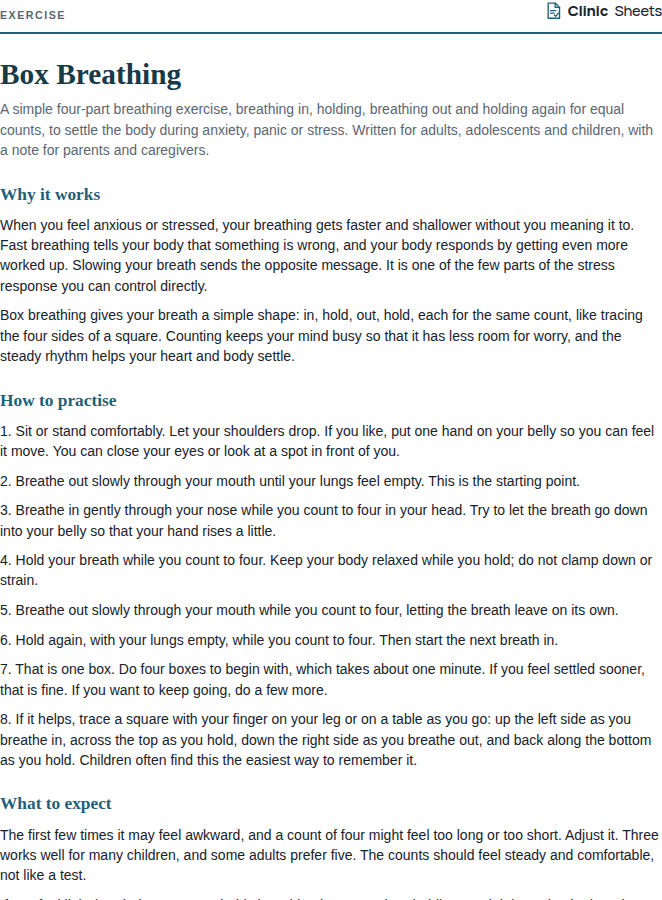
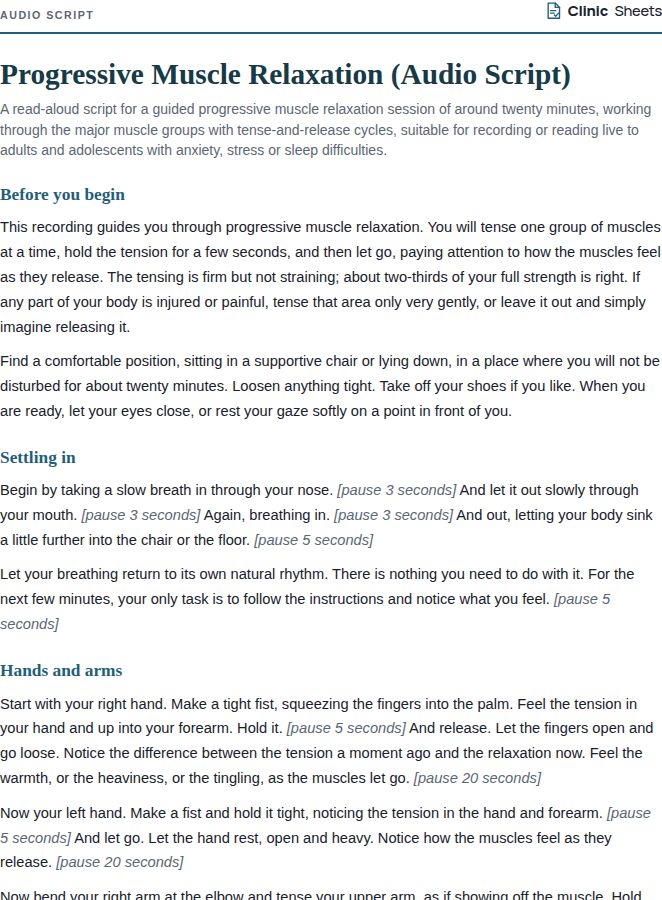
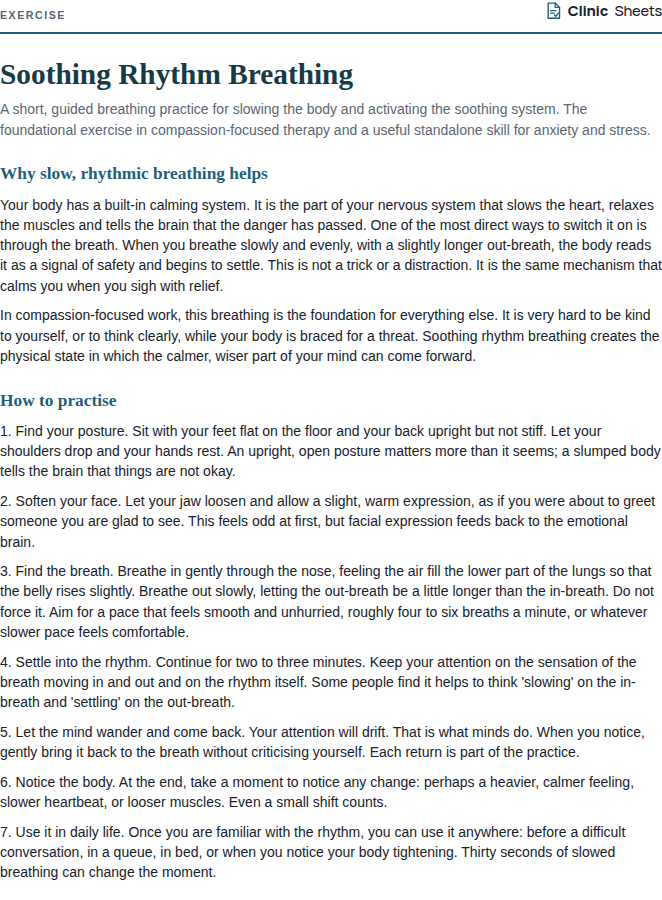
This workbook delivers that sequence over seven weeks, written directly to the adolescent in a respectful, plain voice with no slang and no lecturing. Each week has a short explanation, a skill, and two to four practice fields. The cognitive weeks focus on catastrophising and the other thinking traps that most often drive teenage anxiety; the behavioural weeks address avoidance through a step ladder and stress load through problem solving and attention to sleep, movement and downtime. It closes with a review and a plan for foreseeable pressure points such as exams.
The professional version includes notes on pacing, on engaging adolescents who did not choose to attend, on involving parents appropriately without undermining the teenager's autonomy, and on distinguishing normal adolescent stress from anxiety disorders, depression and other conditions that need fuller assessment.
How to use it
- Use one week per session, or combine or stretch weeks to fit the young person's pace. Read each explanation together or ask them to read it beforehand, then complete the practice fields in session before setting home practice.
- Treat the adolescent as the expert on their own life. Use their examples throughout, let them choose the ladder goal and the order of steps, and avoid telling them what they should feel.
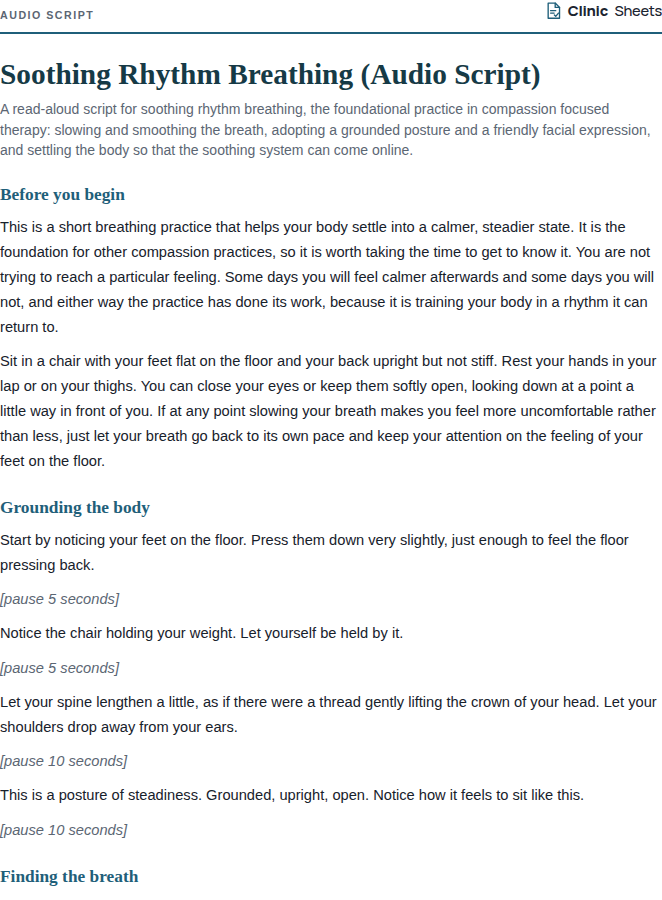
- Rehearse the breathing and muscle relaxation in session in Week 2 before asking for daily practice; teenagers rarely practise a skill they have only read about.
- Involve parents with the young person's agreement, mainly around reducing accommodation and supporting ladder steps. Keep the workbook itself the adolescent's own.
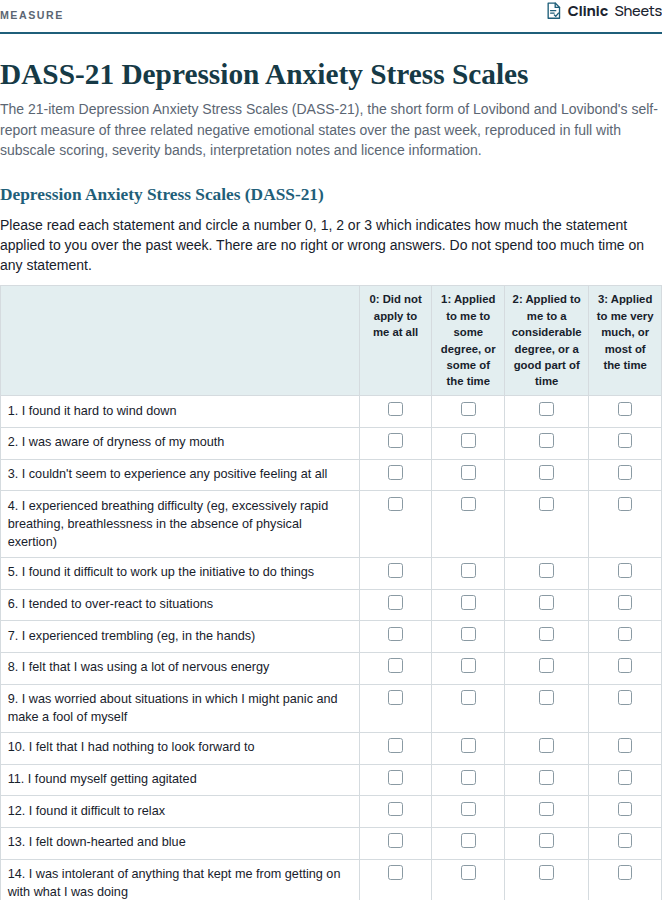
- Use a brief anxiety measure at the start, midway and at the end, and review it with the young person as evidence of change.
- Screen for low mood, self-harm, substance use and sleep problems at assessment. Where these are present, use the workbook as one component of a fuller treatment plan.
References
- Kendall, P. C., Choudhury, M., Hudson, J., & Webb, A. (2002). The C.A.T. Project Manual for the Cognitive Behavioral Treatment of Anxious Adolescents. Workbook Publishing.
- Stallard, P. (2019). Think Good, Feel Good: A CBT Workbook for Children and Young People (2nd ed.). Wiley-Blackwell.
- Clark, D. A., & Beck, A. T. (2010). Cognitive Therapy of Anxiety Disorders: Science and Practice. Guilford Press.
- Bernstein, D. A., & Borkovec, T. D. (1973). Progressive Relaxation Training: A Manual for the Helping Professions. Research Press.