The Struggle Switch
A client handout introducing the struggle switch metaphor from ACT: how fighting anxiety adds a second layer of distress on top of the first, and what it means to turn the switch off.
About this resource
Experiential avoidance is the attempt to control, reduce or escape unwanted internal experiences such as anxiety, even when doing so is costly. In ACT it is considered a central process in the maintenance of anxiety disorders. The struggle switch metaphor, popularised by Russ Harris, gives clients a simple way to see this process in their own experience. When the switch is on, anxiety is treated as an emergency and the person fights it, which produces anxiety about anxiety, frustration about anxiety, and sadness about anxiety. When the switch is off, the original anxiety is still there, but the second layer does not build.
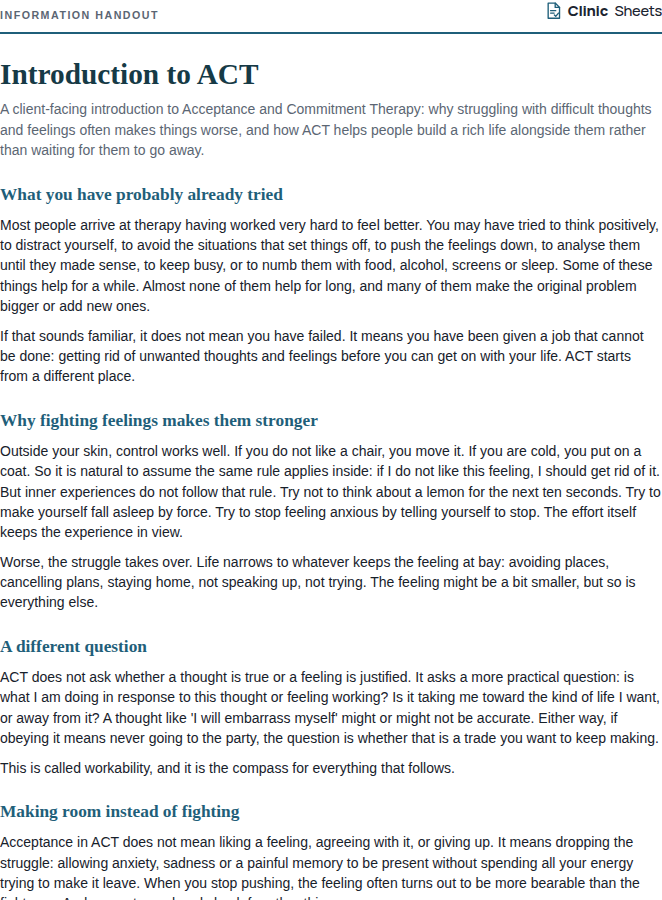
The metaphor is useful because it does not ask the client to like anxiety or to want it. It only asks them to notice the difference between the discomfort itself and the struggle against it, and to experiment with letting the first be present without the second. This is a doorway into willingness, and it sets up later work on acceptance and committed action.
This handout describes the two-layer idea in plain language, walks through what a day looks like with the switch on and with it off, explains what turning the switch off does and does not mean, and offers a short reflection. It is designed for early sessions with anxious clients, particularly those who have spent years trying to get rid of anxiety and are exhausted by the effort.
The professional version adds a session script for drawing the two layers on a whiteboard, notes on the creative hopelessness stage that often precedes this handout, and cautions about clients who hear 'stop struggling' as 'give up' or as blame.
How to use it
- Use after a review of what the client has tried in order to control anxiety and how well it has worked. The metaphor lands best when the client has already noticed that control efforts have been costly.
- Draw two stacked layers in session: the original anxiety at the bottom, and the struggle on top (anxiety about the anxiety, anger at yourself for feeling it, hopelessness about it). Ask the client to estimate how much of their suffering on a bad day is the top layer.
- Read the handout together, then invite the client to describe a recent episode with the switch on. Ask what the switch being off would have looked like in that same situation, behaviourally.
- Set a between-session task of noticing when the switch flips on, without yet trying to change it. Noticing is the first skill.
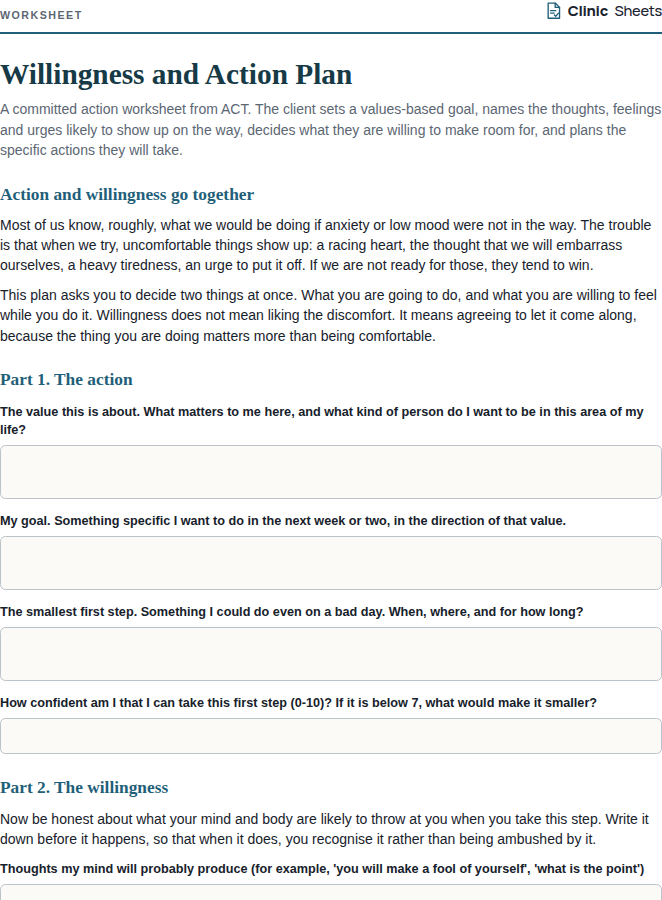
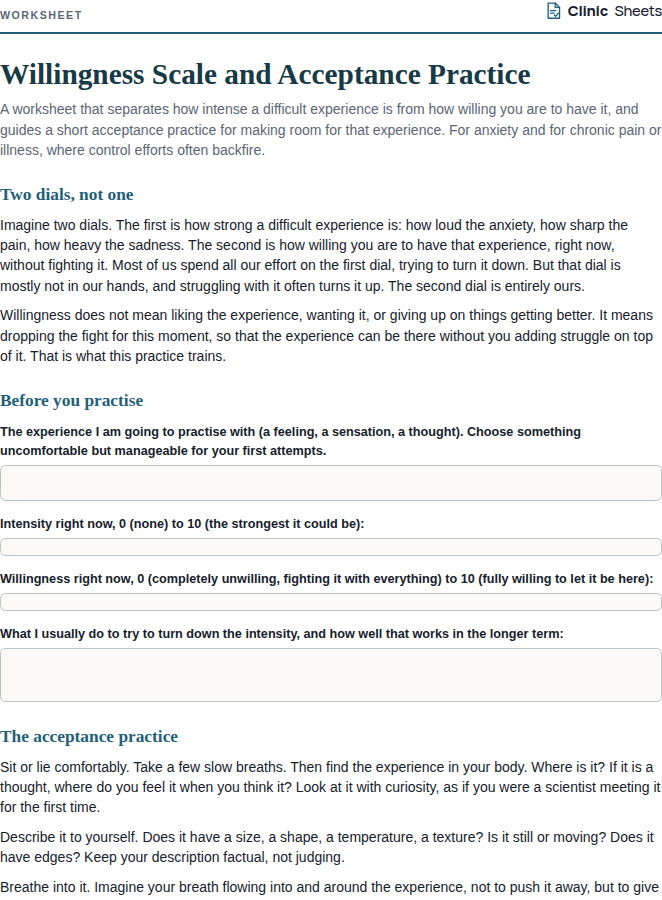
- Follow with a willingness exercise or the Willingness and Action Plan once the client can reliably tell the two layers apart.
References
- Harris, R. (2008). The Happiness Trap: How to Stop Struggling and Start Living. Trumpeter.
- Hayes, S. C., Strosahl, K. D., & Wilson, K. G. (2012). Acceptance and Commitment Therapy: The Process and Practice of Mindful Change (2nd ed.). Guilford Press.
- Hayes, S. C., Wilson, K. G., Gifford, E. V., Follette, V. M., & Strosahl, K. (1996). Experiential avoidance and behavioral disorders: A functional dimensional approach to diagnosis and treatment. Journal of Consulting and Clinical Psychology, 64(6), 1152-1168.