Tug of War with the Anxiety Monster
An experiential ACT exercise built on the tug-of-war metaphor: struggling with anxiety is like pulling on a rope against a monster over a pit, and the alternative is to drop the rope. Includes a physical version to do in session and an imagined version for home. Suitable for adults and adolescents.
About this resource
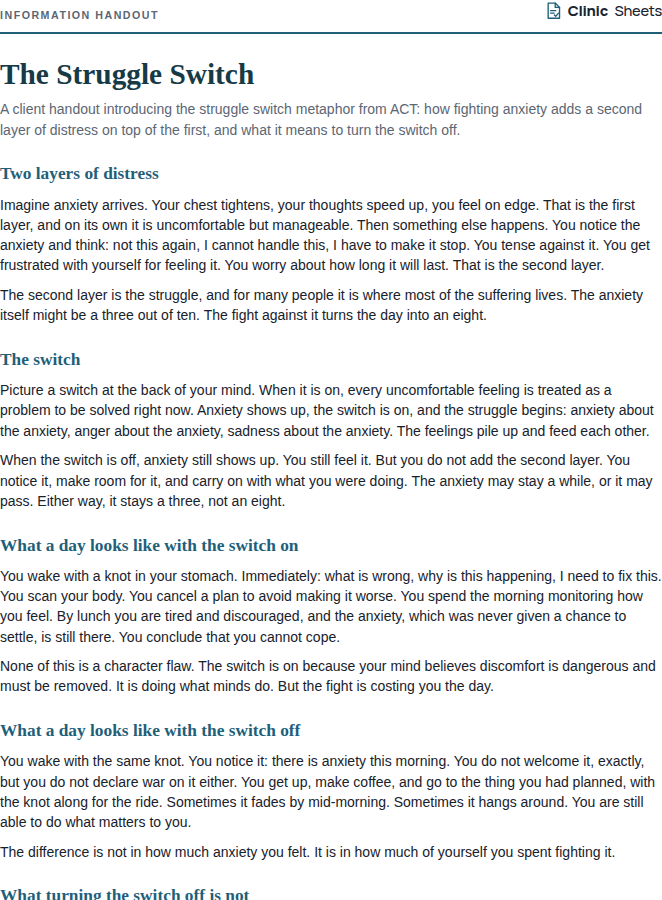
The tug-of-war with a monster is one of the best-known metaphors in acceptance and commitment therapy. The client is asked to imagine a rope stretched over a bottomless pit, with a large monster on the other end. The harder they pull, the harder the monster pulls back, and all their effort goes into not being dragged in. The move that changes everything is not to pull harder but to drop the rope. The monster is still there, but the person's hands are free and they can walk in any direction they choose.
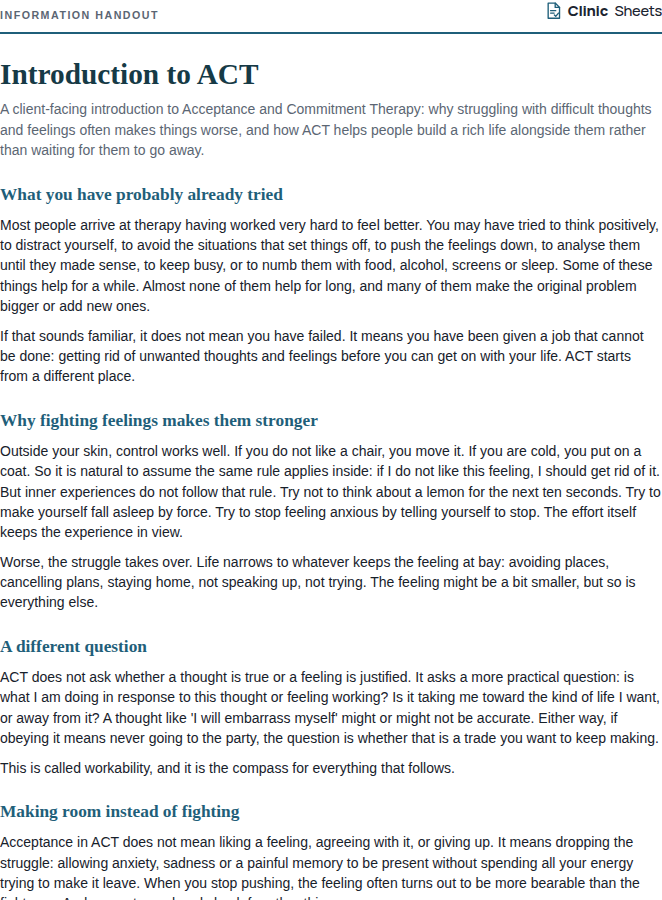
The metaphor targets experiential avoidance, the effort to control or eliminate unwanted inner experience, which is a central maintaining process in anxiety. Most clients arrive having tried many ways of pulling on the rope: distraction, reassurance, avoidance, arguing with the thoughts, trying to relax it away. The exercise helps them see these strategies as a single struggle and to consider willingness, allowing the anxiety to be present without fighting it, as a genuine alternative rather than as giving up.
Acting the tug of war out with a real rope or scarf in session makes the point in the body rather than only in words, and adolescents in particular respond to this. The professional version includes a script for the enacted version, guidance on the debrief, and a note on the common objection that dropping the rope means the monster wins.
How to use it
- Use once the client has described their attempts to control anxiety and you have explored how well those attempts have worked. The exercise lands best when the client is already a little tired of the struggle.
- For the enacted version, bring a scarf, belt or length of rope. Play the monster yourself. Ask the client to pull, and pull back with matching effort, so the harder they try the harder it gets. Keep it going long enough for them to feel the strain. Then invite them to drop it.
- Debrief immediately. Ask what they noticed in their body while pulling and what changed when they let go. Ask what the monster represents and what the rope represents in their life.
- Address the objection that dropping the rope means losing. Point out that the monster never goes away in either version, but only in one version are their hands free. Ask what they would do with free hands.
- Teach the imagined version for use at home, using the client section below, and agree that the client will practise it when they next notice themselves struggling.
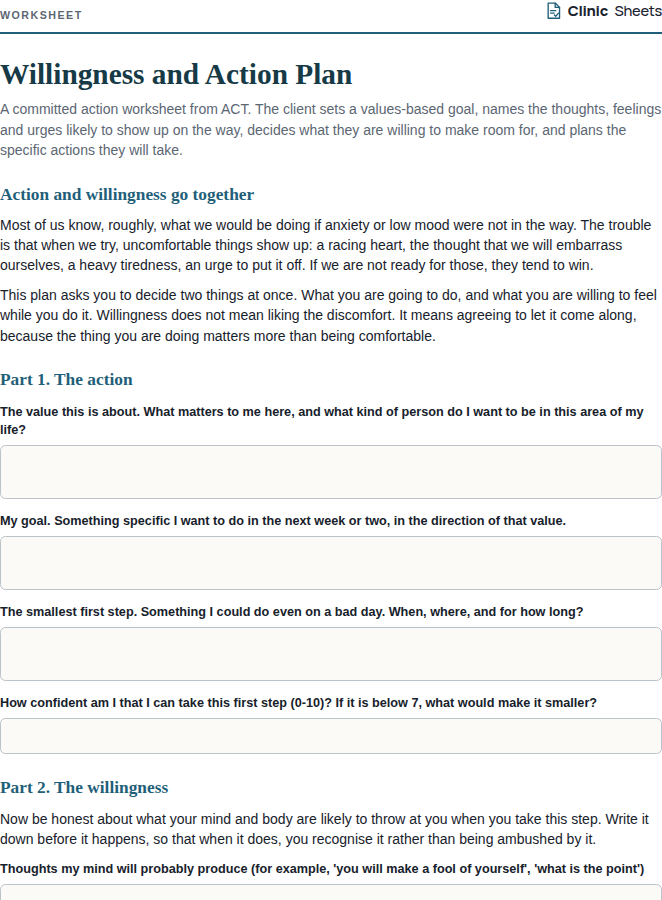
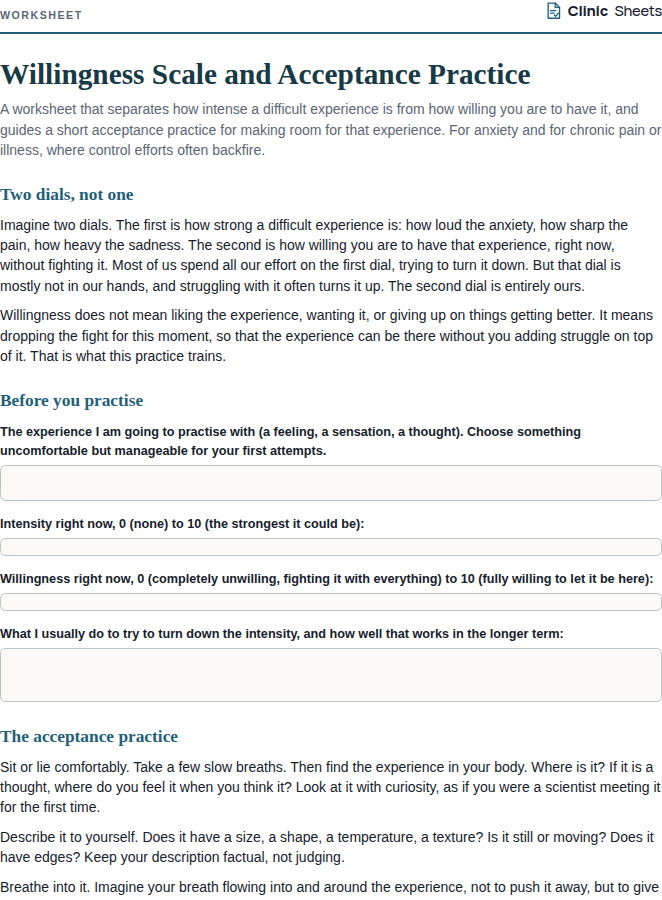
- Review the practice log. Link dropping the rope to willingness exercises and to values-based action: free hands are for doing something that matters.
References
- Hayes, S. C., Strosahl, K. D., & Wilson, K. G. (2012). Acceptance and Commitment Therapy: The Process and Practice of Mindful Change (2nd ed.). Guilford Press.
- Hayes, S. C. (2005). Get Out of Your Mind and Into Your Life: The New Acceptance and Commitment Therapy. New Harbinger.
- Stoddard, J. A., & Afari, N. (2014). The Big Book of ACT Metaphors: A Practitioner's Guide to Experiential Exercises and Metaphors in Acceptance and Commitment Therapy. New Harbinger.