Understanding Burnout
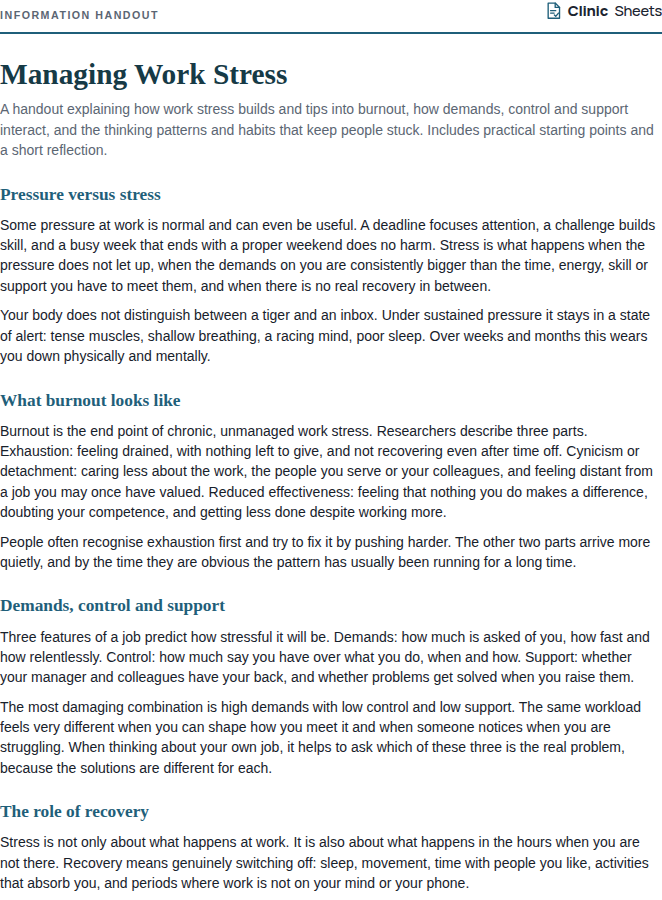
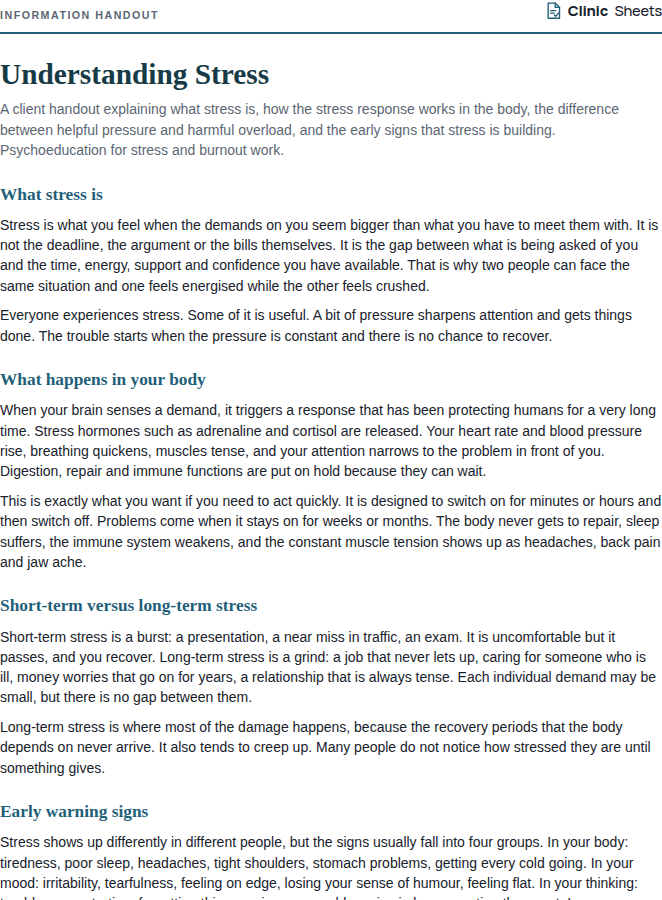
A handout explaining burnout as a state of exhaustion, cynicism and reduced effectiveness that builds from chronic workplace stress, how it differs from ordinary tiredness and from depression, and the role of unrelenting standards in keeping it going.
About this resource
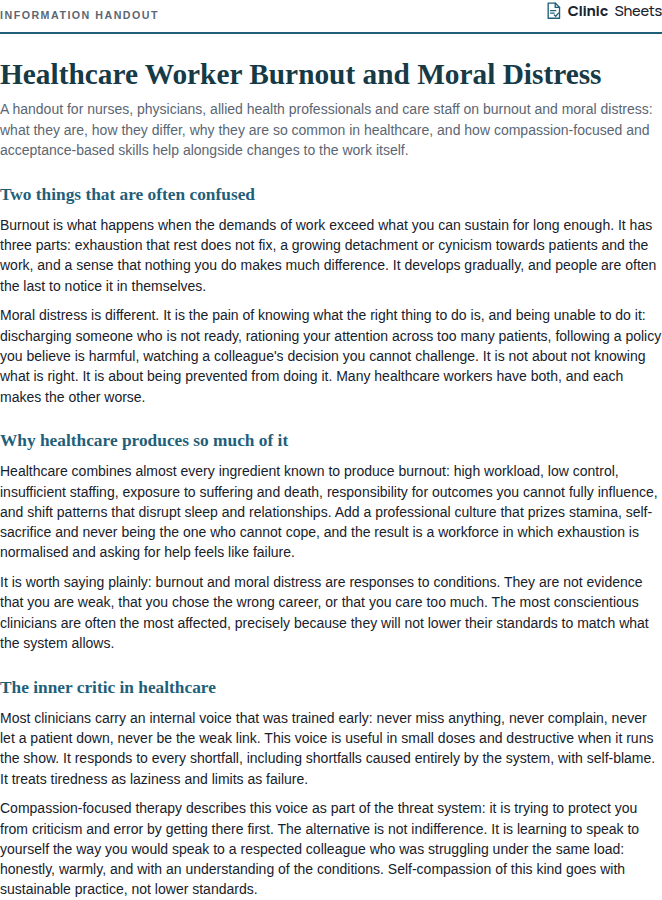
Burnout, as defined by Maslach and colleagues, has three dimensions: emotional exhaustion, depersonalisation or cynicism toward one's work and the people it serves, and a diminished sense of personal accomplishment. It develops gradually from prolonged exposure to demands that outstrip resources, particularly in roles involving high responsibility, emotional labour, low control and poor recognition. The World Health Organization classifies it as an occupational phenomenon rather than a medical condition, but it overlaps substantially with depression and anxiety, and it is a common presenting problem in therapy.
This handout helps clients recognise burnout in themselves, understand the workplace and personal factors that drive it, and see why 'trying harder' tends to deepen the problem. It pays particular attention to unrelenting standards: the belief that one must always perform at the highest level, never let anyone down and never rest until everything is done. These standards are often what drew the person to their work and made them good at it, and they are also what keeps them from recovering. The handout frames this without blame, so that the client can hold their standards more lightly rather than feel criticised for having them.
The professional version adds guidance on distinguishing burnout from major depression (where the low mood and anhedonia extend beyond work), notes on the six workplace mismatches described by Maslach and Leiter (workload, control, reward, community, fairness, values), and prompts for exploring the client's rules about rest, achievement and self-worth. It pairs with the Burnout Recovery Plan worksheet.
How to use it
- Offer to clients presenting with exhaustion, loss of motivation or cynicism about work, after taking a history of the workload and its trajectory.
- Read the three dimensions section together and ask the client to rate themselves on each. Many clients recognise the exhaustion but have not named the cynicism or the loss of effectiveness.
- Explore the unrelenting standards section with curiosity: where did these rules come from, what have they given the client, and what are they costing now?
- Screen for depression and for thoughts of self-harm. Burnout and depression frequently co-occur and the treatment plan should reflect both where present.
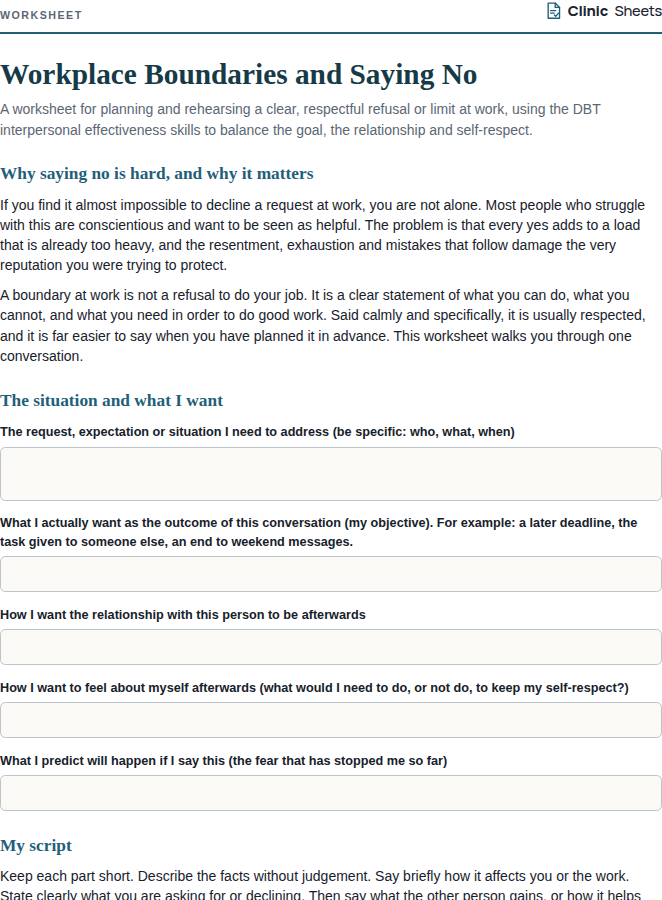
- Follow with the Burnout Recovery Plan to translate insight into concrete changes at work and in recovery habits.
References
- Maslach, C., Schaufeli, W. B., & Leiter, M. P. (2001). Job burnout. Annual Review of Psychology, 52, 397-422.
- Maslach, C., & Leiter, M. P. (2016). Understanding the burnout experience: Recent research and its implications for psychiatry. World Psychiatry, 15(2), 103-111.
- Young, J. E., Klosko, J. S., & Weishaar, M. E. (2003). Schema Therapy: A Practitioner's Guide. Guilford Press.
- Bianchi, R., Schonfeld, I. S., & Laurent, E. (2015). Burnout-depression overlap: A review. Clinical Psychology Review, 36, 28-41.