Healthcare Worker Burnout and Moral Distress
A handout for nurses, physicians, allied health professionals and care staff on burnout and moral distress: what they are, how they differ, why they are so common in healthcare, and how compassion-focused and acceptance-based skills help alongside changes to the work itself.
About this resource
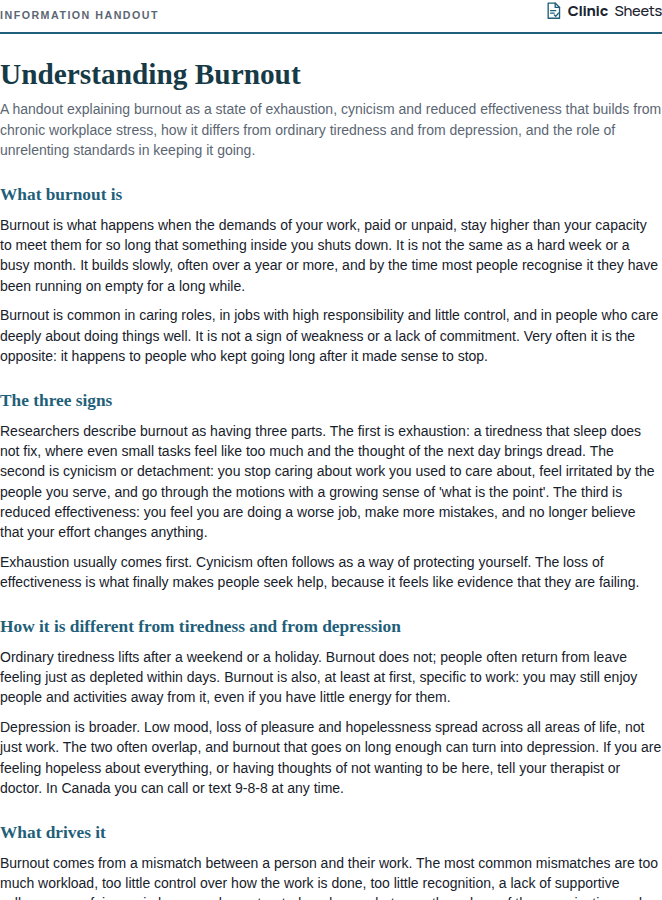
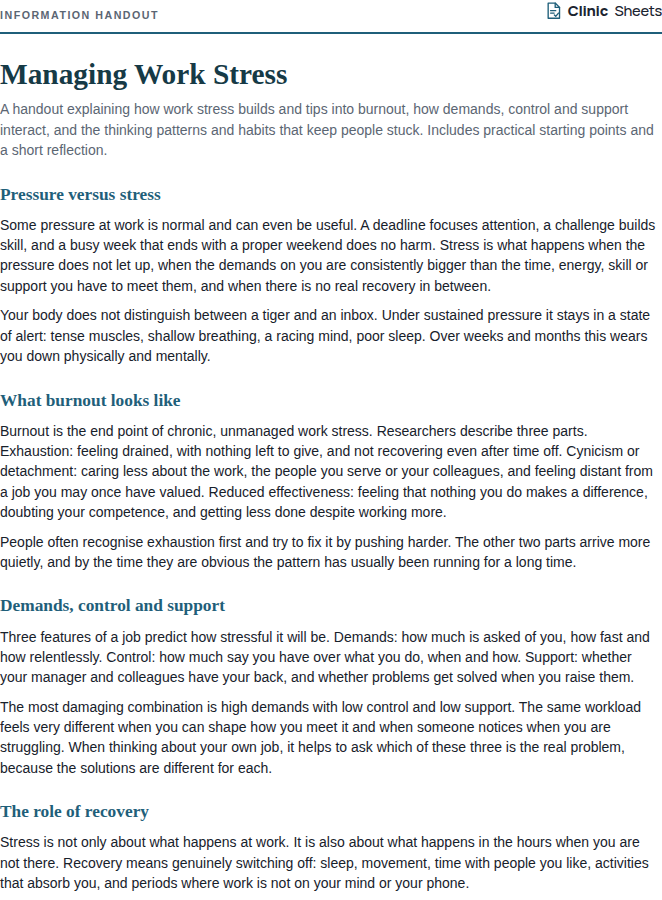
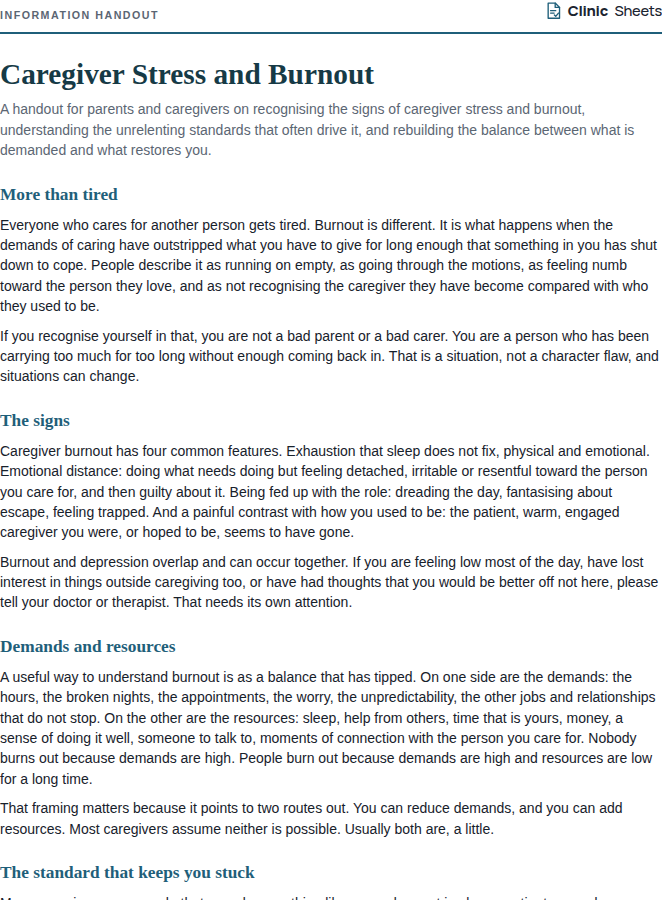
Burnout, as described by Maslach and colleagues, is a work-related syndrome of emotional exhaustion, depersonalisation or cynicism, and reduced sense of accomplishment, arising from chronic workplace stress that has not been successfully managed. Moral distress, a term originating in nursing ethics with Jameton, describes the anguish that arises when a clinician knows the right thing to do but is constrained from doing it by institutional, resource or hierarchical barriers. The two overlap and reinforce each other, and both are prevalent in healthcare, where workload, understaffing, exposure to suffering and responsibility for outcomes combine with a professional culture of unrelenting standards and self-sacrifice.
This handout explains both concepts to healthcare workers in plain terms and makes a distinction that clinicians often find relieving: burnout and moral distress are responses to conditions, not personal deficits, and the fix is never only individual. It then offers the individual skills that do help. From compassion-focused therapy: recognising the threat-driven self-criticism that healthcare culture instils and cultivating a compassionate stance towards one's own limits. From acceptance and commitment therapy: making room for painful feelings that come with caring work, unhooking from perfectionistic rules, and reconnecting with the values that brought the person into healthcare so that action is guided by them rather than by exhaustion.
The professional version notes that the healthcare worker as client often presents with minimisation and a reluctance to occupy the patient role, that depression and suicidality should be screened for directly, that moral distress may shade into moral injury after specific events, and that the clinician should be alert to organisational factors and to the client's rights and options at work without overstepping into advocacy.
How to use it
- Use with healthcare workers presenting with exhaustion, cynicism, guilt about care they could not provide, or a loss of meaning in work. Also suitable as a group handout for staff wellbeing sessions.
- Go through the distinction between burnout and moral distress and ask which fits, or whether both do. Naming the problem accurately reduces self-blame.
- Explore the client's internal standards and the self-critical voice that enforces them. Ask where those standards came from and what they cost. Introduce self-compassion as a stance towards limits, not as lowering the bar for patients.
- Use the values exercise to reconnect with why the person entered healthcare and to identify one small action in line with those values that is within their control this week.
- Screen for depression and suicidal ideation directly. Discuss workplace options (occupational health, professional associations, changes in role or hours) as part of the plan, and be clear about the limits of individual skills when the conditions are the problem.
References
- Maslach, C., & Leiter, M. P. (2016). Understanding the burnout experience: Recent research and its implications for psychiatry. World Psychiatry, 15(2), 103-111.
- Jameton, A. (1984). Nursing Practice: The Ethical Issues. Prentice-Hall.
- Gilbert, P. (2009). The Compassionate Mind: A New Approach to Life's Challenges. Constable.
- Hayes, S. C., Strosahl, K. D., & Wilson, K. G. (2012). Acceptance and Commitment Therapy: The Process and Practice of Mindful Change (2nd ed.). Guilford Press.