Understanding Fear of Flying
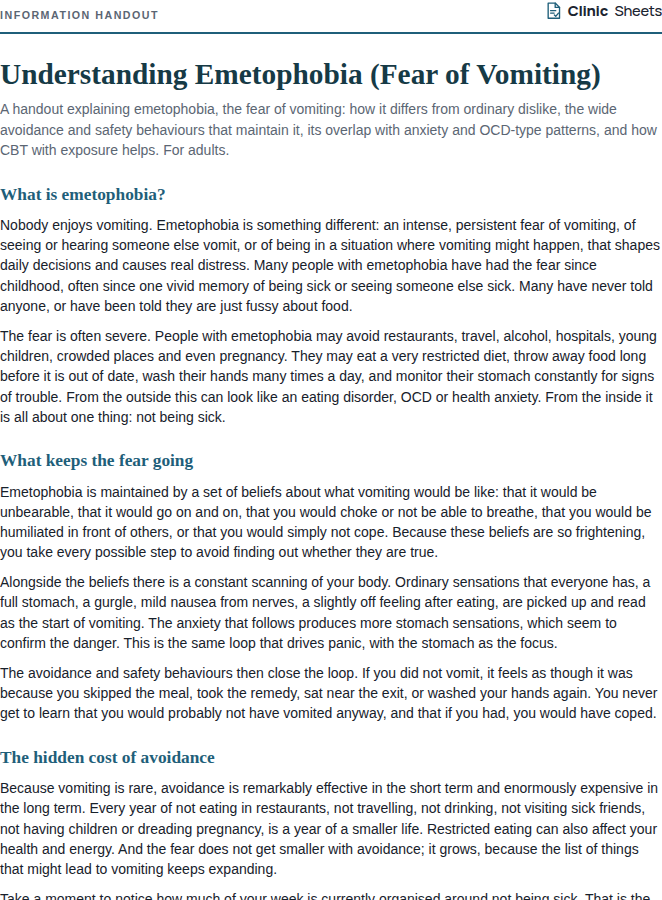
A handout explaining fear of flying: the different fears that drive it (crashing, panic on board, being trapped, heights), how catastrophic thinking and avoidance keep it going, and how CBT with graded exposure helps. For adults.
About this resource
Fear of flying is a common specific phobia and one of the most frequent reasons adults seek brief anxiety treatment. It is rarely a single fear. Some people fear the aircraft failing; others fear having a panic attack in a place they cannot leave; others fear turbulence, heights, or loss of control. Many avoid flying altogether, or fly only with alcohol, sedatives or a companion, which prevents them from learning that the flight is survivable and that their anxiety is manageable.
This handout introduces the cognitive-behavioural model of phobic anxiety: threat overestimation and catastrophizing, the role of unfamiliar sensations (turbulence, engine noise, the feeling on take-off) as triggers, and avoidance and safety behaviours as maintaining factors. It gives a plain account of how graded exposure works, including the use of imagery, airport visits, flight videos and actual flights, and prepares the client for the work ahead. It does not attempt to provide detailed aviation statistics, and clinicians may add current, sourced figures if they wish.
The professional version adds notes on identifying the client's specific feared catastrophe, on distinguishing flying phobia from panic disorder with agoraphobia and from claustrophobia, and on planning a first exposure flight.
How to use it
- Establish what exactly is feared. Ask: what is the worst thing that could happen on the flight? The answer determines the treatment target and may be about the plane, about panic, or about being trapped.
- Read the handout together and ask the client to mark the maintaining factors that apply to them, especially safety behaviours such as alcohol, medication, gripping the seat, or watching the crew for signs of alarm.
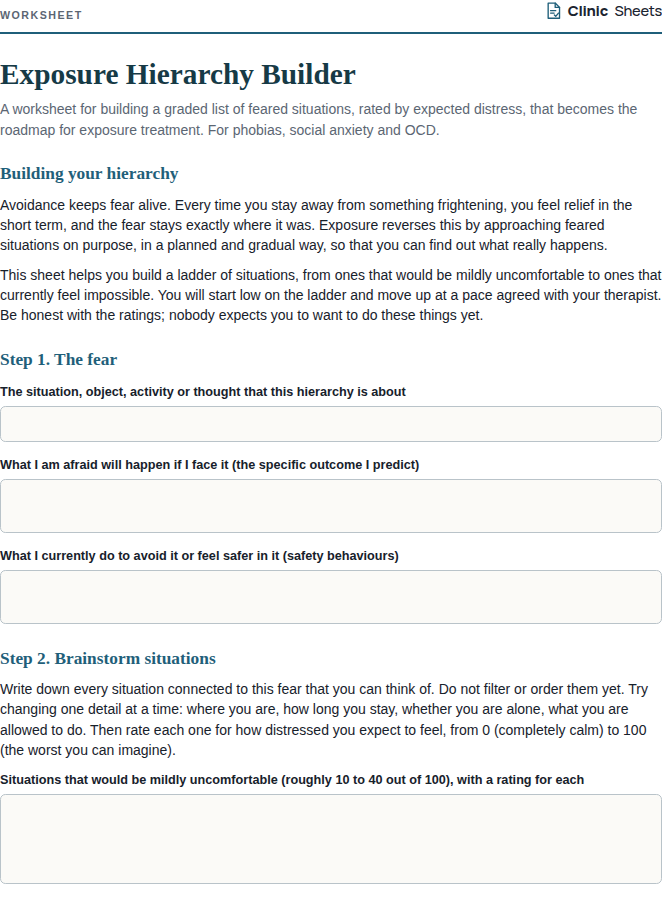
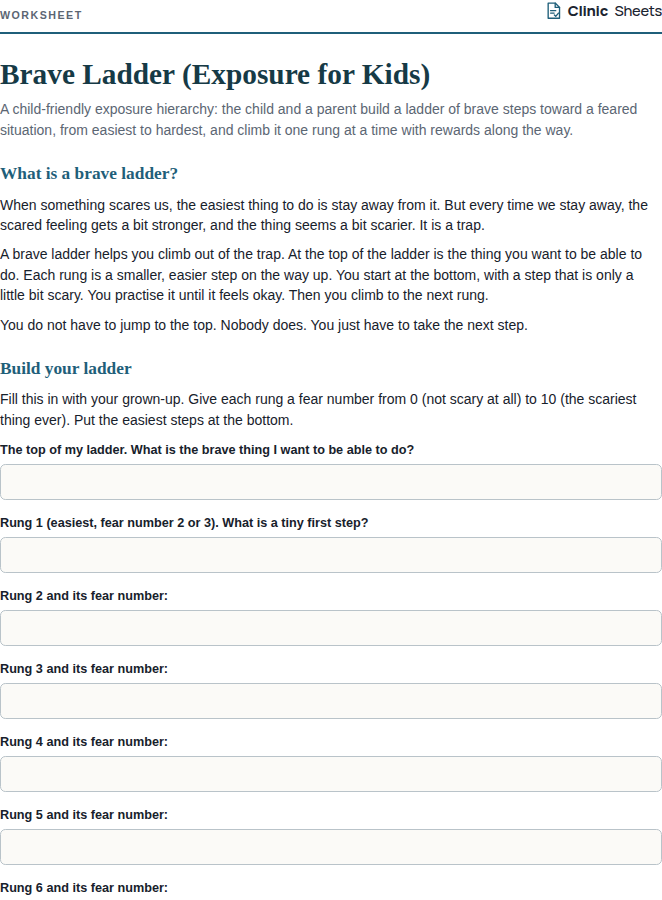
- Use the reflection fields to begin a hierarchy. Steps often include watching flight videos, visiting an airport, sitting in a departure lounge, a short domestic flight, and a longer flight.
- Where panic sensations are central, add interoceptive exposure (see Interoceptive Exposure Exercises) before the first flight.
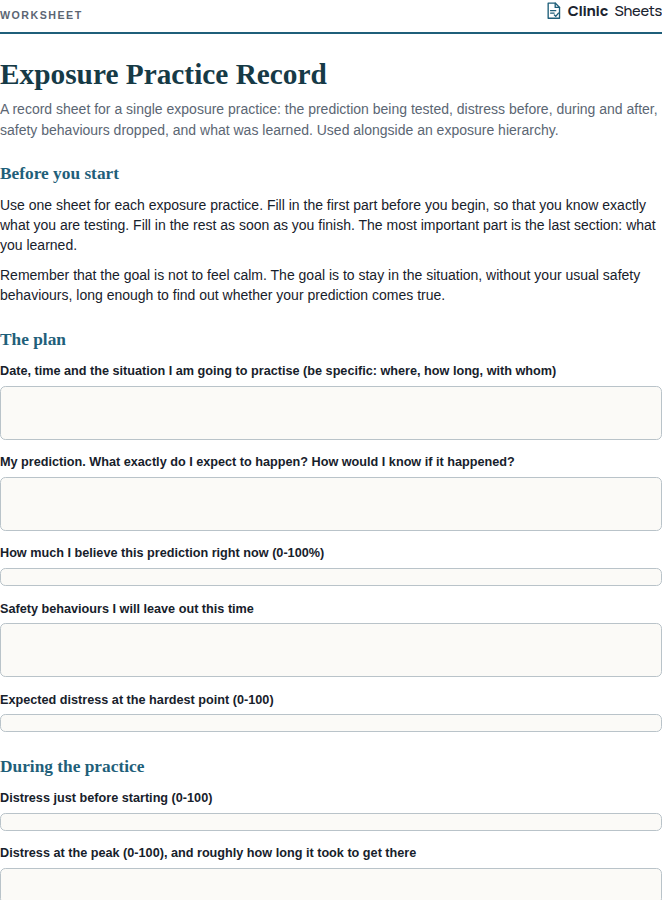
- Plan the exposure flight in detail: no alcohol or as-needed sedatives, planned attention to sensations rather than distraction, and a specific prediction to test.
References
- Clark, D. A., & Beck, A. T. (2010). Cognitive Therapy of Anxiety Disorders: Science and Practice. Guilford Press.
- Abramowitz, J. S., Deacon, B. J., & Whiteside, S. P. H. (2019). Exposure Therapy for Anxiety: Principles and Practice (2nd ed.). Guilford Press.
- Craske, M. G., Treanor, M., Conway, C. C., Zbozinek, T., & Vervliet, B. (2014). Maximizing exposure therapy: An inhibitory learning approach. Behaviour Research and Therapy, 58, 10-23.