Values and Identity (for Teens)
An ACT-based worksheet that helps adolescents separate what they genuinely care about from what they feel they are supposed to be, and translate a few chosen values into small, concrete actions. For teens navigating identity questions, transitions or low self-worth.
About this resource
Adolescence is the period in which identity is actively under construction. Teens try on roles, compare themselves with peers, absorb expectations from family, school and social media, and often arrive in therapy with a sense of not knowing who they are, or of being several different people depending on who is watching. Low self-esteem and life transitions (a move, a family change, the end of high school) intensify this uncertainty.
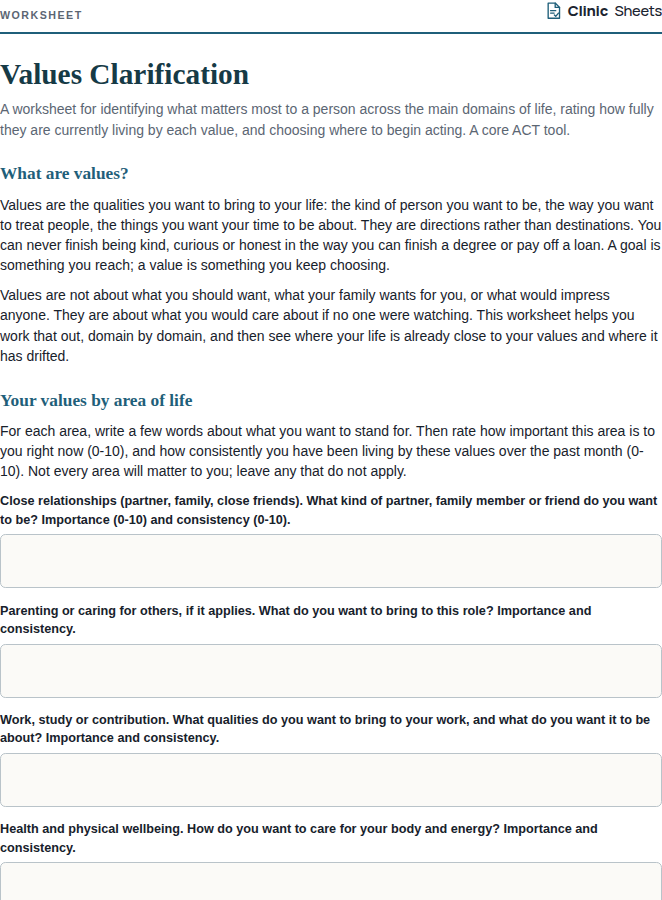
Acceptance and Commitment Therapy offers a useful alternative to trying to resolve the question 'who am I' directly. Rather than defining the self by traits, achievements or comparisons, ACT asks what a person wants to stand for and how they want to treat themselves and others. Values in this sense are chosen directions, not goals to be completed or standards to be met, and they are available regardless of mood, popularity or performance. For a teen whose self-worth rises and falls with each test result or social interaction, this shift is often steadying.
This worksheet walks the teen through noticing externally imposed 'shoulds', identifying what matters to them across several life areas, choosing a small number of values to prioritise now, and committing to one action in the coming week. The professional version adds guidance on holding the difference between values and goals, on teens who answer with what they think the therapist wants to hear, and on using the worksheet with teens who report that nothing matters.
How to use it
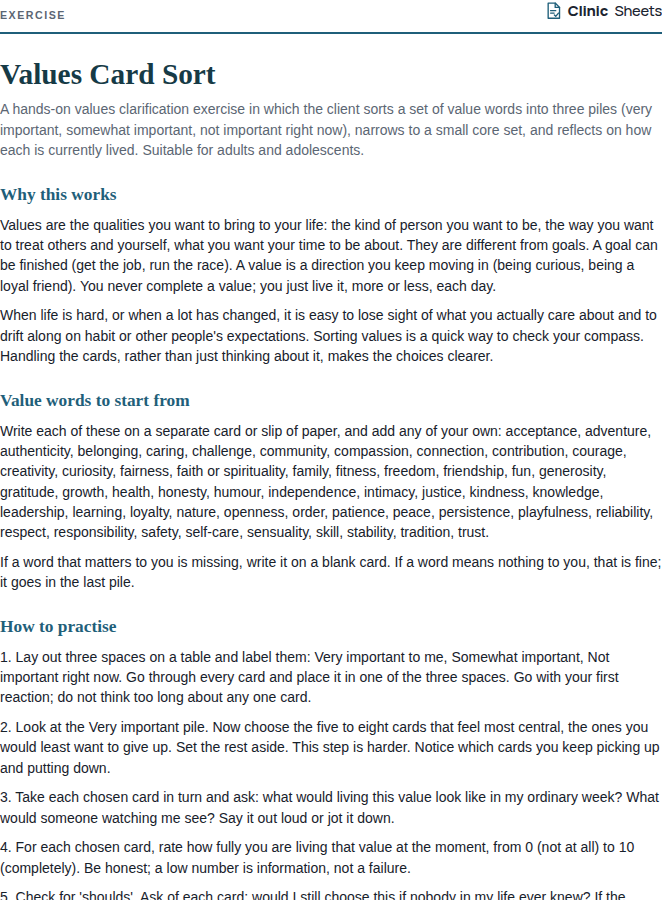
- Introduce the idea of values as directions rather than destinations. A simple metaphor works well: a value is like heading west; you never arrive at west, but every step in that direction counts.
- Complete the first section together. Teens often find it easier to name what they have been told to be than what they care about, and the contrast is where the work begins.
- In the life areas section, prompt with concrete questions: 'When you are with friends, how do you want to be treating them?' rather than 'What do you value in friendship?'
- Check for values that are really goals or rules ('get good grades', 'never let people down'). Ask what the goal is in the service of; the value is usually one step underneath.
- Keep the committed action small enough to be done this week without anyone else's cooperation. Review it at the next session, focusing on whether it was done, not on how it felt.
- If the teen says nothing matters, treat that as information about how they feel right now rather than a fact about them, and ask about what used to matter or what they get angry about. Anger often points to a value.
References
- Hayes, S. C., Strosahl, K. D., & Wilson, K. G. (2012). Acceptance and Commitment Therapy: The Process and Practice of Mindful Change (2nd ed.). Guilford Press.
- Harris, R. (2019). ACT Made Simple: An Easy-to-Read Primer on Acceptance and Commitment Therapy (2nd ed.). New Harbinger.
- Erikson, E. H. (1968). Identity: Youth and Crisis. W. W. Norton.