Compassionate Letter Writing
A guided exercise for writing a letter to yourself from a compassionate perspective, addressing a current difficulty with understanding, warmth and wisdom rather than criticism. A core practice in compassion-focused therapy.
About this resource
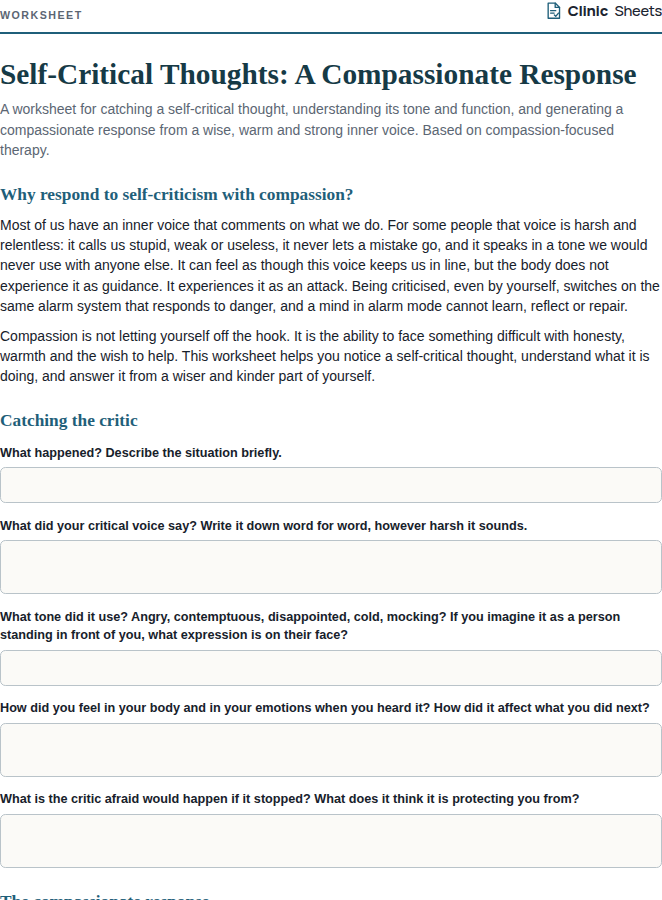
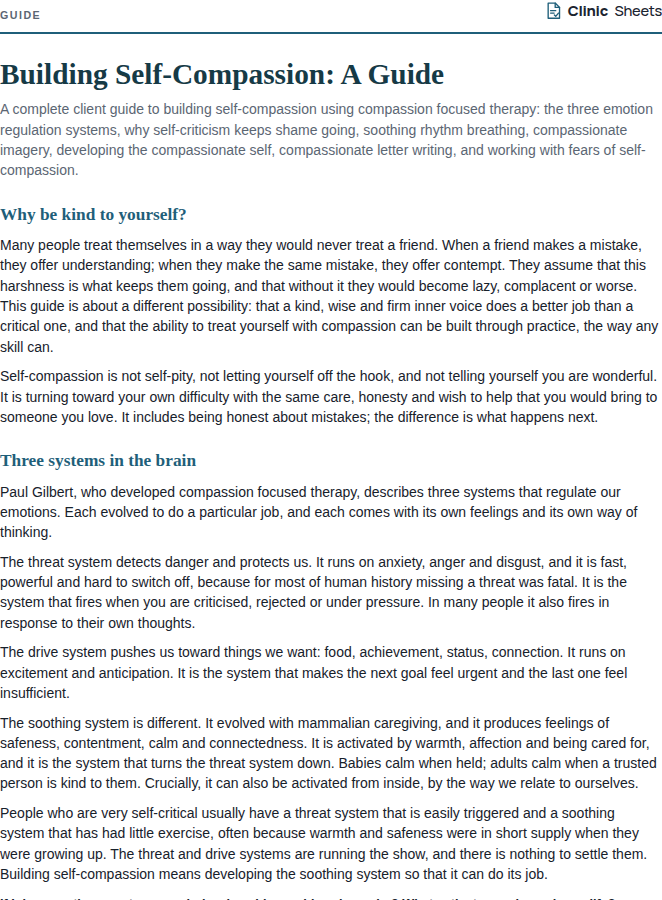
Compassionate letter writing is one of the central practices of compassion-focused therapy. The client writes to themselves about a struggle, a mistake or a painful feeling, from the perspective of their compassionate self or of a compassionate other. The letter is not a pep talk or a list of reassurances; it is an attempt to hold the difficulty with honesty, to understand how it makes sense given the person's history and circumstances, to validate the emotions involved, and to consider what would genuinely help. The act of writing slows the process down and gives the client a concrete artefact to return to.
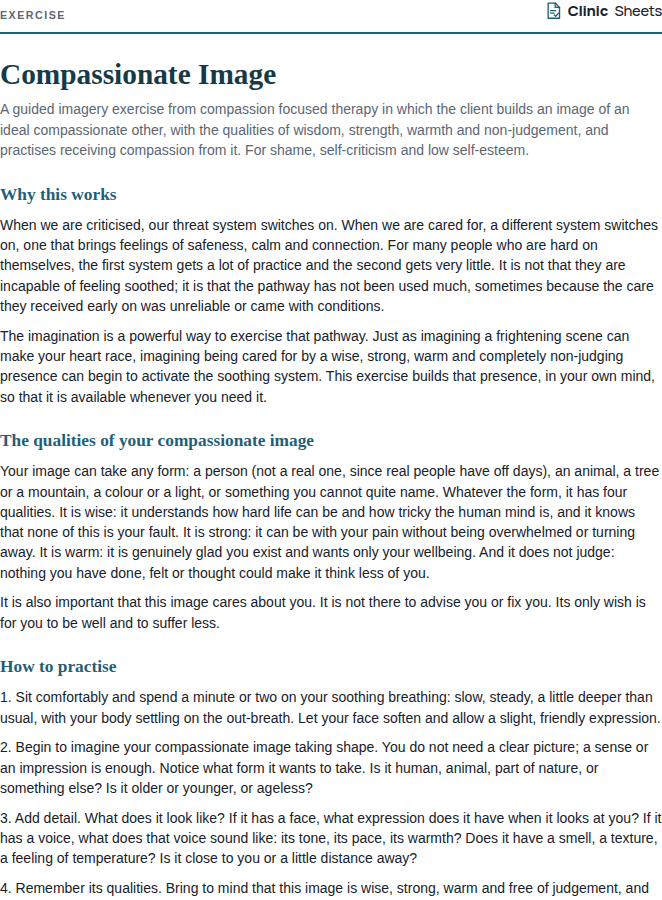
The evidence base for expressive and compassionate writing is reasonably strong. Pennebaker's work established that structured writing about difficult experiences has measurable benefits, and subsequent studies of self-compassionate writing have shown reductions in self-criticism, shame and depressive symptoms, with effects that hold up at follow-up. In CFT the letter is usually introduced after the client has practised soothing rhythm breathing and compassionate self imagery, because the letter is easier to write from an activated soothing system.
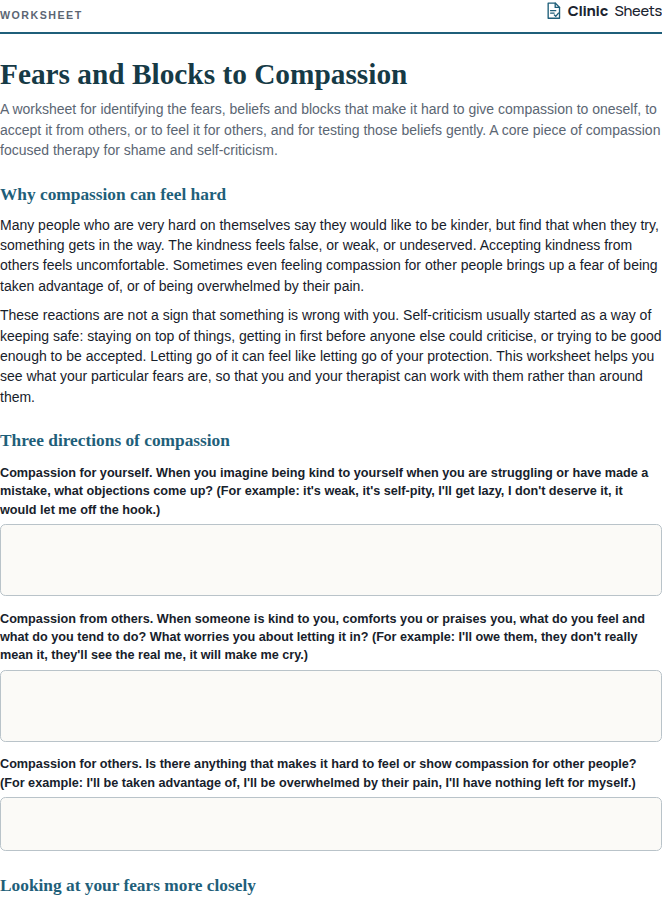
The professional version includes a checklist for reviewing letters (warmth, understanding, validation, absence of hidden criticism, orientation toward helpful action), guidance for clients who cannot write anything that does not sound critical, and a note on the option of writing first as a compassionate other and later as the self.
How to use it
- Introduce the exercise after the client has some experience of the compassionate self exercise and soothing rhythm breathing. Ask them to spend a minute in that state before writing.
- Explain what the letter is and is not. It is not about making excuses, cheering yourself up, or fixing the problem. It is about being understood.
- Write the first letter in session if the client is willing, or at least the opening paragraph. Many clients find it much harder than expected and need support to get started.
- Review the letter together. Read it aloud, or ask the client to. Check for hidden criticism, for advice disguised as compassion, and for reassurance that skips over the feeling. Redraft together where needed.
- Assign a letter between sessions on a current difficulty. Suggest re-reading it in a warm tone of voice a few days later.
- For clients who cannot write kindly to themselves, start by writing to a friend in the same situation, then to a younger version of themselves, before attempting the self directly.
References
- Gilbert, P. (2009). The Compassionate Mind. Constable.
- Gilbert, P. (2010). Compassion Focused Therapy: Distinctive Features. Routledge.
- Pennebaker, J. W., & Beall, S. K. (1986). Confronting a traumatic event: Toward an understanding of inhibition and disease. Journal of Abnormal Psychology, 95(3), 274-281.
- Leary, M. R., Tate, E. B., Adams, C. E., Batts Allen, A., & Hancock, J. (2007). Self-compassion and reactions to unpleasant self-relevant events. Journal of Personality and Social Psychology, 92(5), 887-904.