Self-Critical Thoughts: A Compassionate Response
A worksheet for catching a self-critical thought, understanding its tone and function, and generating a compassionate response from a wise, warm and strong inner voice. Based on compassion-focused therapy.
About this resource
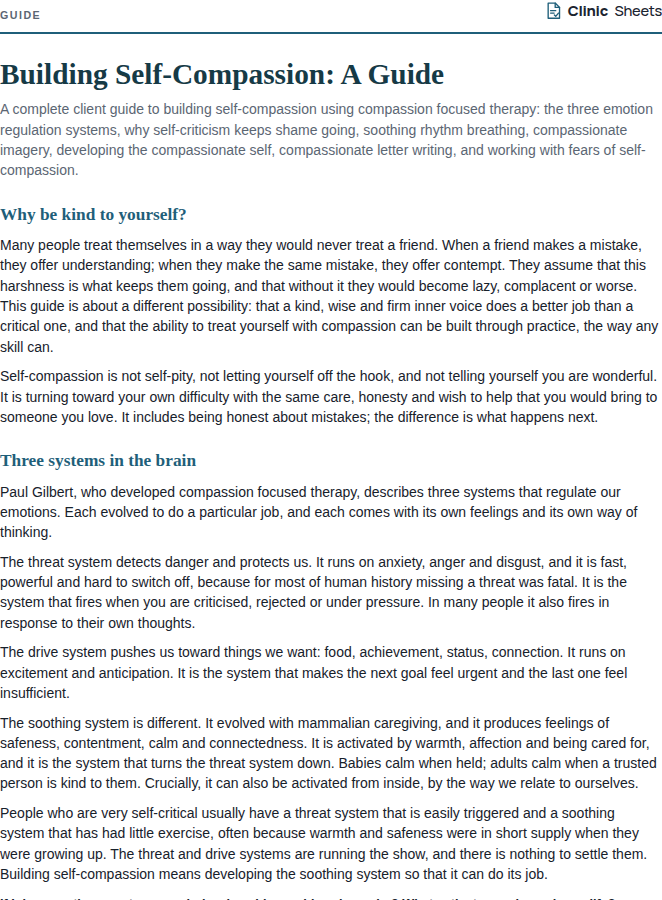
Self-criticism is a common maintaining factor across depression, anxiety, shame-based difficulties and low self-esteem. In compassion-focused therapy (CFT), Paul Gilbert describes the inner critic as an internal threat signal: it activates the same threat-protection system that responds to external hostility, so a person who attacks themselves for a mistake is, physiologically, being attacked. Repeated self-criticism keeps the threat system switched on and blocks access to the soothing system that allows for calm, reflection and repair.
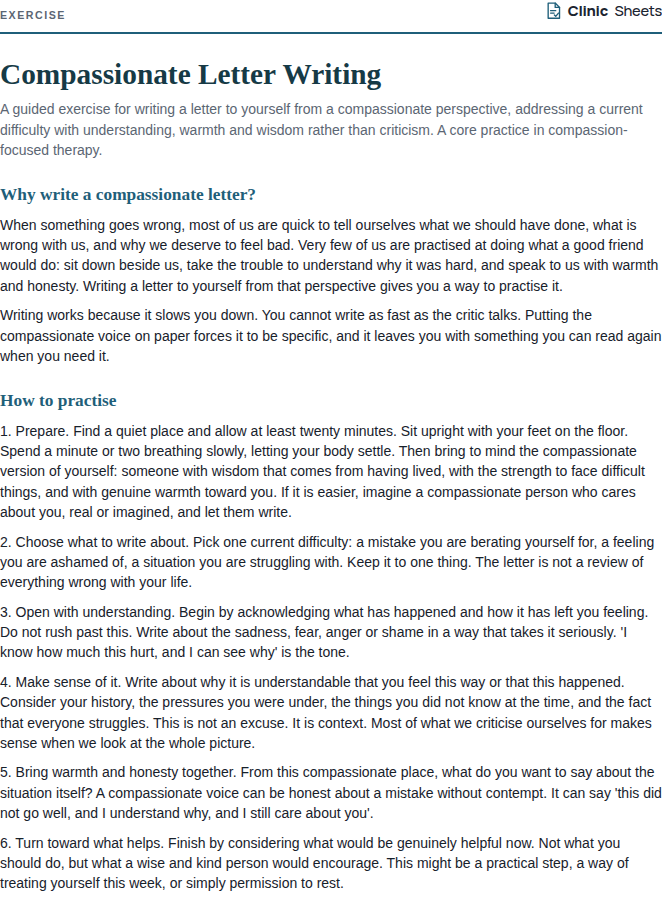
This worksheet differs from a standard thought record. Rather than testing whether the critical thought is accurate, it asks the client to notice the emotional tone and intent of the criticism, to consider what the critic is afraid of, and then to respond to the same situation from a compassionate self: a voice that is honest about the problem but warm, wise and committed to the person's wellbeing. The evidence is still relevant, but the emphasis is on changing the relationship with the thought rather than winning an argument with it.
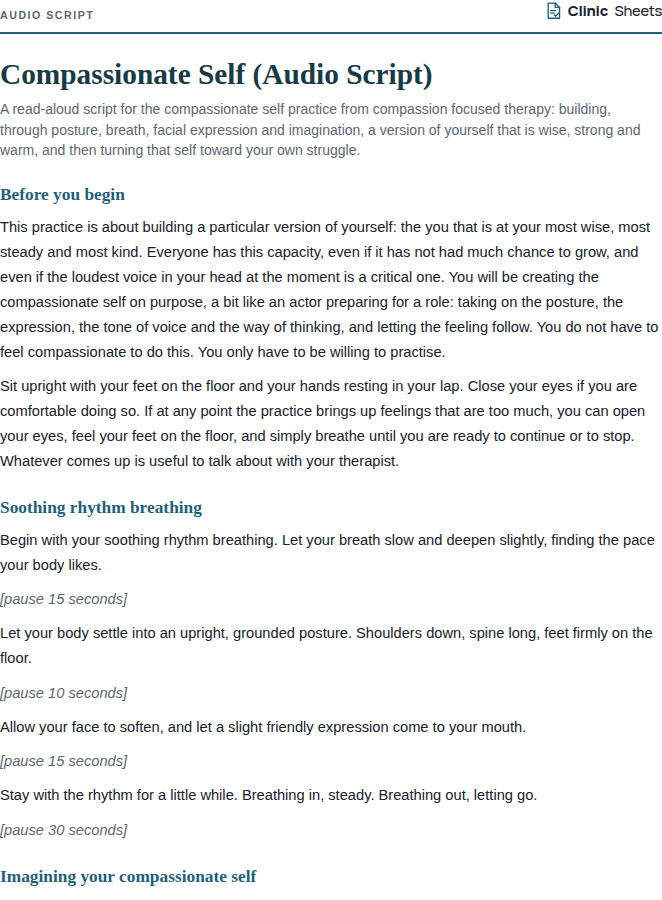
The professional version includes notes on the common objection that compassion is soft or will lower standards, on clients who feel they do not deserve compassion, and on using the compassionate self exercise (imagery and posture) before attempting the written response.
How to use it
- Introduce the three emotion systems first (see Three Emotion Systems) so the client understands self-criticism as threat activation rather than motivation.
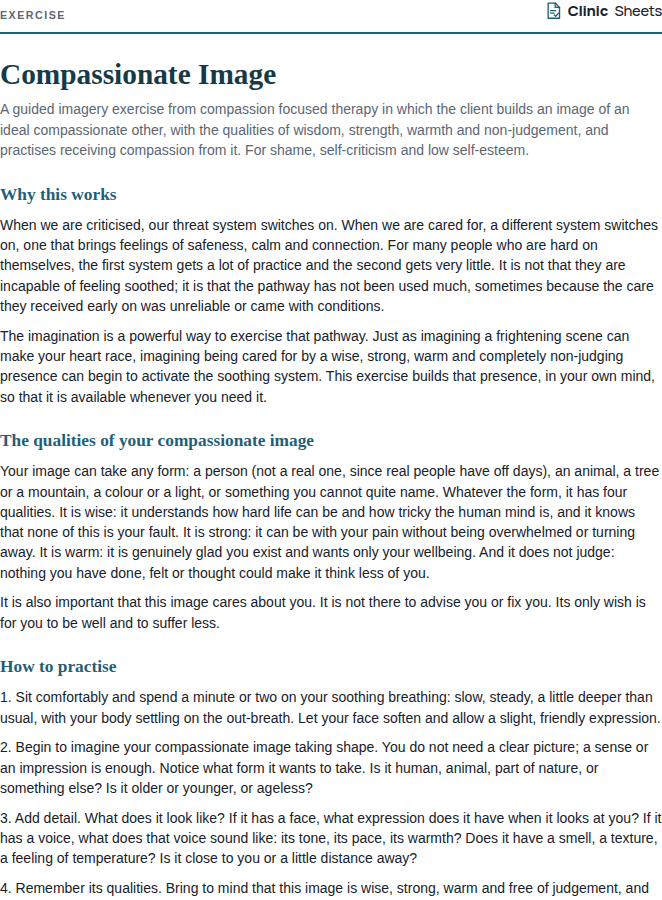
- Practise the compassionate self in session before using the worksheet: adopt an upright, open posture, slow the breathing, and spend a minute imagining oneself as someone with wisdom, strength and warmth. The written response is easier from that state.
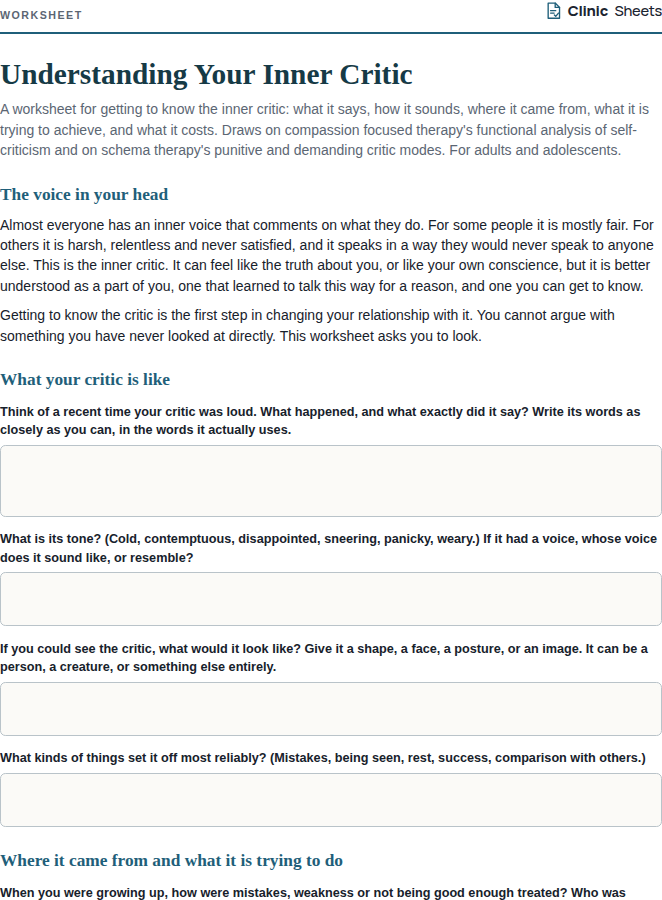
- Complete the first worksheet together using a recent, moderate example. Ask the client to say the critical thought out loud and notice its tone. Many clients are surprised by how contemptuous it sounds.
- When the client writes the compassionate response, check it for hidden criticism ('you should know better by now, but never mind'). A compassionate response acknowledges the difficulty, validates the feeling, and orients toward what would help.
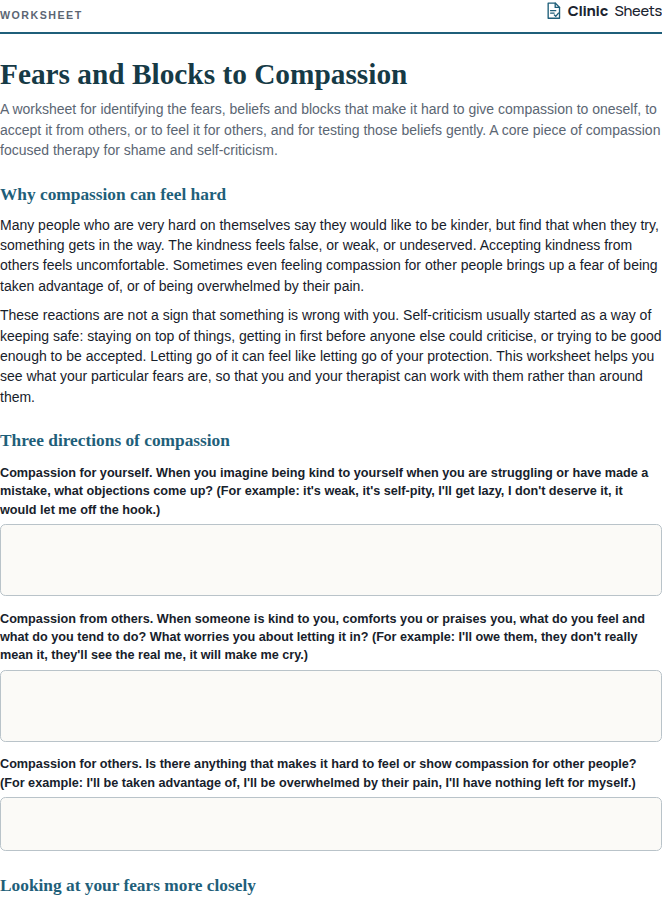
- Explore the fears about dropping self-criticism. If the client believes the critic is what keeps them functioning, plan a behavioural experiment to test that directly.
- Assign one worksheet between sessions, and review the tone of the compassionate response together each time.
References
- Gilbert, P. (2009). The Compassionate Mind. Constable.
- Gilbert, P. (2010). Compassion Focused Therapy: Distinctive Features. Routledge.
- Gilbert, P., & Procter, S. (2006). Compassionate mind training for people with high shame and self-criticism: Overview and pilot study of a group therapy approach. Clinical Psychology and Psychotherapy, 13(6), 353-379.
- Neff, K. D. (2003). Self-compassion: An alternative conceptualization of a healthy attitude toward oneself. Self and Identity, 2(2), 85-101.