Compassionate Self (Audio Script)
A read-aloud script for the compassionate self practice from compassion focused therapy: building, through posture, breath, facial expression and imagination, a version of yourself that is wise, strong and warm, and then turning that self toward your own struggle.
About this resource
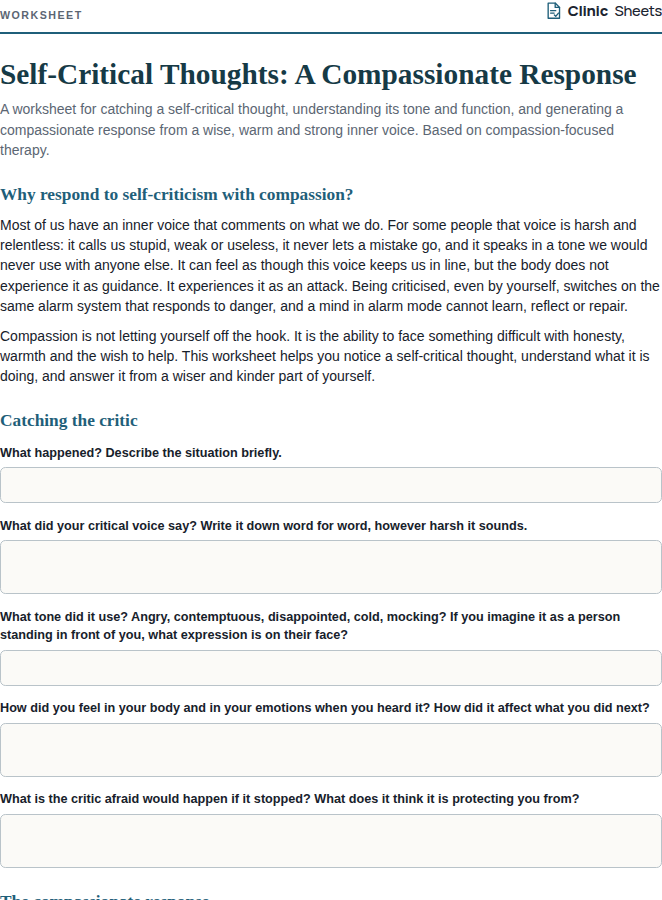
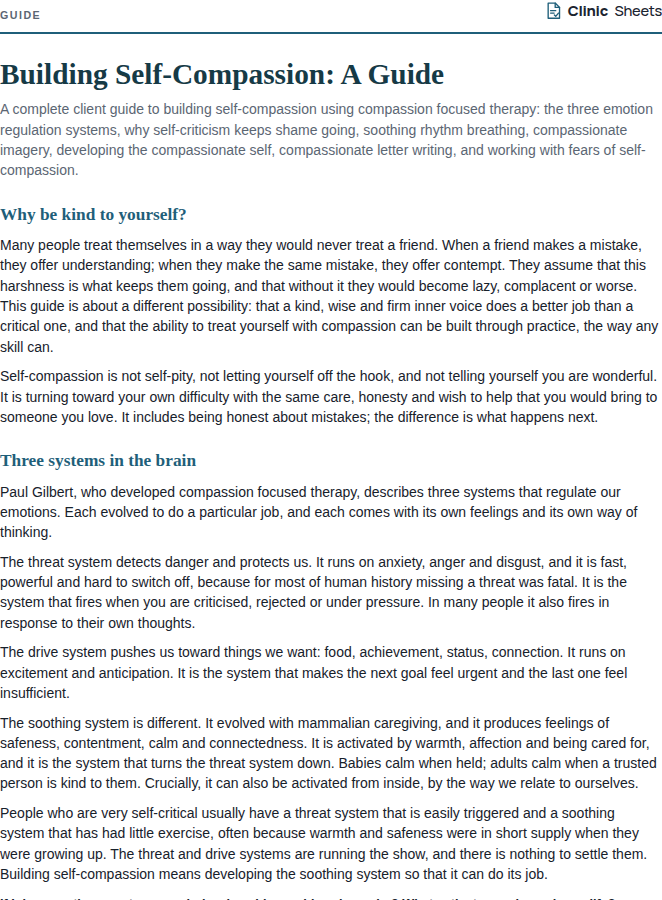
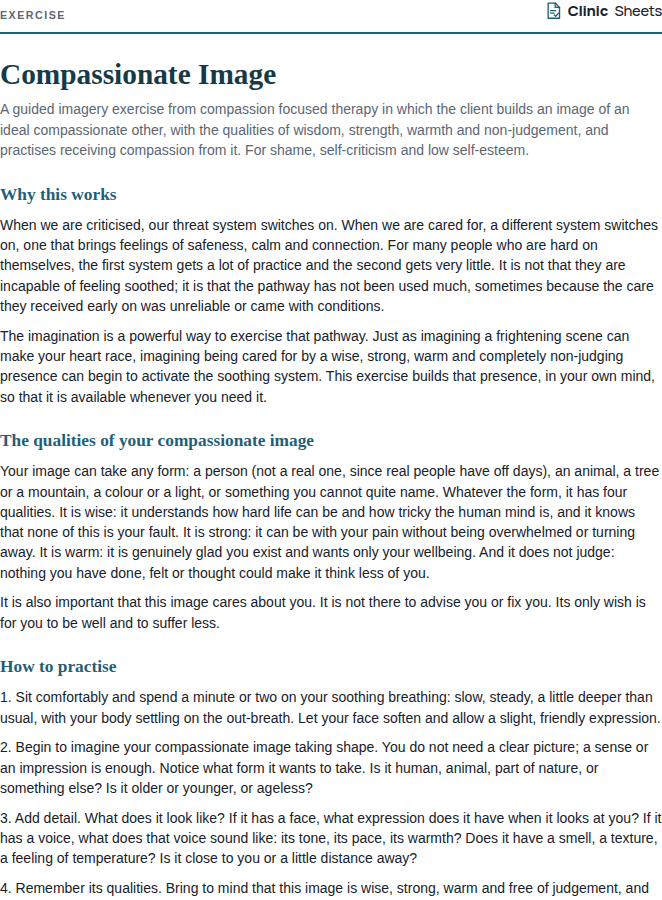
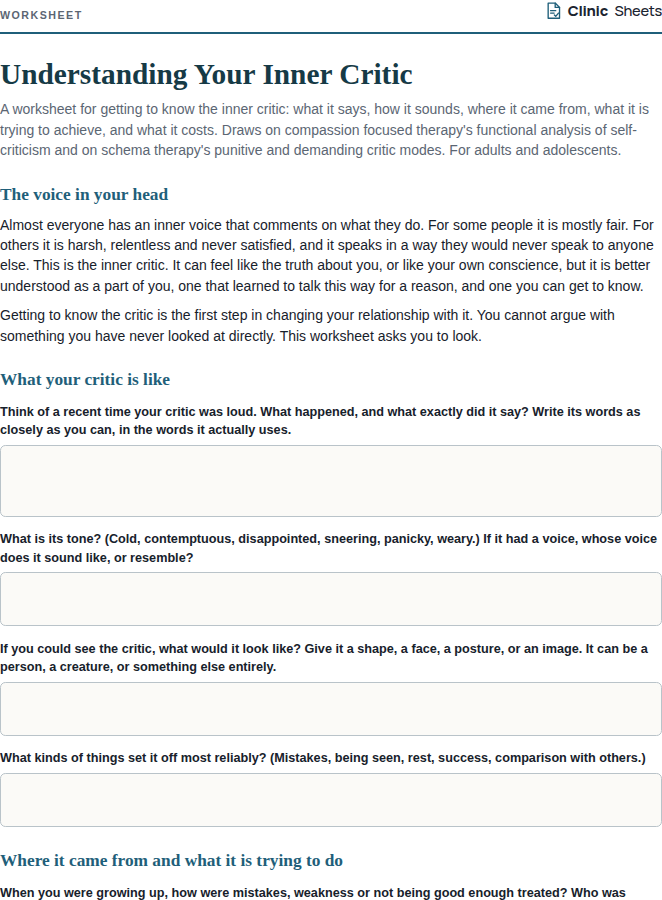
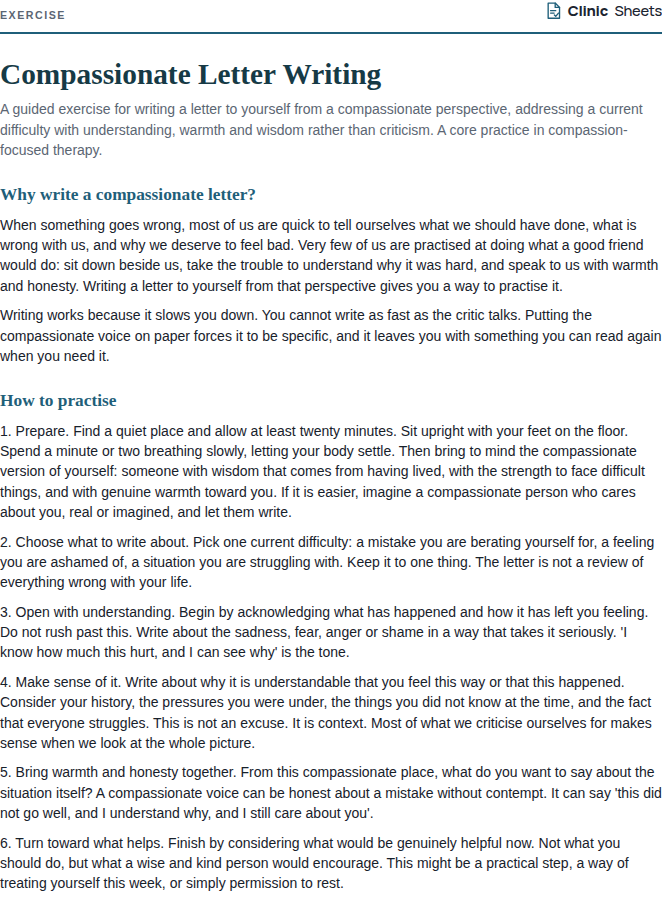
The compassionate self is a core practice in compassion focused therapy (CFT), developed by Paul Gilbert. CFT proposes that shame and self-criticism keep the threat system active and that many clients have little experience of soothing directed at themselves. Rather than trying to argue with the inner critic, CFT cultivates a different part of the self, one organised around compassion, and gradually gives it more authority. The compassionate self is built deliberately, using an approach Gilbert likens to method acting: the client adopts the posture, breathing, facial expression and tone of a compassionate person and imagines having the key qualities of compassion, whether or not they feel them yet.
Gilbert describes three central qualities. Wisdom: an understanding that we did not choose our tricky brains, our early experiences or our sensitivities, and that struggle is part of being human. Strength: a grounded, steady authority that can tolerate distress without being swept away. Commitment or warmth: a genuine wish to be helpful and to relieve suffering, one's own included. The practice begins with soothing rhythm breathing, builds the compassionate self through each quality in turn, and finishes by directing that self toward the client's own difficulty.
This script is written for recording or reading aloud, about twelve minutes. The professional version adds notes on the common blocks (clients who feel they do not deserve compassion, who fear it will make them weak or lazy, or who find warmth itself threatening), on beginning with compassion for others or for a version of the client as a child if self-directed compassion is too much, and on using the compassionate self as the voice in later chair work and letter writing.
How to use it
- Teach soothing rhythm breathing first and ensure the client has practised it for at least a week. This script assumes the rhythm is familiar.
- Discuss the three qualities (wisdom, strength, warmth) before the practice, and the idea of acting as if: the client does not need to feel compassionate to practise being compassionate, any more than an actor needs to be a king to play one.
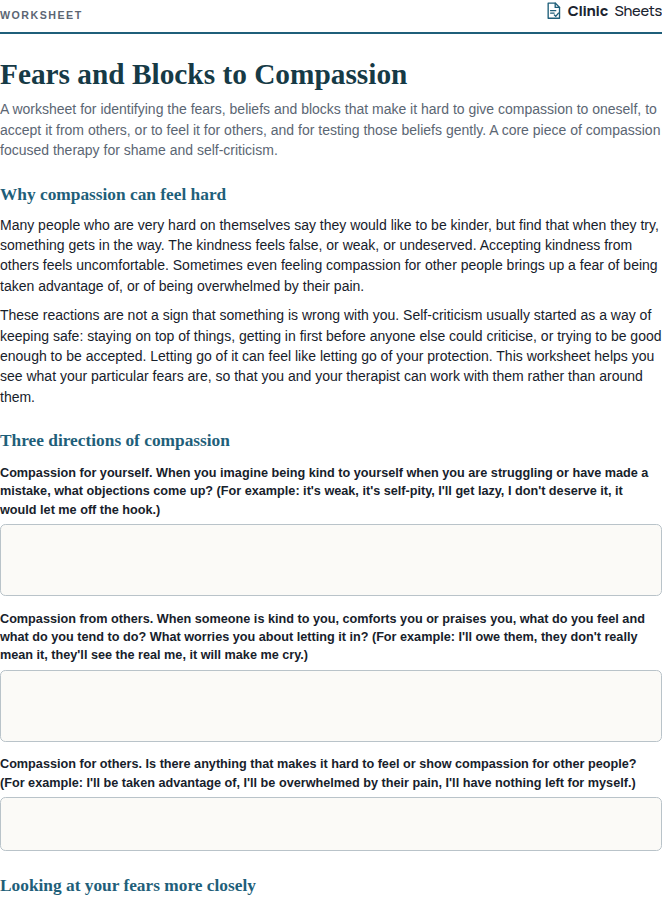
- Explore fears of compassion before and after. Many clients find the practice brings up grief, resistance or the sense of not deserving it. These reactions are important material, not failures, and should be met with the same compassionate stance.
- For clients who cannot direct compassion at themselves yet, use the practice up to the point of building the compassionate self, and then direct it toward someone else or toward the client at a younger age. Return to self-directed compassion in later sessions.
- Assign daily practice with the recording. Later, ask the client to spend a minute stepping into the compassionate self before situations they find difficult, and use the compassionate self as the speaking voice in two-chair work and compassionate letter writing.
References
- Gilbert, P. (2009). The Compassionate Mind: A New Approach to Life's Challenges. Constable.
- Gilbert, P. (2010). Compassion Focused Therapy: Distinctive Features. Routledge.
- Gilbert, P., McEwan, K., Matos, M., & Rivis, A. (2011). Fears of compassion: Development of three self-report measures. Psychology and Psychotherapy: Theory, Research and Practice, 84(3), 239-255.
- Kirby, J. N., Tellegen, C. L., & Steindl, S. R. (2017). A meta-analysis of compassion-based interventions: Current state of knowledge and future directions. Behavior Therapy, 48(6), 778-792.