Compassionate Self Practice
A method-acting style exercise from compassion focused therapy in which the client imagines becoming their compassionate self, a version of them at their wisest, strongest and warmest, and practises seeing their difficulties from that place. Builds the inner resource that later compassion work draws on.
About this resource
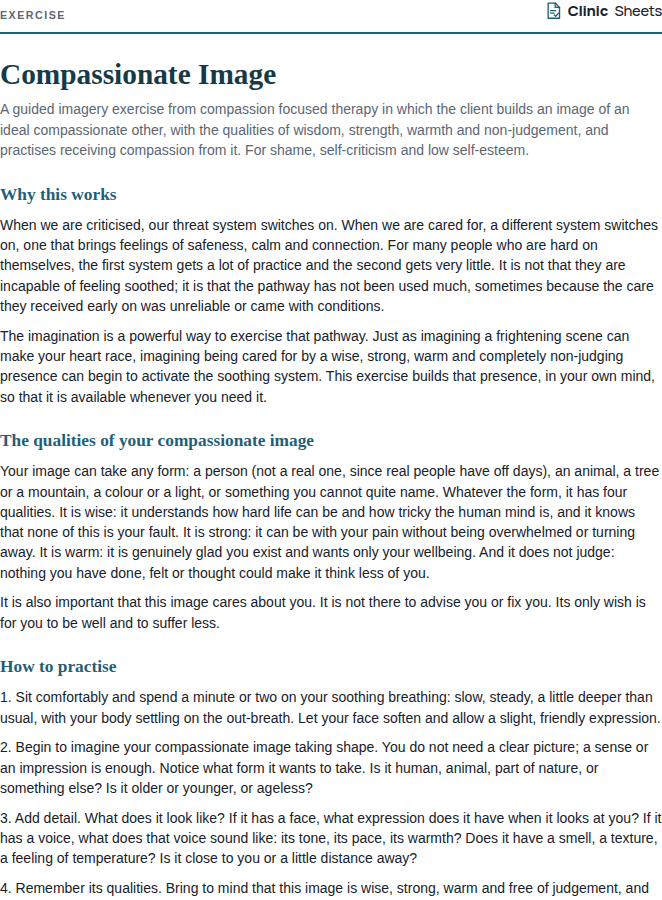
Compassionate self practice is the foundational exercise of compassionate mind training in Paul Gilbert's compassion focused therapy. Whereas the compassionate image asks the client to imagine receiving compassion from another, this exercise asks them to embody compassion themselves. Gilbert compares it to method acting: the client imagines, in detail, what it would be like to be a deeply compassionate person, with the three core qualities of wisdom, strength and commitment to caring, and practises inhabiting that identity through posture, facial expression, breathing, tone of voice and imagined behaviour. The point is not to pretend; it is that practising a pattern of mind, repeatedly, makes it more accessible.
This pattern of mind then becomes the vantage point from which the client can relate to their self-criticism, shame, depression and painful memories. In CFT, most subsequent techniques (compassionate letter writing, compassionate chair work, compassionate reframing of thoughts) are done from the compassionate self. Clients with strong shame often find that they cannot initially generate compassion for themselves directly, but they can imagine being a compassionate person looking at someone in their situation, which is why the exercise begins by building the identity before turning it towards the self.
The professional version includes notes on scaffolding the exercise for clients who report feeling nothing, on the use of the body (posture, half-smile, voice tone) as the most reliable way in, and on moving from the compassionate self to compassionate engagement with a specific difficulty.
How to use it
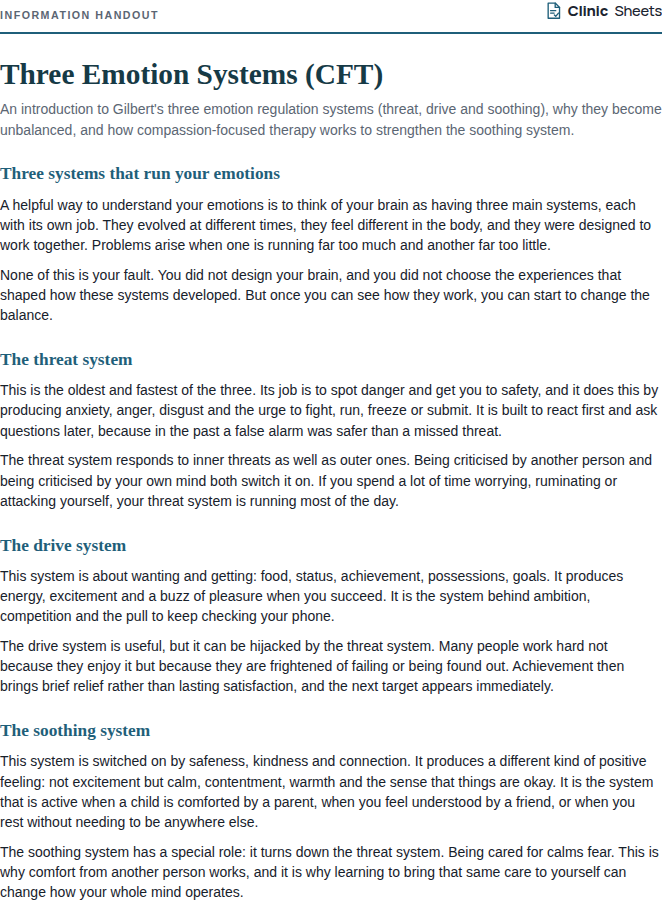
- Teach soothing rhythm breathing first, and explain the three emotion systems, so the client understands what the exercise is trying to activate.
- Introduce the method-acting frame. Ask the client to think of an actor preparing for a role, and explain that they will be building the role of a compassionate self using the same tools: imagination, body, voice.
- Guide the exercise aloud the first time. Spend most time on the qualities (wisdom, strength, warmth and commitment) and on the body: posture, facial expression, tone. These are concrete and give the client something to do even when feeling is absent.
- Once some sense of the compassionate self is present, invite the client to imagine looking at themselves through its eyes, and notice what it sees and what it wants to say or do. Keep this brief the first time.
- Debrief. Normalise feeling little or feeling awkward. Ask what part of the exercise gave the strongest sense of the compassionate self, and build on that in later practice.
- Assign daily practice of five to ten minutes. In subsequent sessions, begin compassion-focused work by asking the client to step into the compassionate self first.
References
- Gilbert, P. (2009). The Compassionate Mind: A New Approach to Life's Challenges. Constable.
- Gilbert, P. (2010). Compassion Focused Therapy: Distinctive Features. Routledge.
- Kolts, R. L. (2016). CFT Made Simple: A Clinician's Guide to Practicing Compassion-Focused Therapy. New Harbinger.
- Irons, C., & Beaumont, E. (2017). The Compassionate Mind Workbook: A Step-by-Step Guide to Developing Your Compassionate Self. Robinson.