Self-Validation
A worksheet for learning to validate your own emotions and experience: noticing self-invalidation, finding what makes sense about a reaction, and responding to yourself with accuracy and kindness.
About this resource
Validation is central to Marsha Linehan's DBT. Her biosocial theory proposes that emotion dysregulation develops through the interaction of emotional sensitivity and an invalidating environment, one that dismisses, punishes or trivialises a person's inner experience. People who grow up in such environments often learn to invalidate themselves: to tell themselves they are overreacting, that they should not feel this way, that their needs are unreasonable. Self-invalidation increases emotional intensity, feeds shame, and blocks problem-solving.
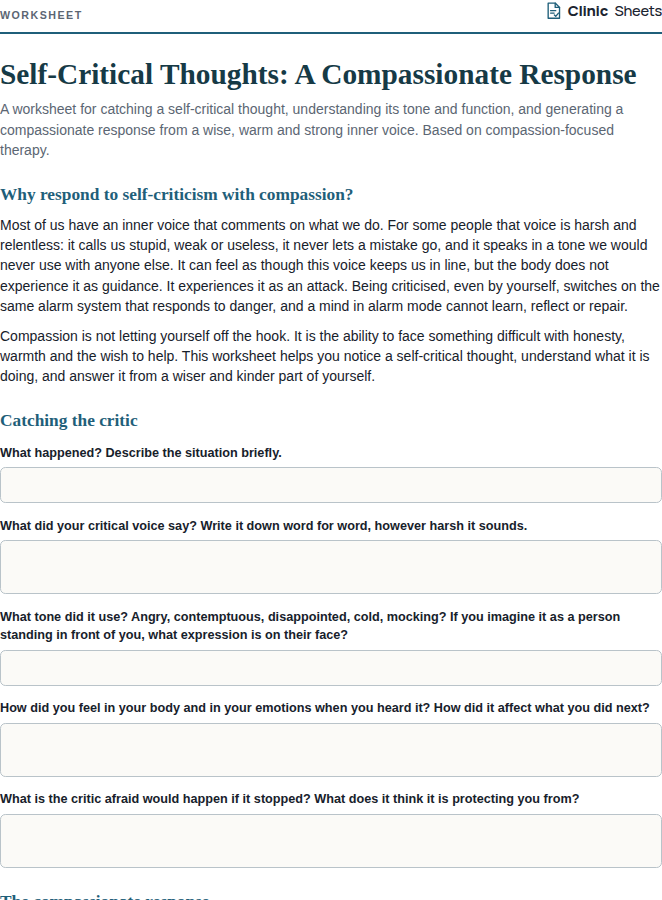
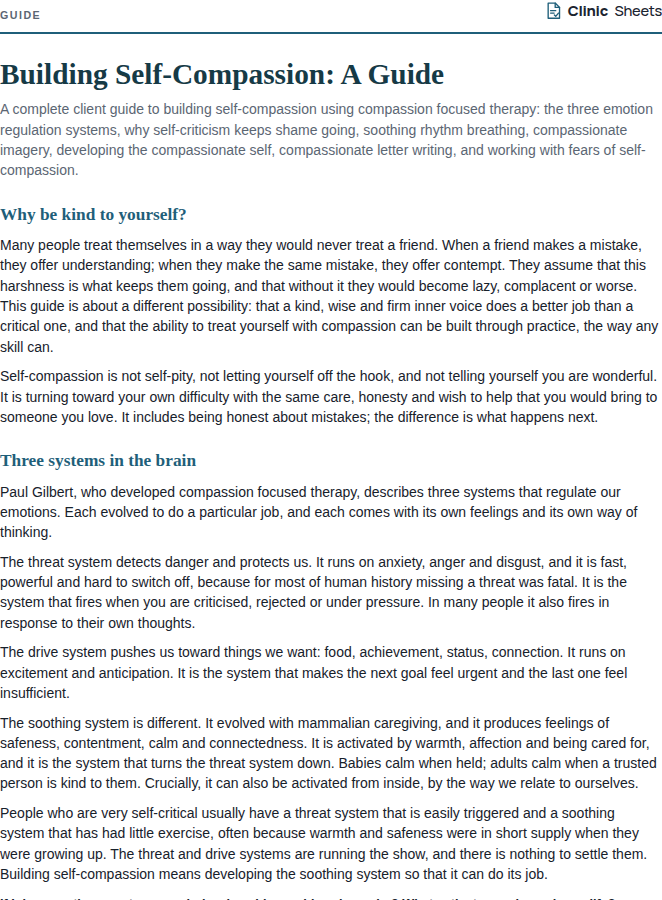
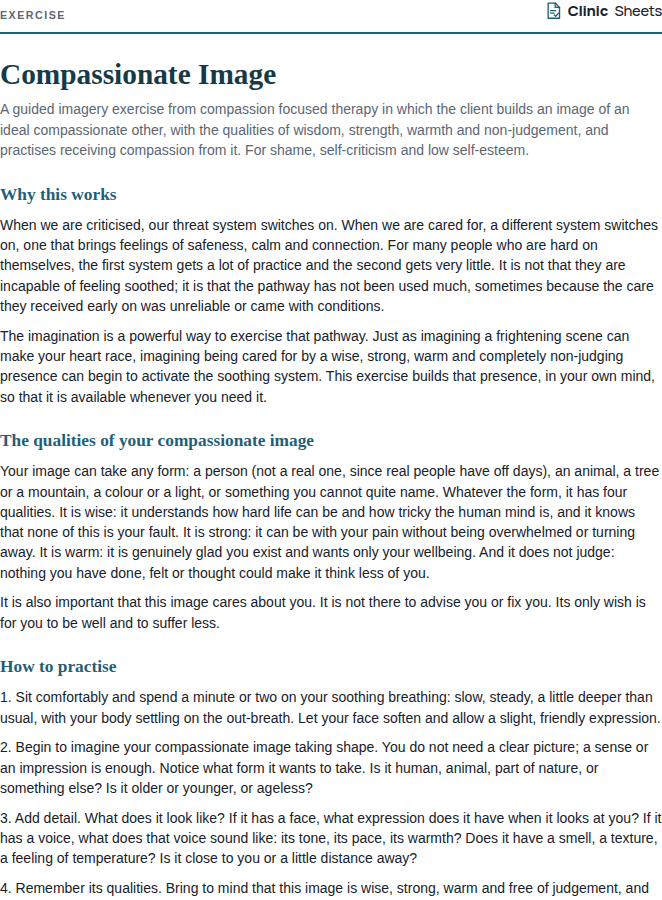
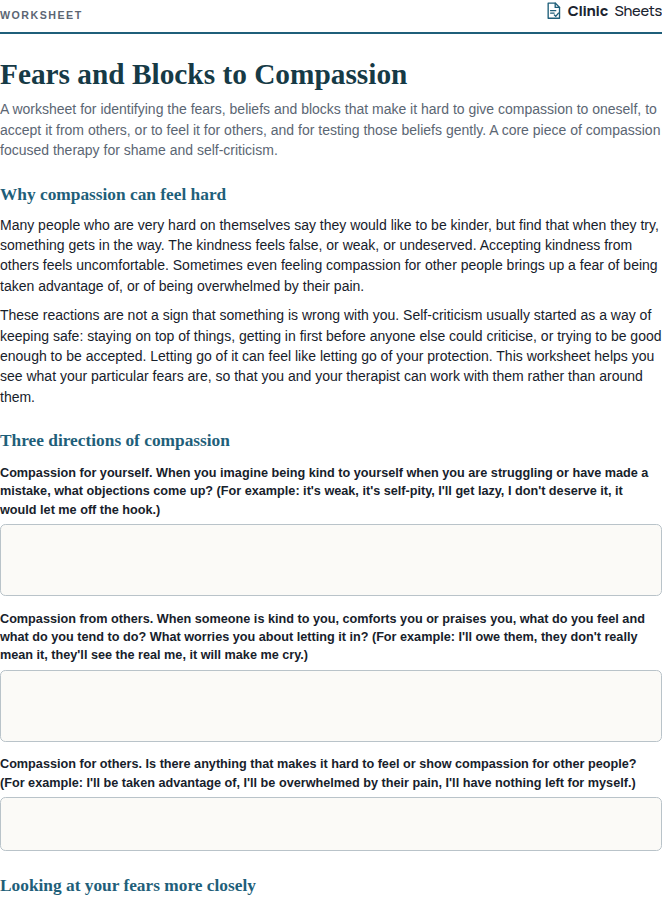
Self-validation reverses this. It means acknowledging what one feels, recognising that the feeling makes sense given the circumstances or history, and treating oneself as someone whose experience matters. It is not the same as approving of every behaviour or concluding that every thought is accurate; the aim is to validate what is valid. The skill draws on Linehan's levels of validation and overlaps with the self-compassion practices of compassion-focused therapy, where responding to distress with warmth rather than criticism is understood to calm the threat system.
The professional version adds guidance on distinguishing validation from reassurance, on working with clients who experience self-validation as self-indulgence, and on modelling validation in session so the client has a felt template for it.
How to use it
- Introduce the idea of an invalidating environment and self-invalidation gently, without blaming the client's family. Ask for examples of how they typically talk to themselves when upset.
- Model validation in session first. When the client describes a reaction, reflect it accurately and say what makes sense about it. Then ask them to try saying the same thing to themselves.
- Work through the worksheet with a recent example. Emphasise the difference between 'my feeling makes sense' and 'my feeling is a fact about the situation'.
- Address the belief that self-validation will make the client complacent or self-pitying. Point out that invalidation has not produced change either, and that validation makes room for it.
- Assign the practice log between sessions and review what was easiest and hardest to validate.
References
- Linehan, M. M. (1993). Cognitive-Behavioral Treatment of Borderline Personality Disorder. Guilford Press.
- Linehan, M. M. (2015). DBT Skills Training Manual (2nd ed.). Guilford Press.
- Gilbert, P. (2009). The Compassionate Mind. Constable.
- Neff, K. D. (2003). Self-compassion: An alternative conceptualization of a healthy attitude toward oneself. Self and Identity, 2(2), 85-101.