Crisis Coping Card
A pocket-sized crisis plan for moments of overwhelming distress or urges to self-harm: the first DBT distress tolerance skills to reach for, reasons to hold on, and who to call. Designed to be completed in session and carried by the client.
About this resource
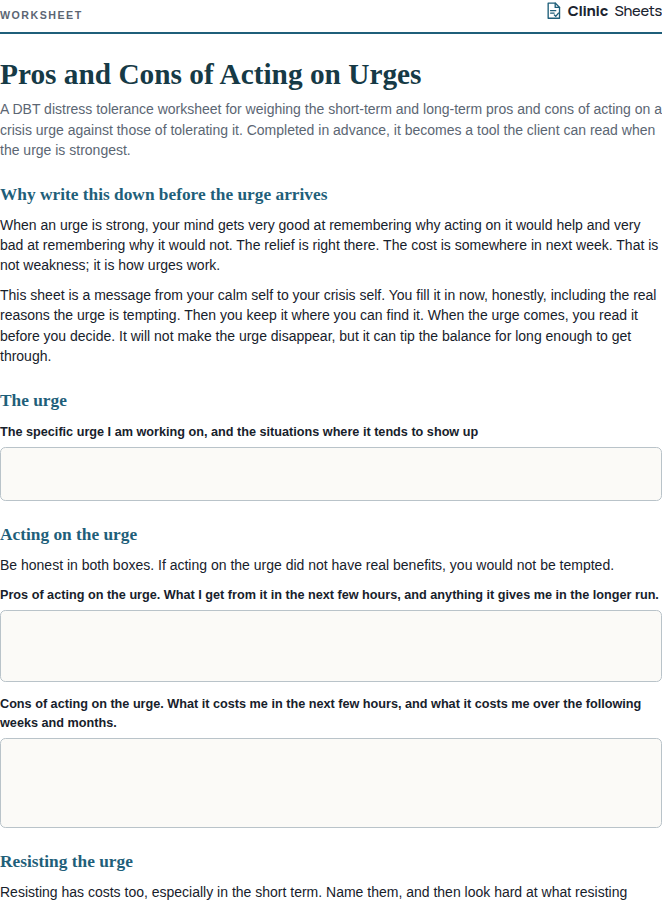
In a crisis, the capacity to think flexibly and recall skills collapses. Clients who can describe six distress tolerance skills fluently in session often cannot bring a single one to mind when overwhelmed. A crisis coping card addresses this by putting the person's chosen skills, reasons to get through the next hour, and contact numbers on a single card that lives in a wallet or on a phone. It is a compact companion to a full safety plan rather than a replacement for one.
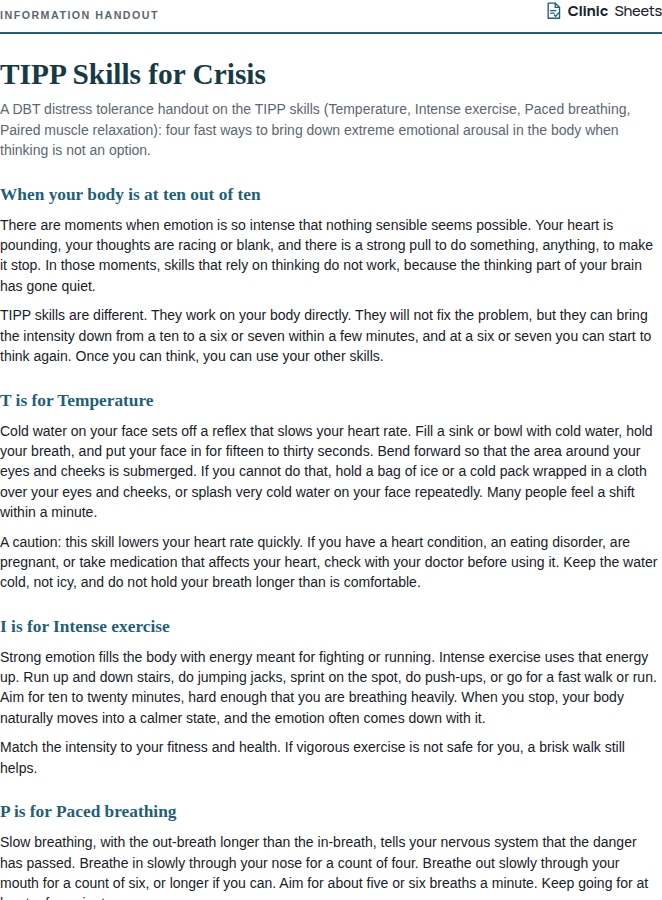
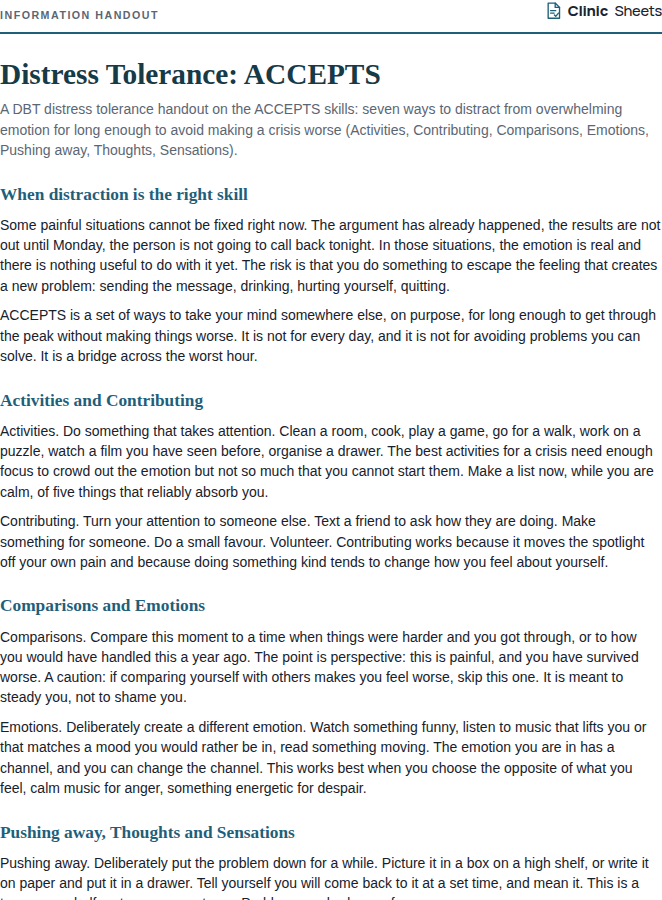
The card is organised around Linehan's DBT crisis survival skills. It begins with a skill that changes body chemistry fast, such as the TIPP skills (temperature, intense exercise, paced breathing, paired muscle relaxation), because these work even when the person cannot engage with anything cognitive. It then moves to distraction and self-soothing, then to reasons for holding on, and finally to people and services. The order matters: skills the person can do alone come first, so that reaching out is available but not the only option.
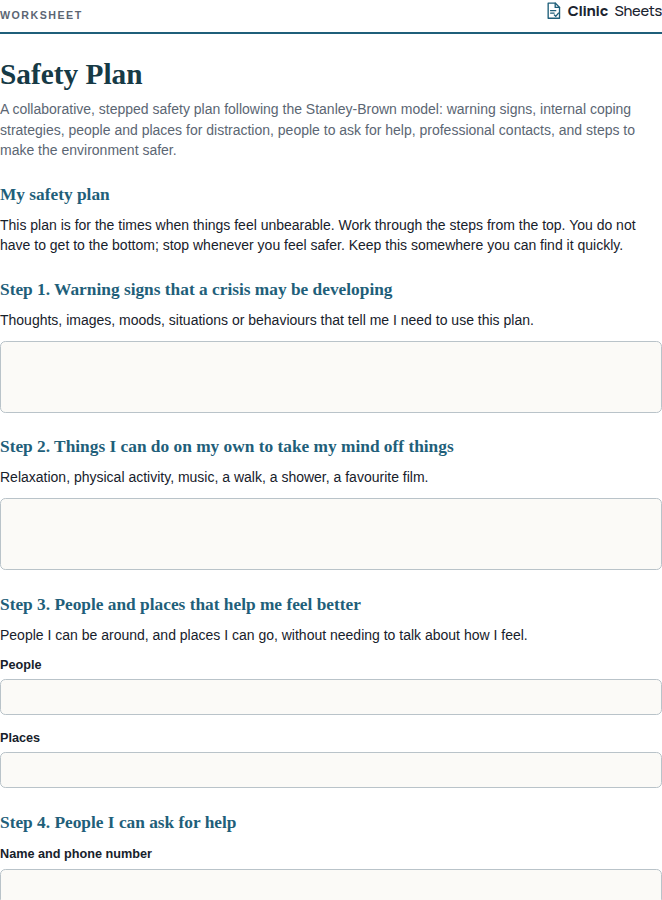
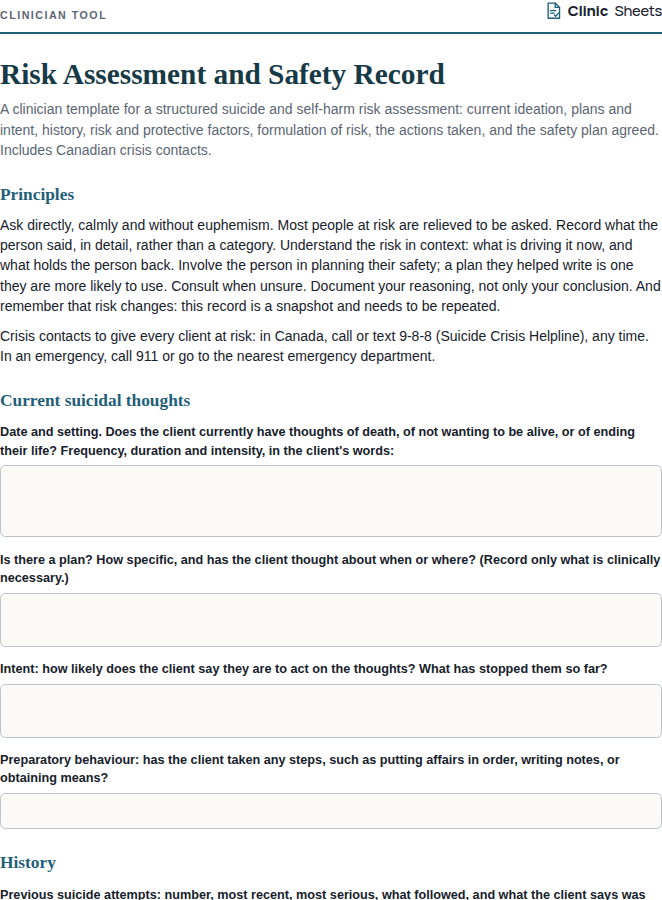
Suitable for adults and adolescents with suicidal thoughts, self-harm urges, or intense emotion dysregulation, in DBT or any treatment where distress tolerance is being taught. The professional version adds a checklist for ensuring the skills chosen have been practised at least once when calm, guidance on involving parents of adolescent clients, and notes on reviewing the card after every crisis it was, or was not, used in.
How to use it
- Complete the card after a risk assessment and after the client has learned and practised at least two or three distress tolerance skills. A skill that has never been tried when calm will not be tried in a crisis.
- Fill it in together, in the client's words. Ask 'What has actually worked, even once?' rather than offering a list.
- Keep each entry short enough to read in a state of high distress. If the client writes a paragraph, help them cut it to a few words.
- Have the client photograph the completed card and put the photo in a favourites folder on their phone, and keep the paper copy in a wallet or bag.
- For adolescents, agree with the client which parts, if any, a parent will see, and add a parent or caregiver to the contact section if the client is willing.
- Review the card at the start of the next session after any crisis. Ask whether it was used, what helped, and what to change.
References
- Linehan, M. M. (2015). DBT Skills Training Manual (2nd ed.). Guilford Press.
- Stanley, B., & Brown, G. K. (2012). Safety Planning Intervention: A brief intervention to mitigate suicide risk. Cognitive and Behavioral Practice, 19(2), 256-264.
- Rathus, J. H., & Miller, A. L. (2015). DBT Skills Manual for Adolescents. Guilford Press.