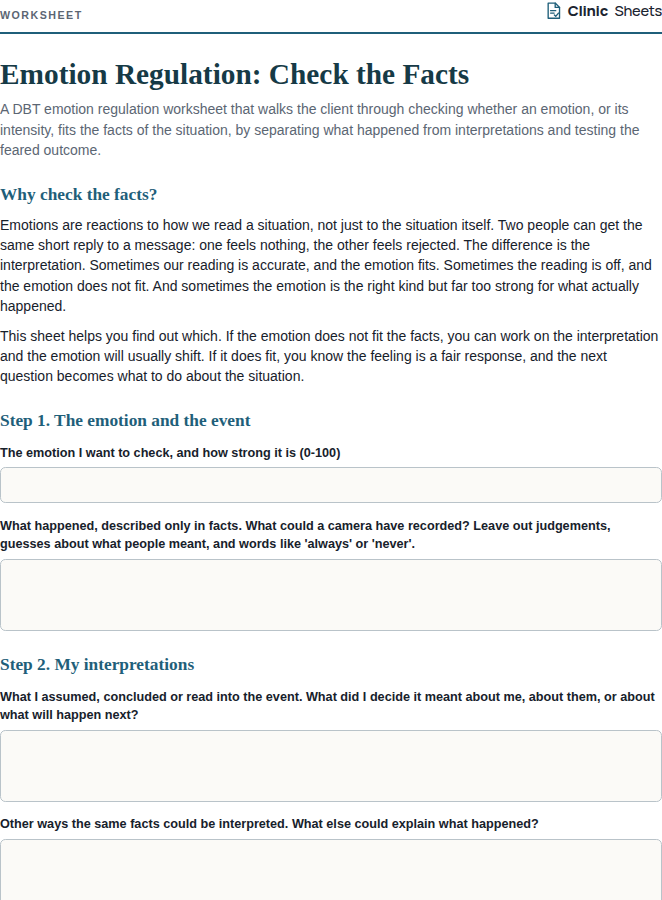
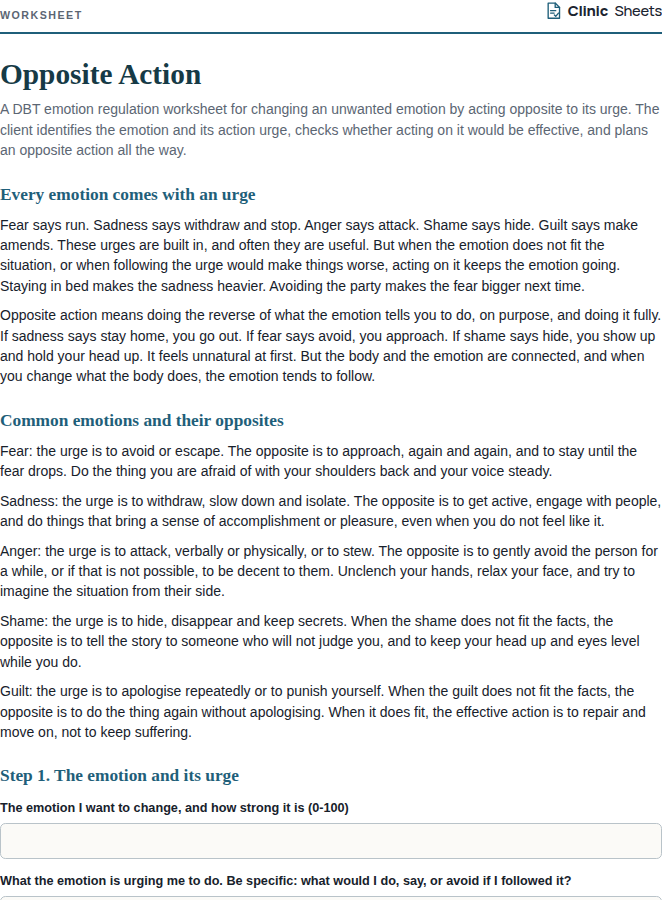
Emotion Regulation Strategies Menu
A handout that organises emotion regulation strategies into a menu, from changing the situation and where attention goes, to changing how a situation is interpreted, to managing the emotional response itself once it is under way. Draws on Gross's process model and DBT emotion regulation skills.
About this resource
Gross's process model of emotion regulation describes five points at which an emotional response can be influenced: selecting the situation, modifying the situation, deploying attention, changing cognitive appraisal, and modulating the response once it has occurred. Strategies that act earlier in the sequence, particularly reappraisal, are generally associated with better outcomes than strategies such as suppression that act late. Linehan's DBT adds a structured skills set for the same territory: reducing vulnerability to emotion, checking the facts, opposite action, and crisis survival skills for when an emotion is already at full intensity.
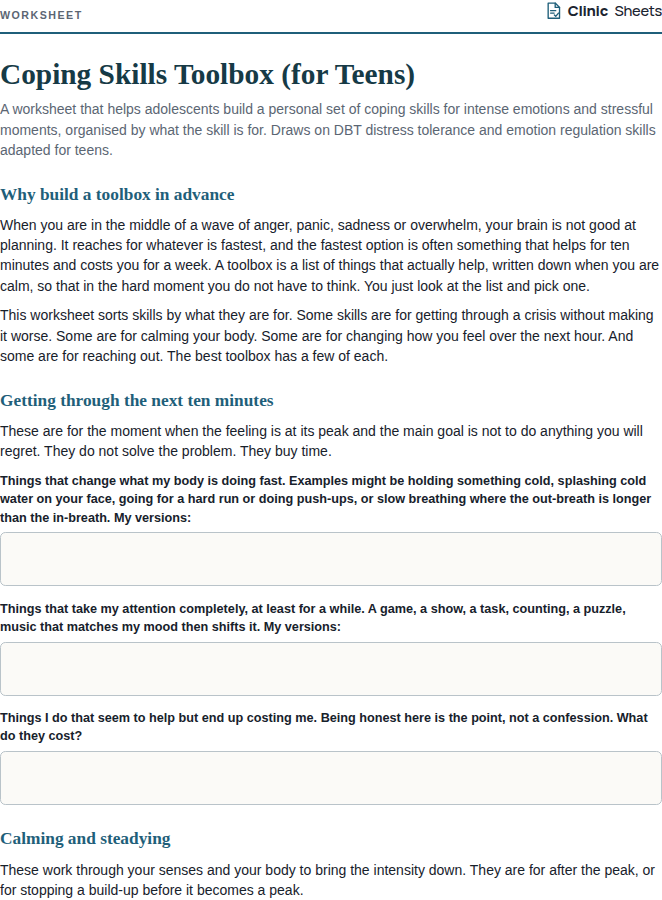
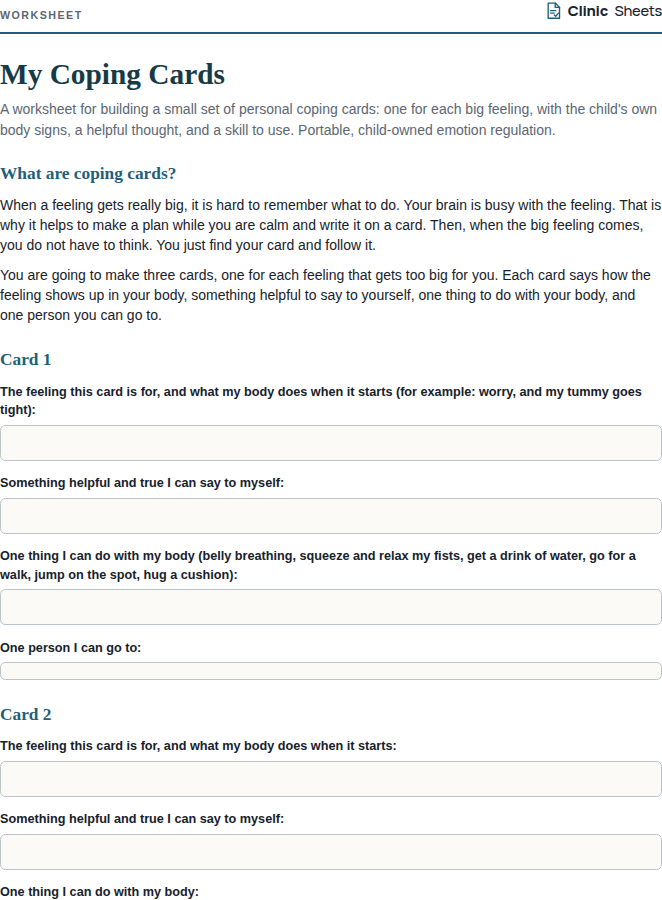
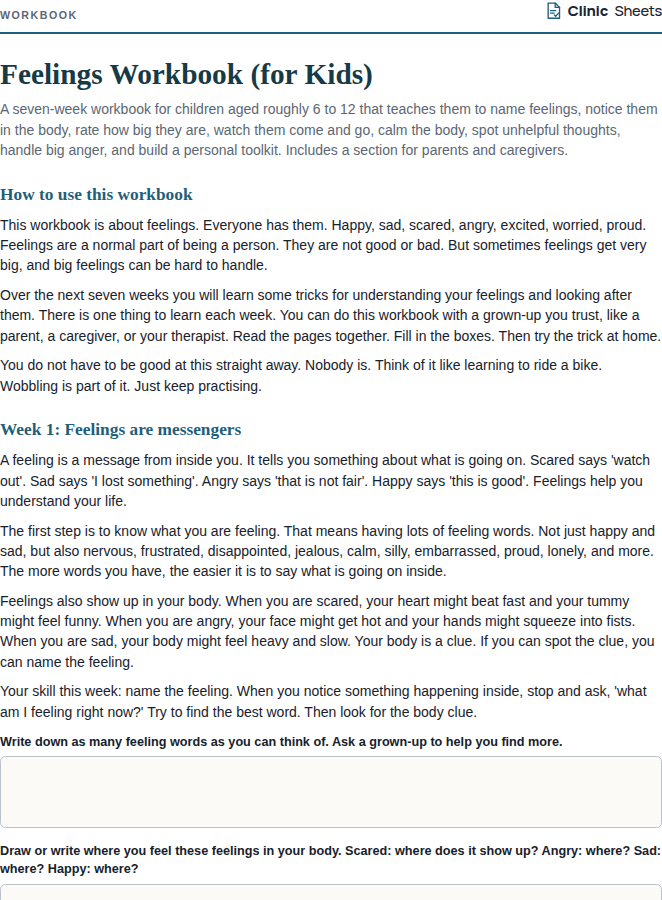
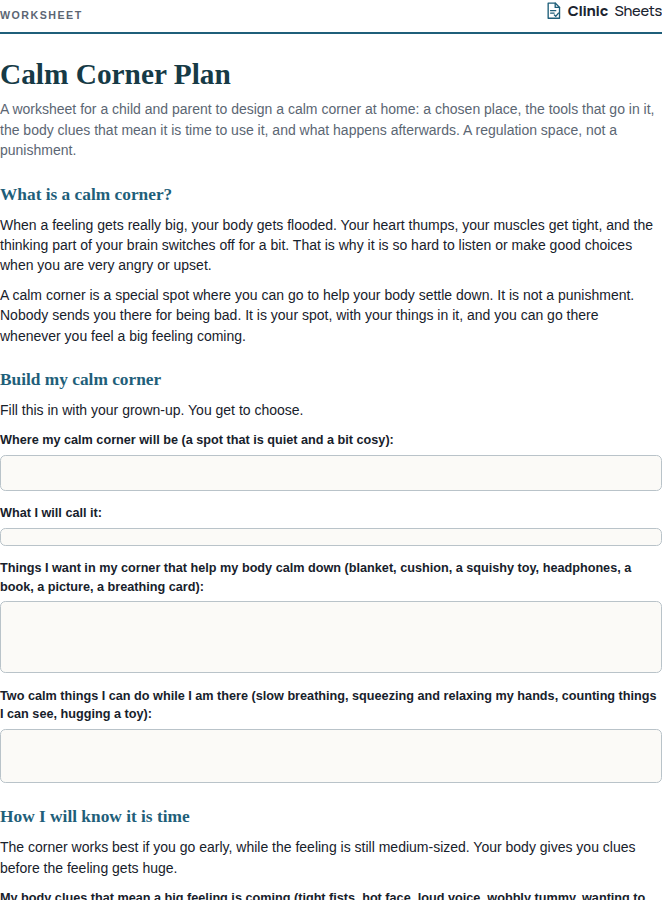
This handout presents these ideas as a menu rather than a sequence. Clients with emotion dysregulation often know one or two strategies and apply them regardless of the situation, or reach for late-stage strategies such as suppression and avoidance because they are the only ones available in the moment. Seeing the full range laid out, grouped by when in the emotional sequence each applies, helps clients notice where they have gaps and choose a strategy that fits the situation.
The professional version includes notes on which strategies suit which stage of an emotional episode, on matching the menu to a client's formulation, and on the distinction between regulation that serves the person's goals and regulation that avoids emotion altogether.
How to use it
- Introduce the handout after basic psychoeducation about emotions: that they have a function, that they rise and fall on their own, and that intensity, not the emotion itself, is usually the problem.
- Go through each group of strategies and ask the client which they already use, which they overuse, and which they have never tried. Most clients find that their repertoire is concentrated in one or two groups.
- Use the reflection fields to identify two or three strategies from under-used groups to practise over the coming weeks. Rehearse them in session where possible.
- Link the strategies to specific recurring situations from the client's life, and note that different situations call for different approaches: reappraisal for a misread email, crisis skills for a panic surge, situation selection for a predictable trigger.
- Revisit the menu when a strategy fails. The question is not whether the client tried hard enough but whether the strategy fitted the moment.
References
- Gross, J. J. (1998). The emerging field of emotion regulation: An integrative review. Review of General Psychology, 2(3), 271-299.
- Linehan, M. M. (2015). DBT Skills Training Manual (2nd ed.). Guilford Press.
- Aldao, A., Nolen-Hoeksema, S., & Schweizer, S. (2010). Emotion-regulation strategies across psychopathology: A meta-analytic review. Clinical Psychology Review, 30(2), 217-237.