Interpersonal Myths and Cheerleading Statements (DBT)
A worksheet for identifying the beliefs that stop people asking for what they need or saying no, testing them, and building personal cheerleading statements to use before and during difficult conversations.
About this resource
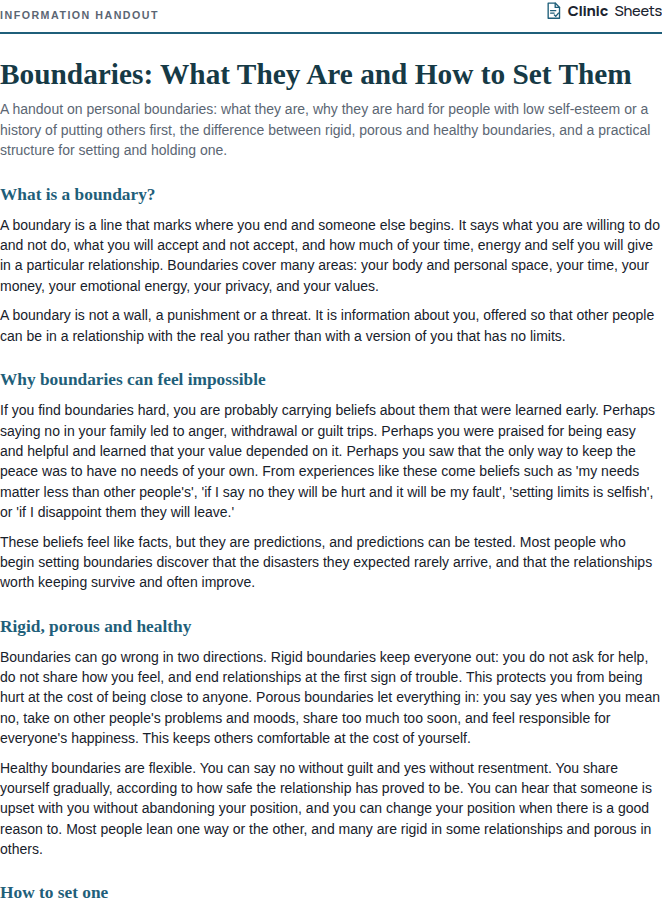
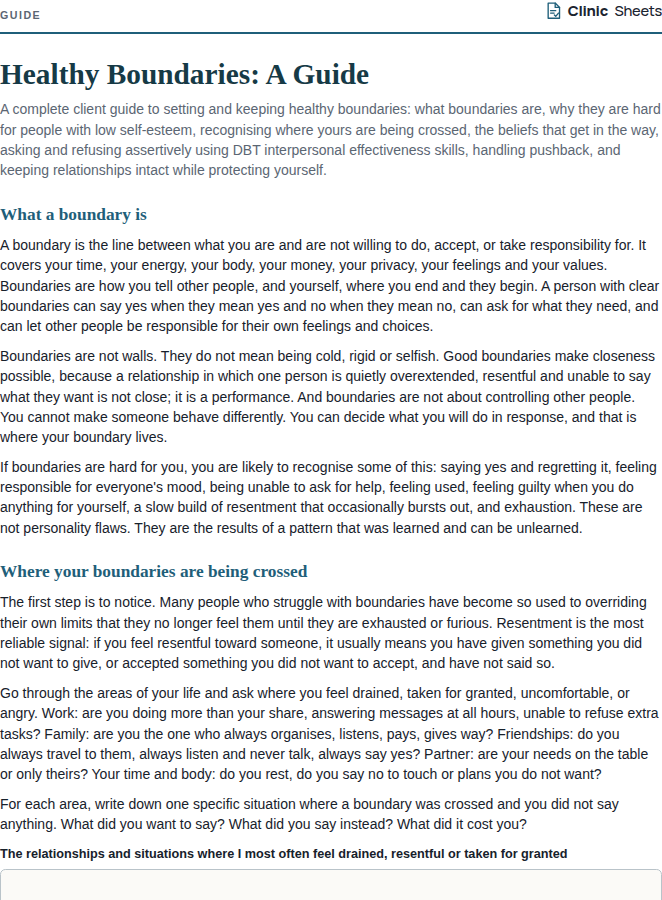
In Marsha Linehan's DBT skills training, the interpersonal effectiveness module recognises that skills such as DEAR MAN fail not only because people lack the skill but because beliefs get in the way of using it. Linehan calls these interpersonal myths: assumptions such as that asking for something shows weakness, that saying no will make people leave, or that one's needs are less important than other people's. The module pairs myth-challenging with cheerleading statements, which are self-statements a person prepares in advance to counter the myths and support skilful behaviour in the moment.
This is cognitive work in the service of behaviour change. The myths function like the conditional assumptions described in cognitive therapy, and the cheerleading statements function like coping cards. What DBT adds is a specific focus on interpersonal situations and on the dialectic between validating the fear behind the myth and challenging its accuracy. This worksheet asks the client to write their own myths in their own words rather than tick a list, so that the statements they develop are personally meaningful.
The professional version adds guidance on eliciting myths through recent examples of unassertive or unskilful behaviour, on connecting myths to core beliefs where relevant, and on rehearsing cheerleading statements alongside DEAR MAN practice.
How to use it
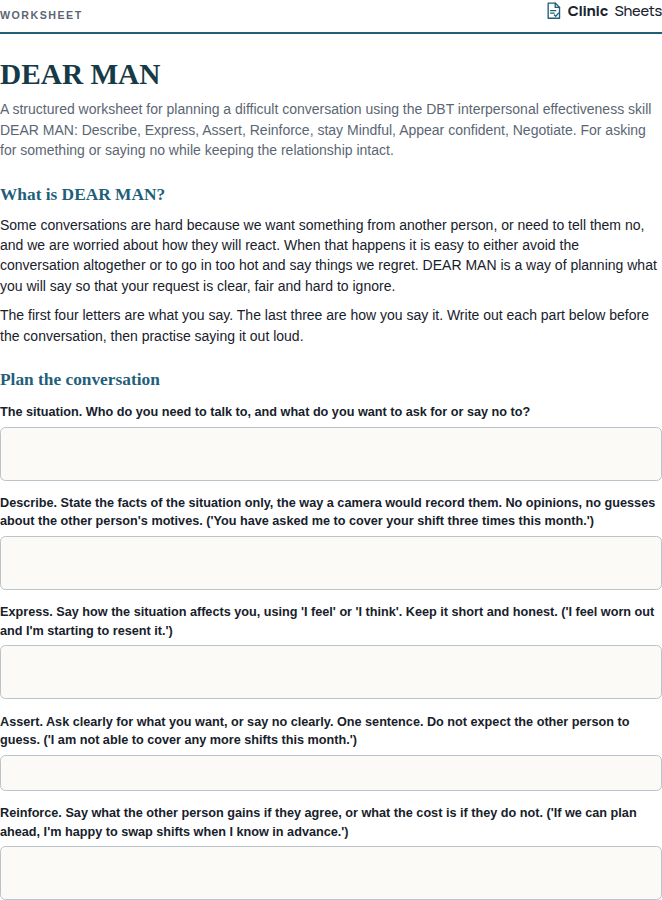
- Use after introducing DEAR MAN, GIVE and FAST, when the client reports knowing the skill but not using it.
- Ask about a recent situation where the client did not ask for something, did not say no, or gave in. Ask what went through their mind just before. The myths usually surface here.
- Help the client write each myth as a clear statement, then examine it: where did it come from, what is the evidence, what does it cost, and what is a more accurate and helpful belief?
- Turn the more accurate belief into a short cheerleading statement in the client's own words. Test it by asking whether they would believe it in the moment. Revise until they would.
- Have the client read the statements before a planned difficult conversation and keep a copy on their phone. Review which ones helped.
References
- Linehan, M. M. (2015). DBT Skills Training Manual (2nd ed.). Guilford Press.
- Linehan, M. M. (2015). DBT Skills Training Handouts and Worksheets (2nd ed.). Guilford Press.
- Beck, J. S. (2020). Cognitive Behavior Therapy: Basics and Beyond (3rd ed.). Guilford Press.