IMPROVE the Moment (DBT)
A handout on the DBT crisis survival skill IMPROVE the Moment: seven ways to make a painful moment more bearable using imagery, meaning, prayer, relaxation, one thing at a time, a brief vacation and self-encouragement.
About this resource
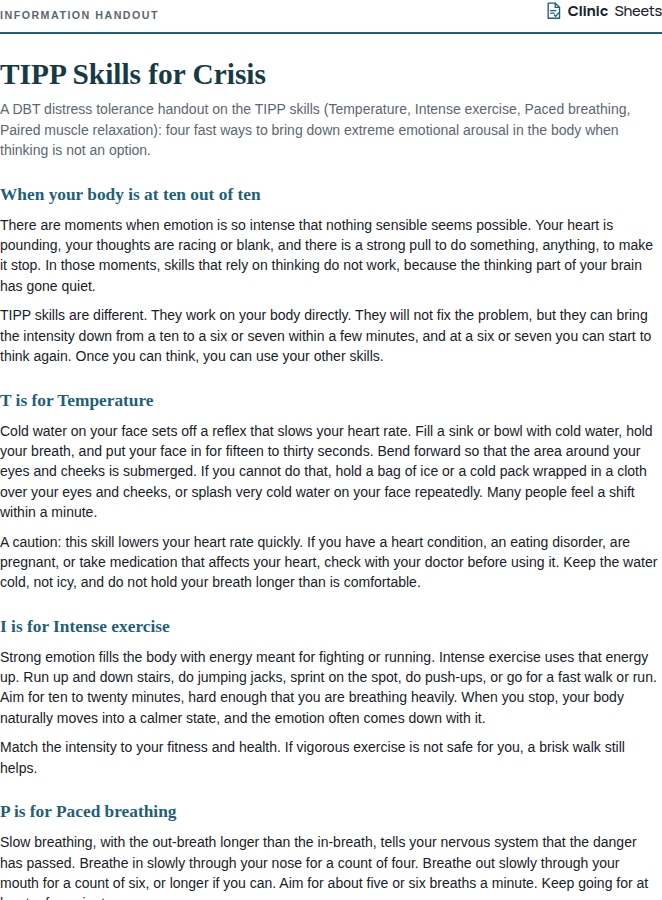
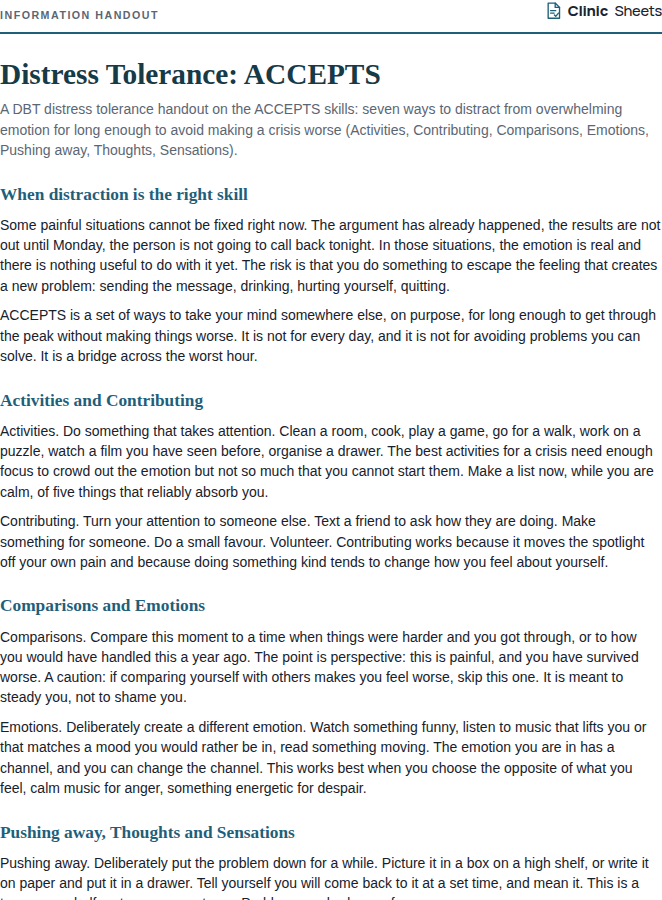
IMPROVE the Moment is a crisis survival skill from the distress tolerance module of Marsha Linehan's DBT skills training. Like the other crisis survival skills, it is intended for situations that cannot be changed right now, where the goal is to tolerate distress without acting on urges that would make things worse. The acronym lists seven strategies: Imagery, Meaning, Prayer, Relaxing actions, One thing in the moment, Vacation (brief), and self-Encouragement (and rethinking the situation).
The skill draws on several established approaches: guided imagery, meaning-making as described in the existential tradition, relaxation training, present-moment focus from mindfulness, and coping self-statements from cognitive therapy. What DBT adds is packaging these into a memorable list the client can draw on when thinking is difficult. Different strategies suit different people, and the client should identify which two or three they will actually use.
The professional version adds notes on adapting Prayer for non-religious clients, on setting limits around the Vacation strategy so it does not become avoidance, and on developing personalised encouraging statements that the client believes.
How to use it
- Introduce IMPROVE after the client understands the purpose of crisis survival skills: getting through, not fixing.
- Go through each letter briefly and ask the client to rate how likely they are to use it. Concentrate on the two or three with the highest ratings and develop them concretely.
- For Imagery, help the client build a specific safe or calming scene with sensory detail, and rehearse it in session.
- For Encouragement, write out three statements in the client's own words that they find believable. Generic affirmations rarely work.
- Agree what a brief Vacation looks like for this client, with a clear end point, so that it remains a skill rather than escape.
References
- Linehan, M. M. (2015). DBT Skills Training Manual (2nd ed.). Guilford Press.
- Linehan, M. M. (2015). DBT Skills Training Handouts and Worksheets (2nd ed.). Guilford Press.
- Rathus, J. H., & Miller, A. L. (2015). DBT Skills Manual for Adolescents. Guilford Press.