Introduction to DBT Skills
An orientation handout for clients starting Dialectical Behaviour Therapy. It explains what DBT is, the idea of dialectics, the biosocial model of emotional sensitivity, and the four skills modules they will learn.
About this resource
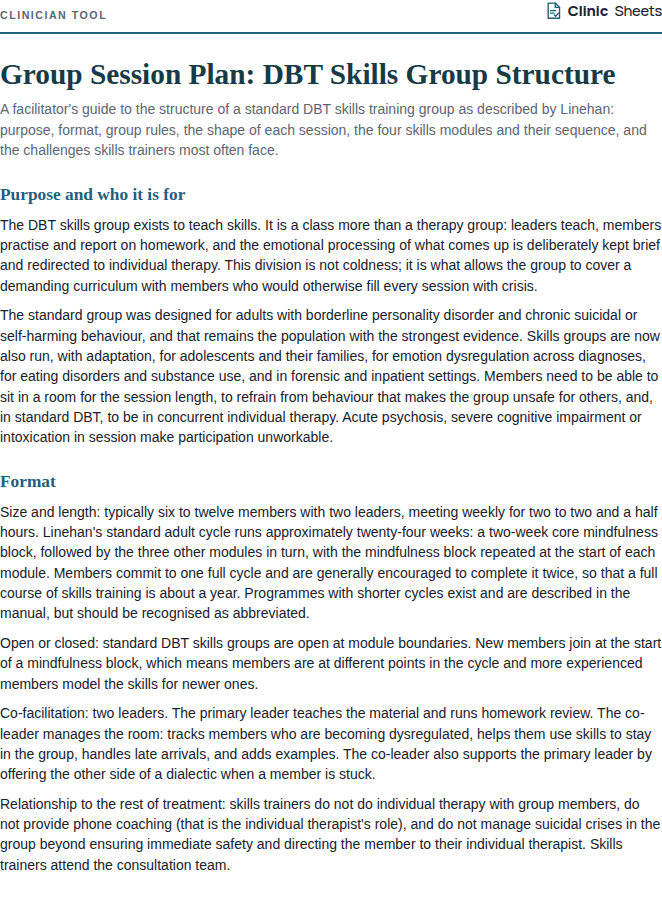
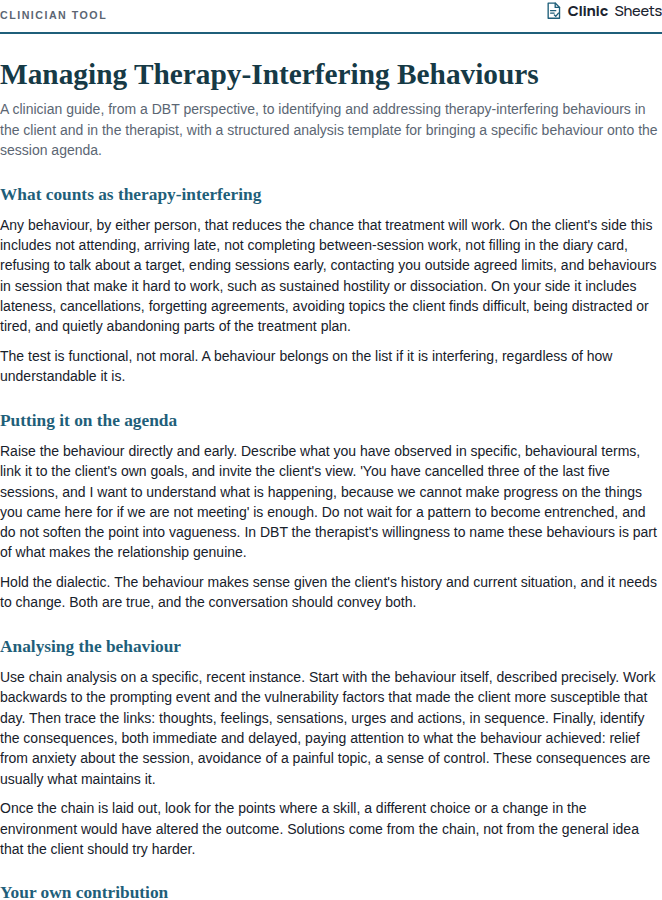
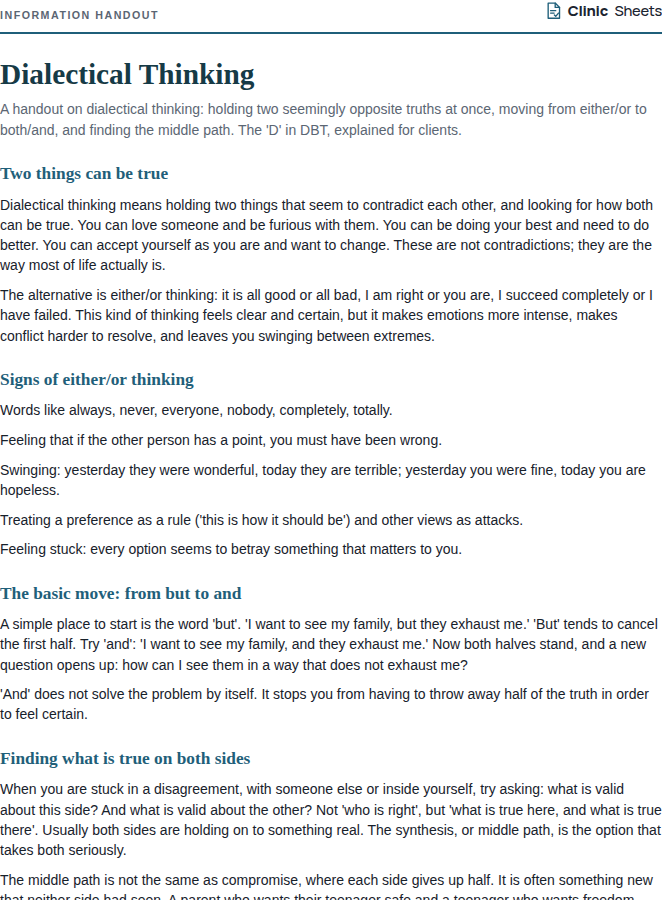
Dialectical Behaviour Therapy, developed by Marsha Linehan, was designed for people whose emotions are intense, quick to rise and slow to settle, and who have often been told that their reactions are too much. DBT holds two things at once: that the person is doing the best they can, and that they need to learn new skills to build a life worth living. That balance of acceptance and change is the dialectic at the heart of the treatment, and it is the first thing a new client needs to understand.
This handout orients the client to the model before skills training begins. It covers the biosocial theory in accessible terms (a sensitive emotional system meeting an environment that did not know how to respond to it), explains what a dialectic is with everyday examples, and introduces the four skills modules: mindfulness, distress tolerance, emotion regulation and interpersonal effectiveness. It closes with the DBT assumptions about clients, which many people find validating to read.
It is written for adults and adolescents and avoids clinical jargon where possible. It suits the first individual session or the first skills group, and it can be sent home with the client so that family members can read it too. It also provides a shared vocabulary that the rest of the skills handouts build on.
The professional version adds notes on how to present the biosocial model without implying blame toward caregivers, guidance on adolescent and family adaptations, and a short list of the commitments that are typically discussed before treatment begins.
How to use it
- Give the handout at the start of treatment, after initial assessment and before the first skills module. Read the biosocial section together and ask whether it fits the client's experience.
- Explain the dialectic using the client's own situation: where they are caught between two things that both seem true, such as wanting help and not trusting it.
- Walk briefly through the four modules and ask which one the client thinks they need most. This builds investment and gives you information about their self-understanding.
- Read the assumptions aloud and ask the client which one is hardest to believe. This often opens a useful conversation about shame and self-blame.
- Return to the handout when the client becomes discouraged during treatment. The assumptions and the dialectic of acceptance and change are worth repeating.
References
- Linehan, M. M. (1993). Cognitive-Behavioral Treatment of Borderline Personality Disorder. Guilford Press.
- Linehan, M. M. (2015). DBT Skills Training Manual (2nd ed.). Guilford Press.
- Rathus, J. H., & Miller, A. L. (2015). DBT Skills Manual for Adolescents. Guilford Press.
- Crowell, S. E., Beauchaine, T. P., & Linehan, M. M. (2009). A biosocial developmental model of borderline personality: Elaborating and extending Linehan's theory. Psychological Bulletin, 135(3), 495-510.