Nightmare Rescripting
A worksheet for imagery rehearsal therapy: writing out a recurring nightmare, changing it in any way the client chooses, and rehearsing the new version in imagination each day until the nightmare loses its hold.
About this resource
Recurring nightmares are among the most persistent and distressing symptoms of PTSD, and they also occur independently of trauma. Imagery rehearsal therapy, developed and tested by Barry Krakow and colleagues, treats nightmares as a learned behaviour of the sleeping mind that can be modified through daytime practice. The client writes down the nightmare, rewrites it with any change they wish, and then mentally rehearses the new dream for several minutes each day. Over one to several weeks, the frequency and intensity of the nightmare typically fall, and sleep improves. The approach has strong support in trials and is recommended in clinical guidelines for nightmare disorder.
The change does not have to be a happy ending or a triumphant confrontation; clients are simply instructed to change the dream in any way they like, and the choice is theirs. Some change the ending, some alter a threatening figure into something absurd, some introduce a helper, and some change the setting entirely. What matters is that the client authors the new script and practises it while awake, so that the mind has a rehearsed alternative available when the dream begins.
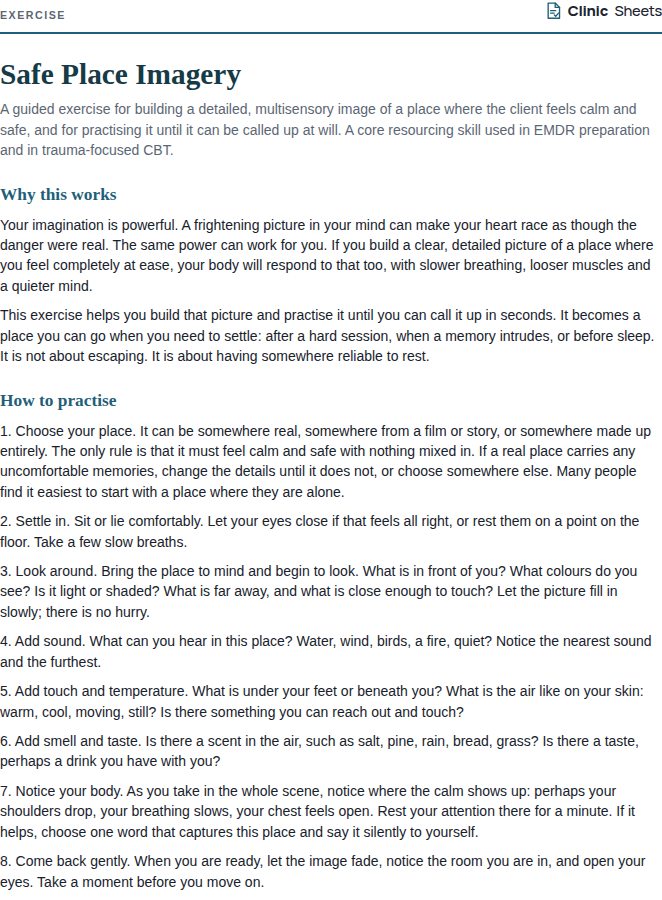
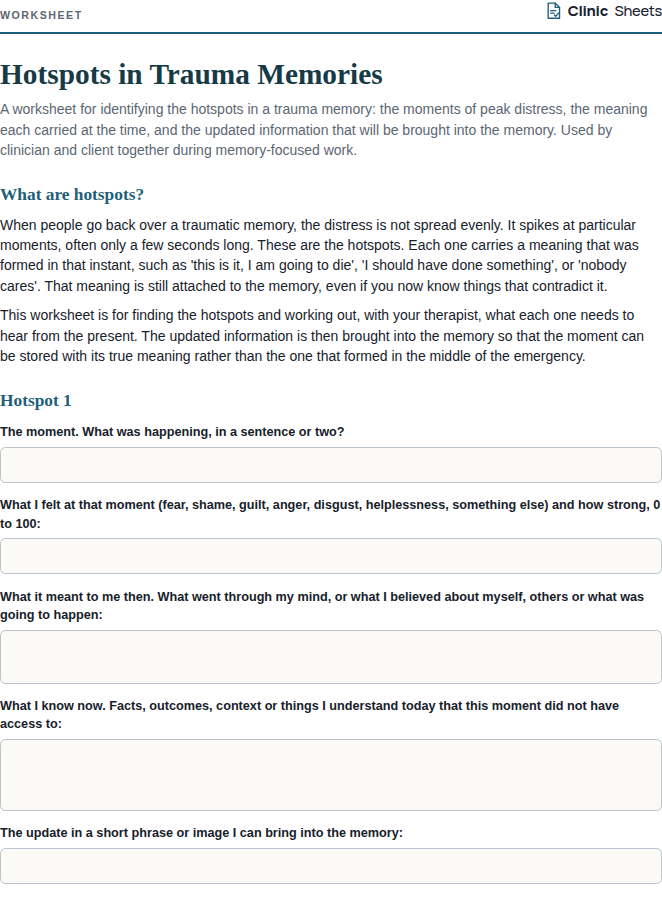
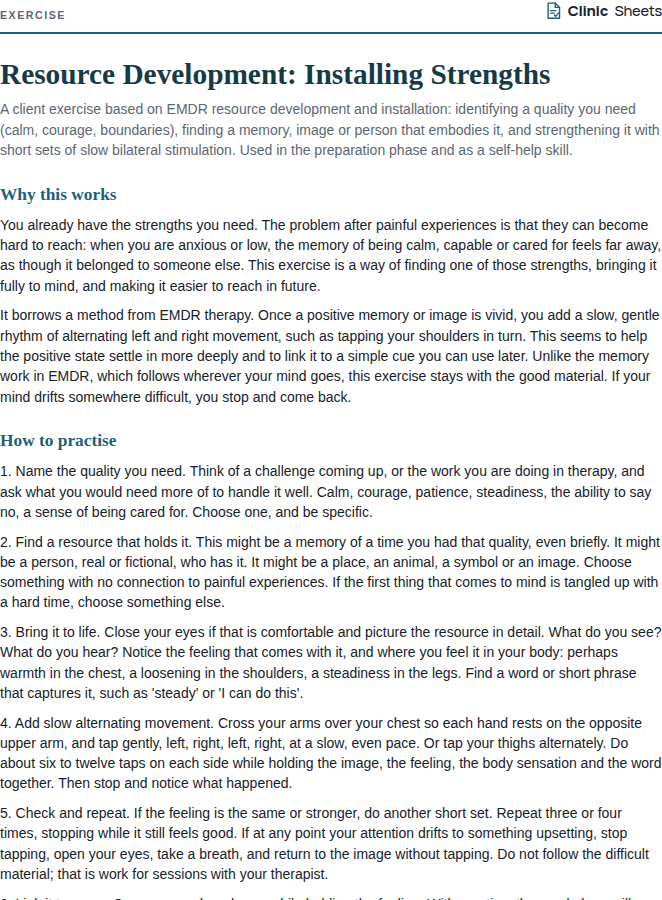
This worksheet takes the client through the steps. It can be used as a stand-alone intervention for nightmares or as part of trauma-focused treatment. The professional version includes guidance on choosing which nightmare to start with (usually not the most severe), on clients who cannot recall dream content, on managing distress during the initial writing, and on combining rehearsal with sleep hygiene and grounding on waking.
How to use it
- Assess nightmare frequency and impact at baseline and explain the rationale: nightmares are a habit of the sleeping mind, and habits can be changed by rehearsal while awake.
- Ask the client to choose a recurring nightmare that is distressing but not the worst one. Success with an easier nightmare builds confidence for harder ones.
- Have them write the nightmare briefly. The account does not need to be detailed, and they should stop if distress becomes high. Then have them rewrite it, changing anything they wish. Do not steer the content.
- Coach the first rehearsal in session: eyes closed, imagining the new dream vividly for five to ten minutes, engaging the senses. Then set daily rehearsal for at least a week.
- Review at each session. If the nightmare persists unchanged, revise the new script or try a different change. If a new nightmare emerges, repeat the process. Track frequency each week.
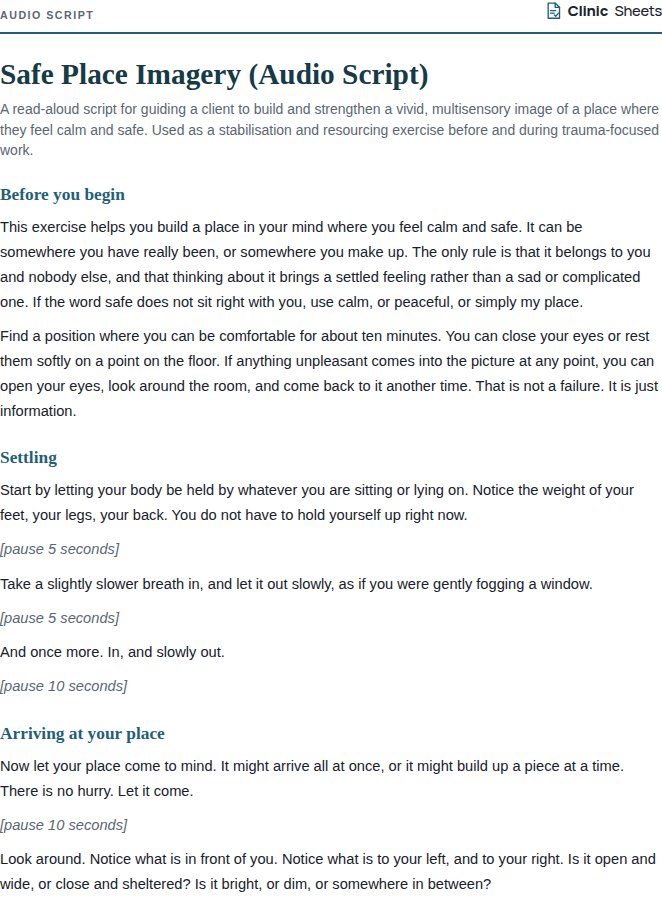
- Combine with sleep hygiene and a plan for grounding on waking, such as turning on a light and naming the date and place.
References
- Krakow, B., & Zadra, A. (2006). Clinical management of chronic nightmares: Imagery rehearsal therapy. Behavioral Sleep Medicine, 4(1), 45-70.
- Krakow, B., Hollifield, M., Johnston, L., Koss, M., Schrader, R., Warner, T. D., Tandberg, D., Lauriello, J., McBride, L., Cutchen, L., Cheng, D., Emmons, S., Germain, A., Melendrez, D., Sandoval, D., & Prince, H. (2001). Imagery rehearsal therapy for chronic nightmares in sexual assault survivors with posttraumatic stress disorder: A randomized controlled trial. JAMA, 286(5), 537-545.
- Morgenthaler, T. I., Auerbach, S., Casey, K. R., Kristo, D., Maganti, R., Ramar, K., Zak, R., & Kartje, R. (2018). Position paper for the treatment of nightmare disorder in adults: An American Academy of Sleep Medicine position paper. Journal of Clinical Sleep Medicine, 14(6), 1041-1055.