Screen Time and Mood
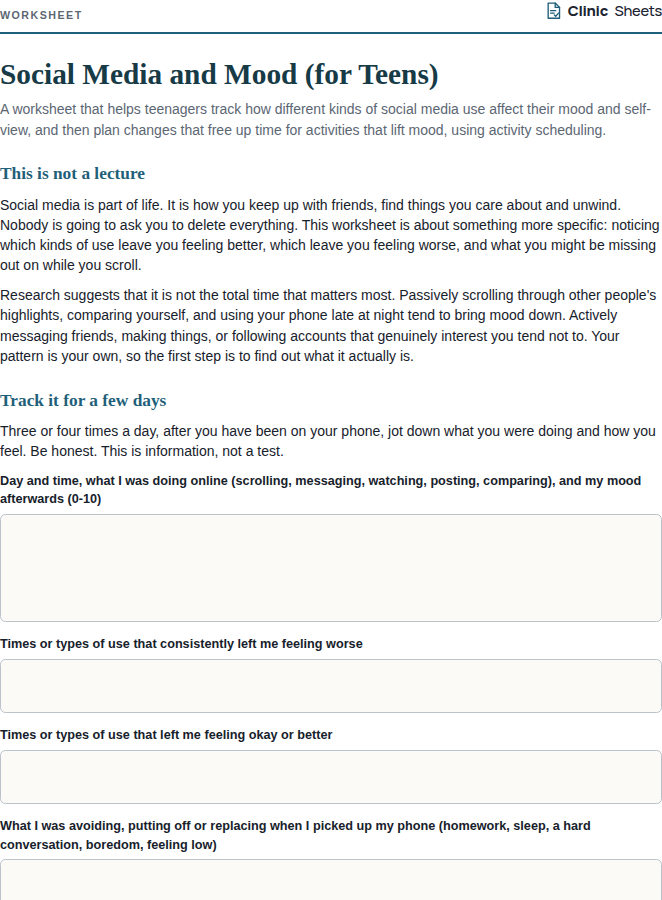
A worksheet for adolescents to track how different kinds of screen use affect their mood, energy and sleep over a week, and to plan small changes based on what they find, rather than on what adults tell them.
About this resource
Adolescents hear constantly that screens are bad for them, and most have stopped listening. The message is also too blunt to be useful: a video call with a close friend, an hour of a creative game, and ninety minutes of scrolling through other people's highlights at 1 a.m. are all 'screen time', and they do very different things to mood. The evidence on screens and adolescent mental health is mixed at the population level, but it is clearer at the individual level for two things: passive, comparison-heavy social media use is associated with lower mood, and screen use late at night displaces sleep, which is one of the most reliable drivers of adolescent depression.
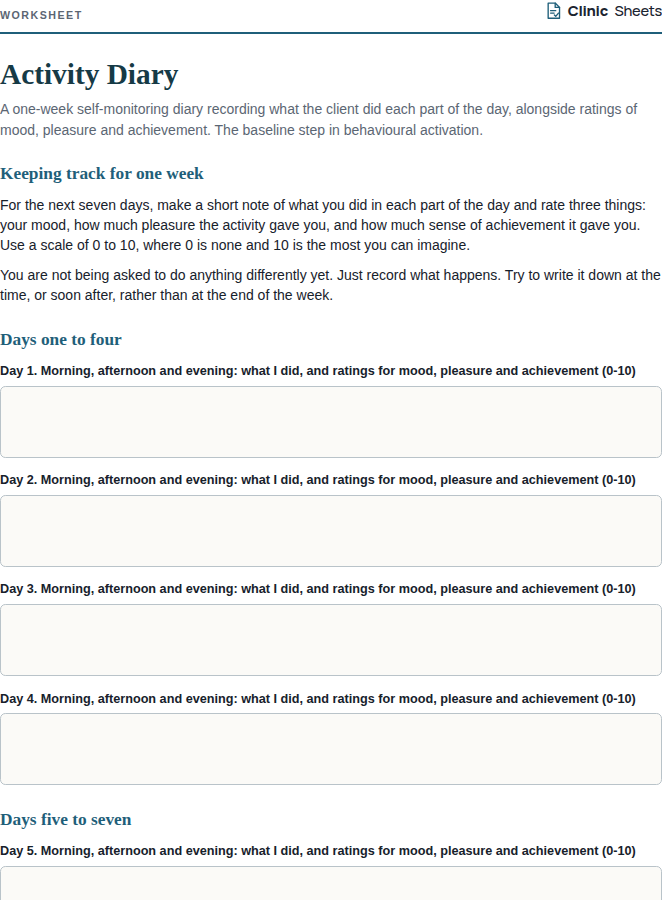
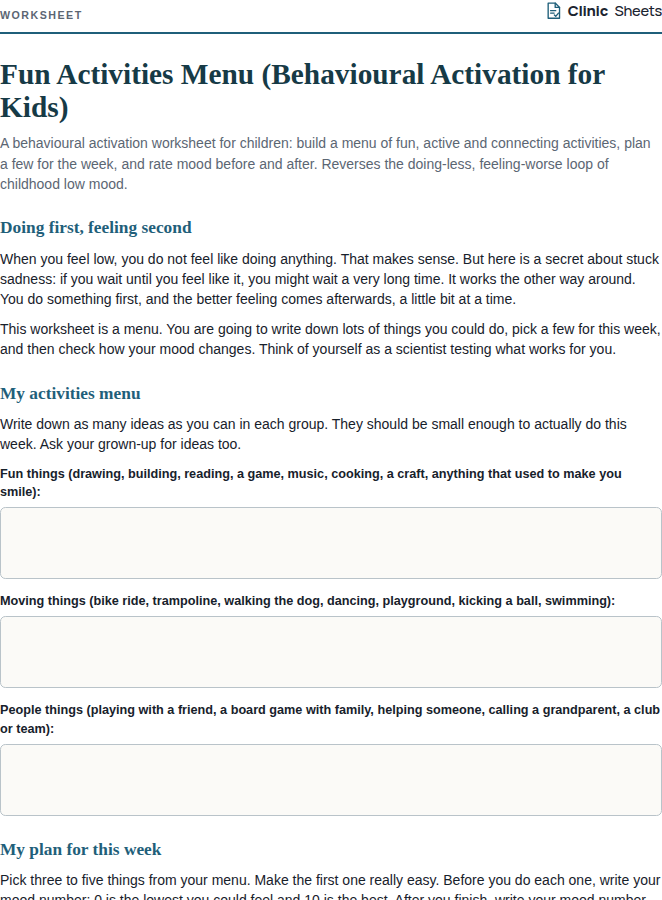
This worksheet takes a behavioural activation approach. Rather than telling the young person to cut down, it asks them to become the researcher: log what they used, for how long, and how they felt before and after, for one week. It then asks them to sort their screen activities into ones that leave them feeling better, neutral, or worse, and to make one small, self-chosen change. The framing respects their autonomy, which is usually the difference between a change that sticks and one that lasts until the next argument with a parent.
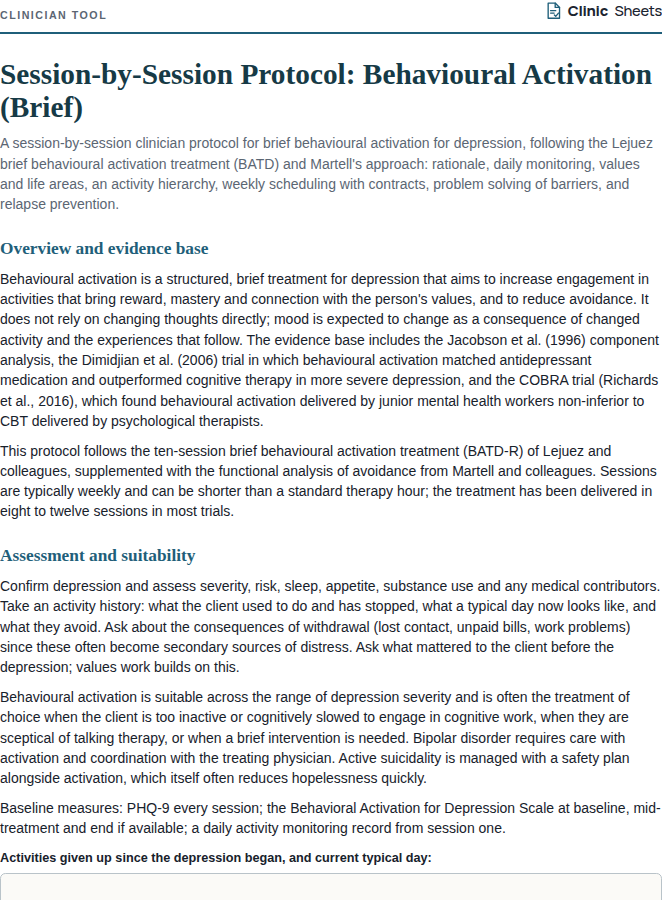
The professional version adds guidance on introducing the worksheet without it landing as a lecture, on the specific role of late-night use in sleep onset and the sleep-mood cycle, on active versus passive use, and on involving parents in a way that does not turn the exercise into surveillance. It also notes when heavy screen use is functioning as avoidance of something else (social anxiety, school refusal) and should be addressed at that level.
How to use it
- Open by asking the young person what they already think about their own screen use, and acknowledge that they have probably heard plenty of opinions. Frame this as an experiment they run, with results only they see unless they choose to share.
- Go through the log together and agree how they will record it. Most phones have built-in usage summaries that make the time part easy; the mood ratings are the part that requires attention.
- After a week, review the log together. Look for patterns rather than totals: which activities, at which times, were followed by lower mood or a worse night's sleep? Which left them feeling better?
- Help them choose one change that is small enough to be realistic and that targets the worst pattern. Moving the phone out of the bedroom, or replacing the last thirty minutes of scrolling with something else, is more effective than a blanket limit.
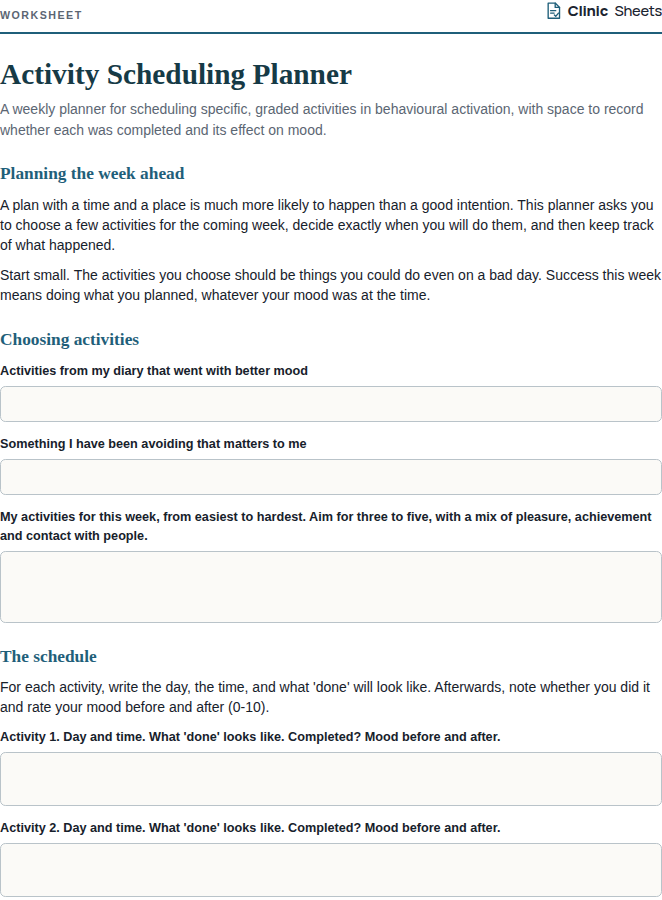
- Link to activity scheduling: if screen use is filling time that used to hold sport, music, friends or sleep, plan what goes back in. Removing a behaviour without replacing it rarely holds.
References
- Orben, A., & Przybylski, A. K. (2019). The association between adolescent well-being and digital technology use. Nature Human Behaviour, 3(2), 173-182.
- Twenge, J. M., & Campbell, W. K. (2018). Associations between screen time and lower psychological well-being among children and adolescents: Evidence from a population-based study. Preventive Medicine Reports, 12, 271-283.
- Carter, B., Rees, P., Hale, L., Bhattacharjee, D., & Paradkar, M. S. (2016). Association between portable screen-based media device access or use and sleep outcomes: A systematic review and meta-analysis. JAMA Pediatrics, 170(12), 1202-1208.
- Martell, C. R., Dimidjian, S., & Herman-Dunn, R. (2022). Behavioral Activation for Depression: A Clinician's Guide (2nd ed.). Guilford Press.