Supporting a Teen with Low Mood
A handout for parents of a teenager with low mood: how depression looks in adolescents, why withdrawal deepens it, how to encourage activity without nagging, how to talk so your teen will keep talking, and when to seek urgent help.
About this resource
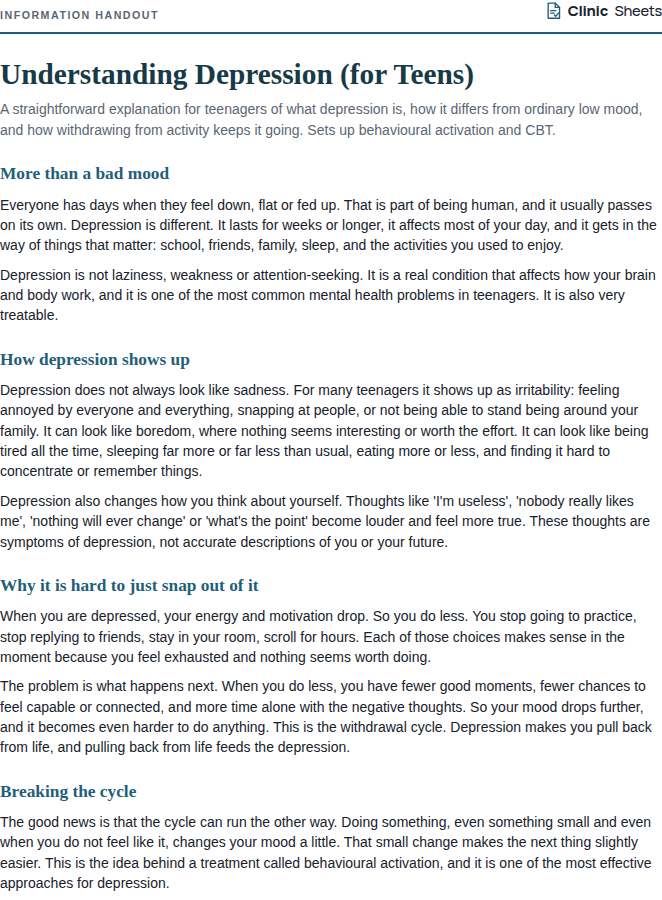
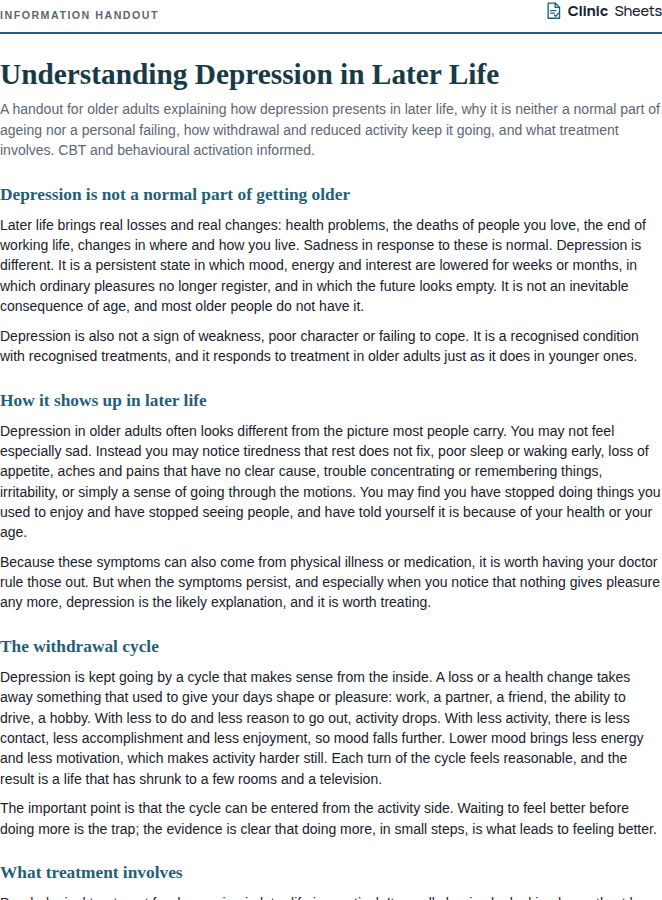
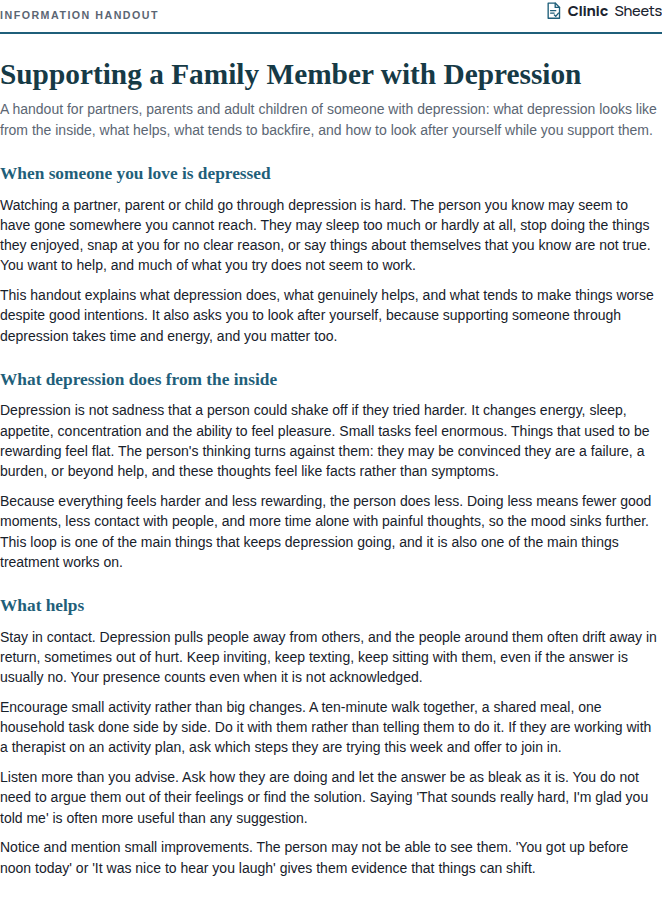
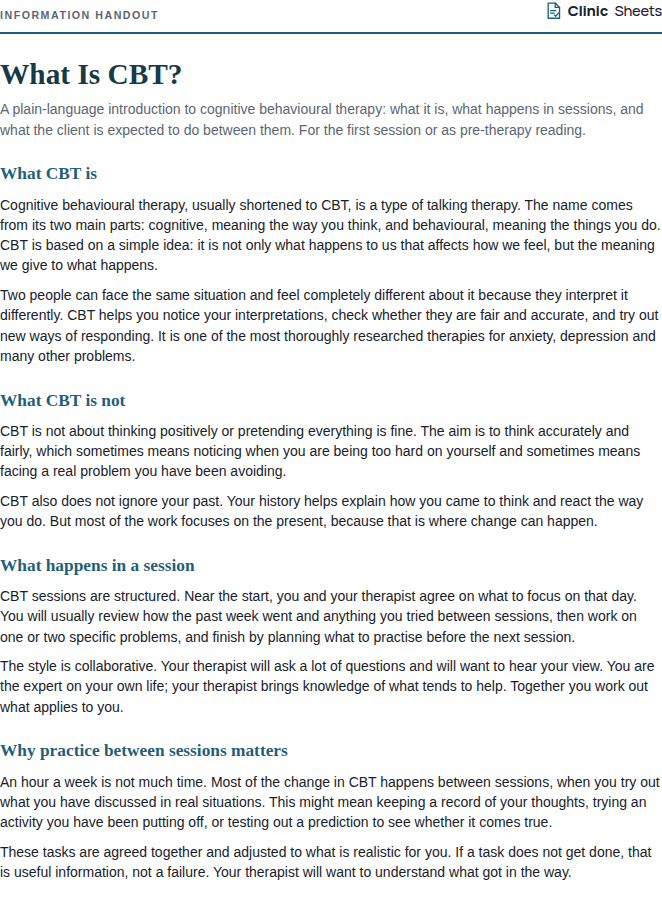
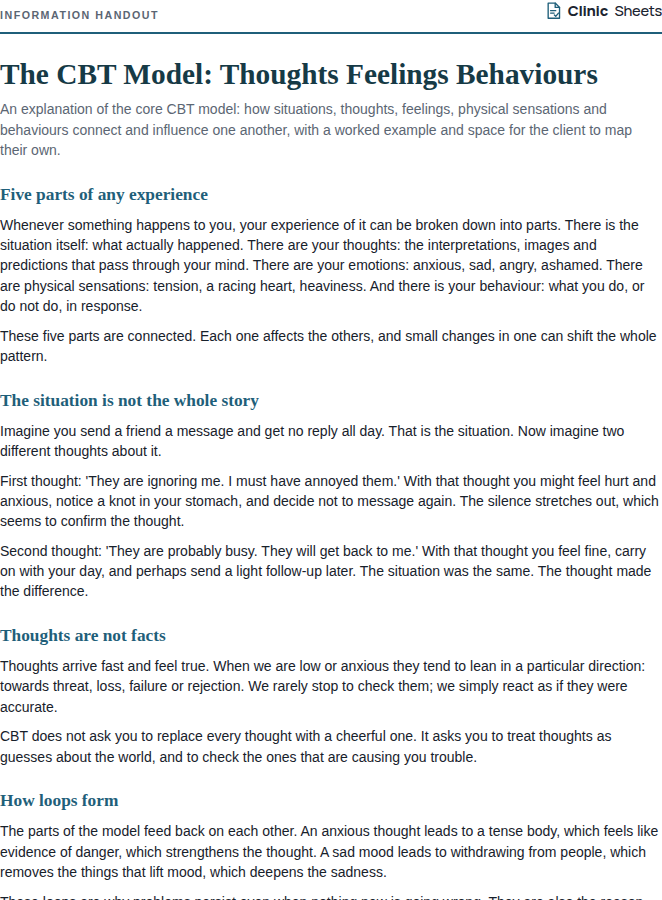
Depression in adolescence often looks different from the adult picture. Irritability, withdrawal to the bedroom, sleeping at odd hours, dropping activities and friends, and a flat 'I'm fine' are more typical than visible sadness, and parents frequently read these as attitude or laziness. The behavioural model of depression explains why the withdrawal matters: low mood leads to doing less, doing less removes the sources of pleasure and accomplishment that lift mood, and the resulting emptiness confirms the teenager's sense that nothing is worth doing. Behavioural activation, which has good evidence in adolescents as well as adults, works by carefully reversing this cycle, and parents are in a strong position to support it or, unintentionally, to fight it.
This handout helps parents recognise low mood, understand the withdrawal cycle, and support activation without turning it into a battle. It distinguishes between pushing (which produces conflict and more withdrawal) and inviting (small, specific, low-pressure opportunities to do something, with the parent alongside). It offers language for conversations that keep the door open, and it includes clear guidance on safety: what to ask if a parent is worried about self-harm or suicide, and where to get urgent help in Canada (9-8-8 and 911).
The professional version notes that the parent's own frustration and fear are usually high, that a parent who has been nagging will need to change tack visibly before the teen will re-engage, and that this handout is a complement to the teen's own treatment, not a substitute. It also flags that parents should be told plainly that asking about suicide does not plant the idea.
How to use it
- Use when a parent is worried about a teenager's mood, whether or not the teen is in treatment. Read the handout with the parent and ask which signs they recognise.
- Explain the withdrawal cycle using the parent's own observations (the bedroom, the dropped sport, the late nights). Help them see the behaviour as part of depression rather than defiance.
- Work through the difference between pushing and inviting. Ask the parent to identify one small, specific activity they could invite the teen into this week, ideally something they do together.
- Rehearse a conversation opener from the handout. Coach the parent to listen without fixing, and to tolerate short answers.
- Cover the safety section explicitly. Make sure the parent knows how to ask about suicidal thoughts and what to do with the answer, including 9-8-8 and 911.
References
- McCauley, E., Schloredt, K. A., Gudmundsen, G. R., Martell, C. R., & Dimidjian, S. (2016). Behavioral Activation with Adolescents: A Clinician's Guide. Guilford Press.
- Weersing, V. R., Jeffreys, M., Do, M.-C. T., Schwartz, K. T. G., & Bolano, C. (2017). Evidence base update of psychosocial treatments for child and adolescent depression. Journal of Clinical Child and Adolescent Psychology, 46(1), 11-43.
- Martell, C. R., Dimidjian, S., & Herman-Dunn, R. (2010). Behavioral Activation for Depression: A Clinician's Guide. Guilford Press.