Schema Flashcards
A worksheet for writing schema flashcards: short, personal statements that acknowledge a triggered schema, remind the client where it came from and why it is not accurate now, and set out a healthy response. Carried and read when the schema is activated.
About this resource
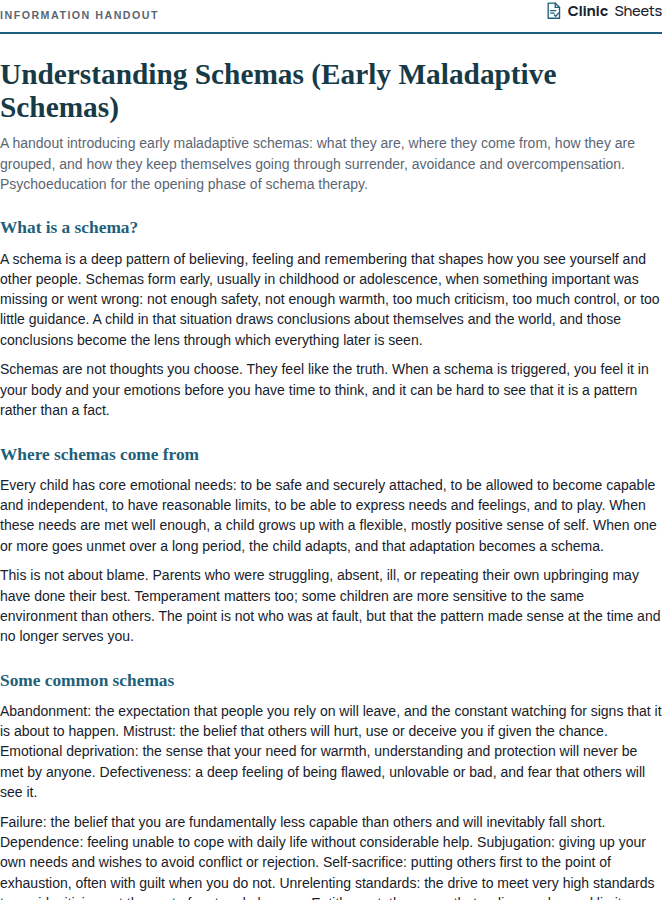
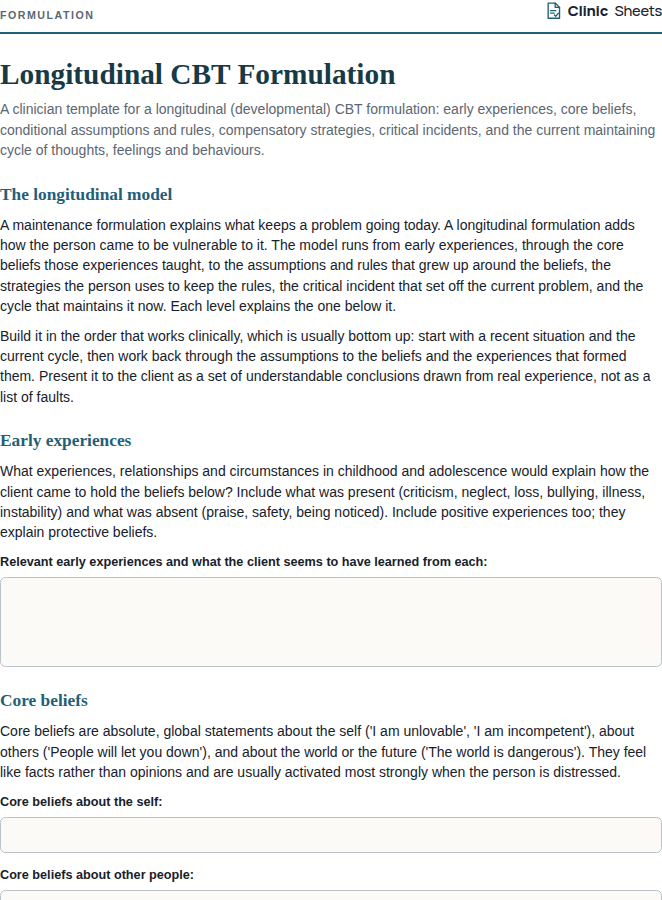
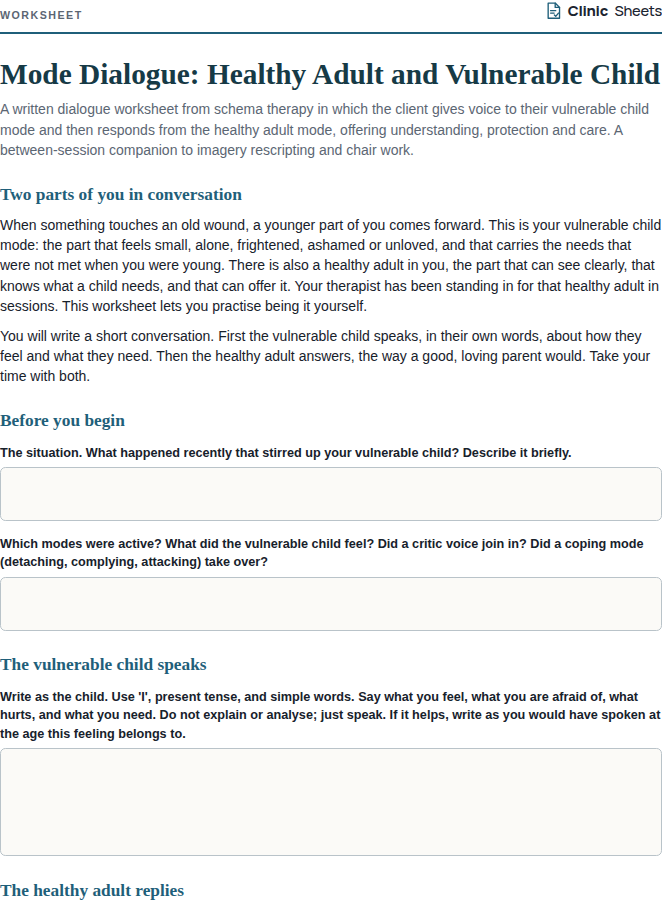
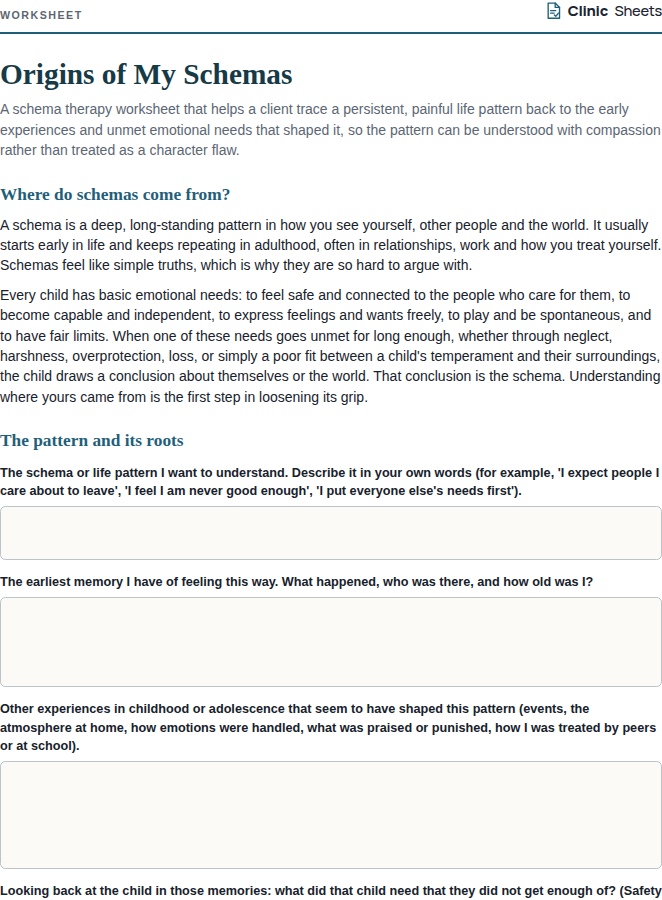
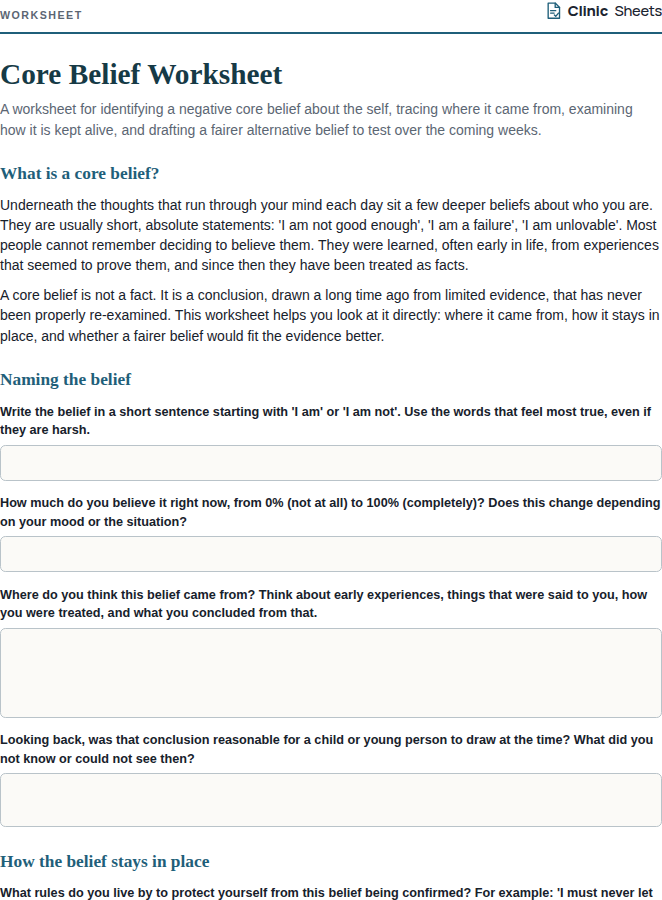
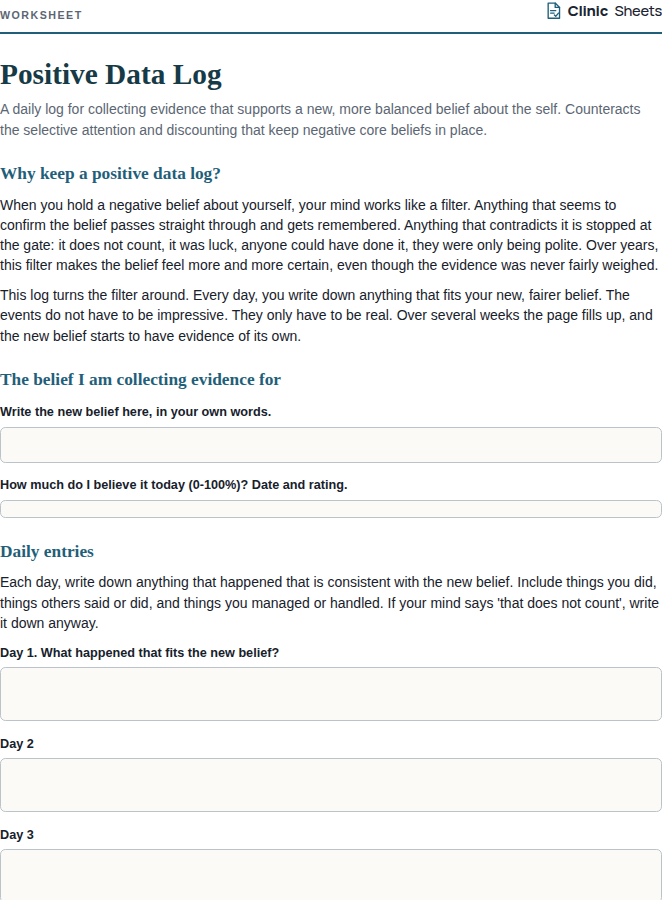
Schema flashcards are one of the core cognitive techniques in Young's schema therapy. Early maladaptive schemas (such as defectiveness, abandonment, emotional deprivation, failure or unrelenting standards) are activated by specific triggers and, once active, feel completely true. In that state clients cannot easily access the balanced understanding they reached in session. A flashcard is a bridge: it is written when the client has access to their healthy adult perspective and read when they do not. Young, Klosko and Weishaar describe a standard structure covering acknowledgement of the current feeling, identification of the schema and its origins, reality testing, and a behavioural plan.
Flashcards work because they are personal, prepared in advance, and brief enough to read in a moment of distress. They validate the feeling before challenging the belief, which is important for clients who experience straightforward cognitive challenge as dismissive. They also pair the cognitive work with a concrete behavioural alternative to the client's usual schema-driven coping, whether that is surrender, avoidance or overcompensation.
The professional version includes a template with prompts for each part of the card, notes on drafting the first card collaboratively in session, and guidance on keeping the language in the client's own voice rather than the therapist's.
How to use it
- Use once a schema has been identified and its origins explored, so that the client has genuine understanding to draw on. Flashcards are not effective as a first intervention.
- Draft the first card together in session, using a recent trigger. Follow the structure in the worksheet: acknowledge the feeling, name the schema and its origins, test it against present reality, and state what the client will do instead.
- Keep the wording in the client's own words and voice. A card that sounds like the therapist will be dismissed when the schema is active.
- Ask the client to write the final version on a card or in their phone and to read it whenever the schema is triggered, and also once daily for a week when calm, so that it becomes familiar.
- Review at the next session: was it read, did it help, and what needs changing? Cards are usually revised several times.
- Over the course of therapy, build a small set of cards, one per major schema or trigger situation.
References
- Young, J. E., Klosko, J. S., & Weishaar, M. E. (2003). Schema Therapy: A Practitioner's Guide. Guilford Press.
- Young, J. E., & Klosko, J. S. (1993). Reinventing Your Life: The Breakthrough Program to End Negative Behavior and Feel Great Again. Plume.
- Arntz, A., & Jacob, G. (2013). Schema Therapy in Practice: An Introductory Guide to the Schema Mode Approach. Wiley-Blackwell.