Mode Dialogue: Healthy Adult and Vulnerable Child
A written dialogue worksheet from schema therapy in which the client gives voice to their vulnerable child mode and then responds from the healthy adult mode, offering understanding, protection and care. A between-session companion to imagery rescripting and chair work.
About this resource
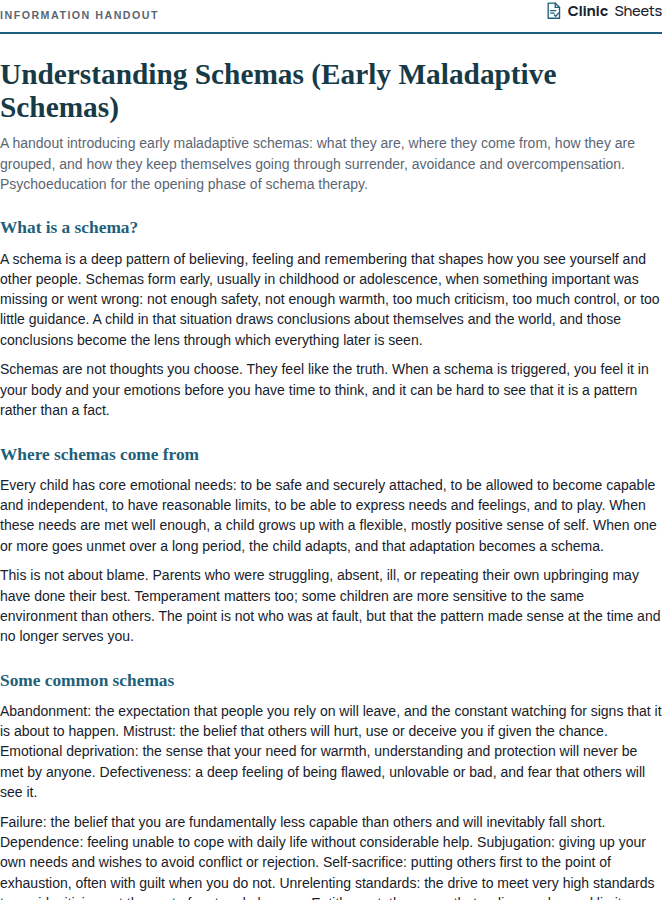
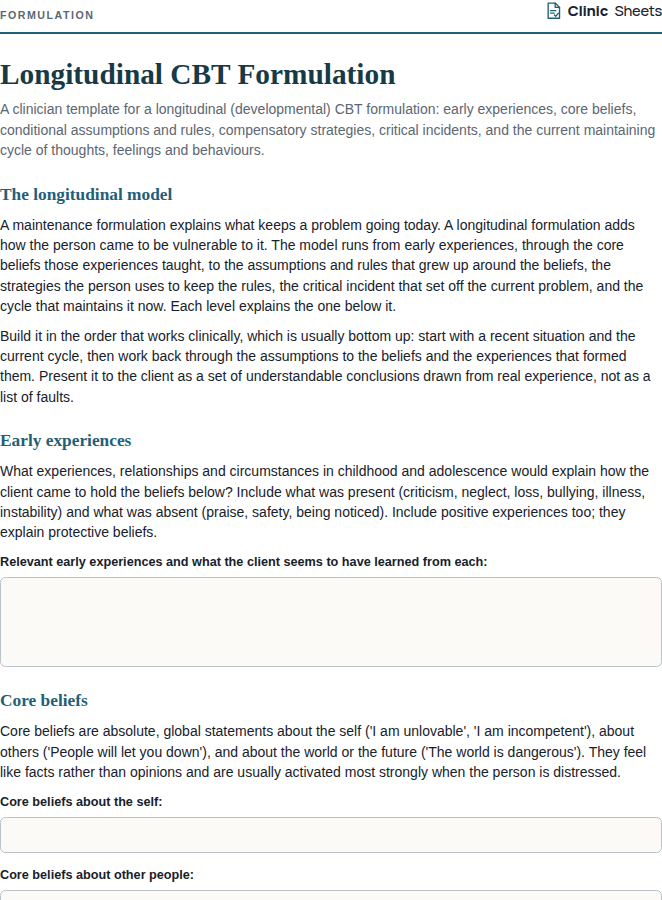
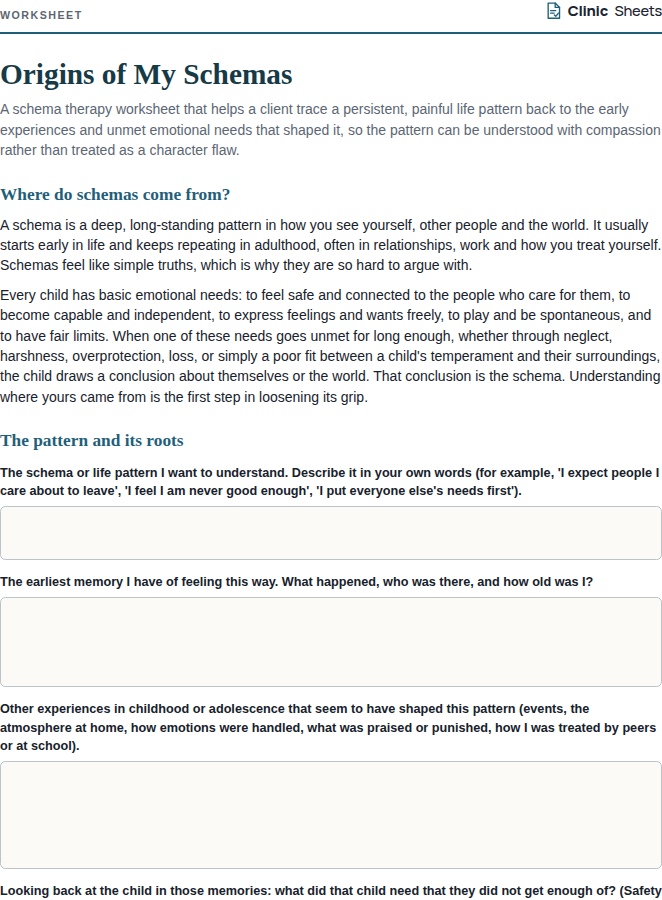
Schema therapy's mode model describes the moment-to-moment states a person moves between. The vulnerable child mode carries the core emotional pain of early unmet needs: feelings of being alone, unloved, defective, frightened or abandoned. The healthy adult mode is the part of the person that can nurture and protect the vulnerable child, set limits on the angry and impulsive child modes, moderate the maladaptive coping modes, and combat the punitive and demanding critic modes. A central aim of schema therapy is to strengthen the healthy adult so that the client can do for themselves what the therapist does for them in session through limited reparenting.
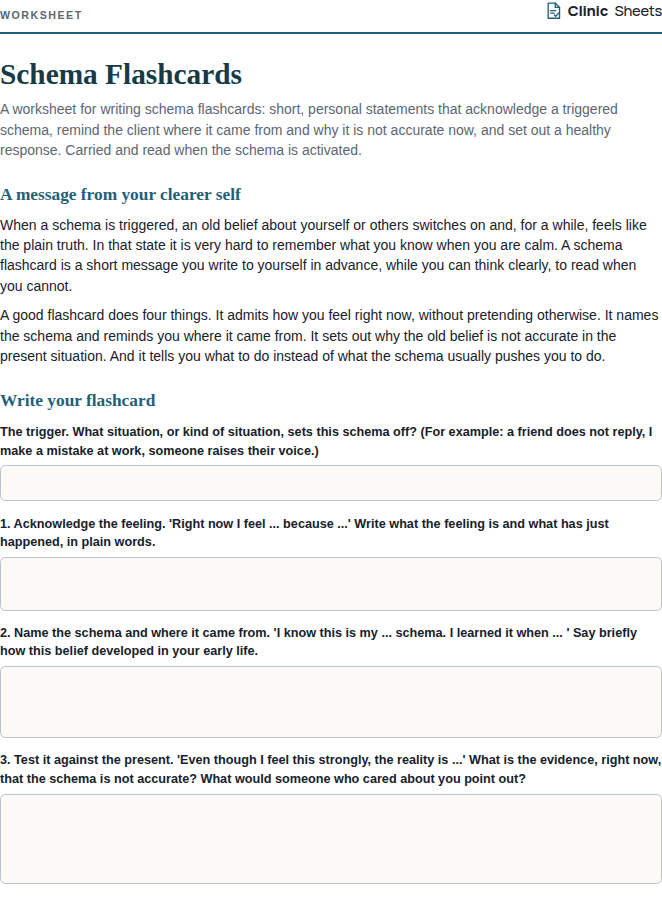
Mode dialogues are one of the main experiential techniques for this. In session they are often carried out through chair work or imagery rescripting, with the therapist initially modelling the healthy adult and then handing over. This worksheet transfers the dialogue to paper so the client can practise between sessions. The client writes first as the vulnerable child, in that mode's own voice, saying what they feel and need; then as the healthy adult, responding with the qualities of a good parent: attunement, validation, reassurance, protection and, where needed, action. Writing slows the exchange down and gives the client a record of their own healthy adult voice to reread.
The professional version includes notes on preparing the client (this is not appropriate as a first exposure to the vulnerable child), on what to do when the critic mode hijacks the healthy adult's reply, and on using the completed dialogue in the following session.
How to use it
- Introduce mode dialogues in session first, through imagery or chair work, with you modelling the healthy adult. Only assign the written version once the client has experienced a compassionate healthy adult response and has some sense of what it sounds like.
- Help the client choose a recent situation in which the vulnerable child was triggered. Moderate intensity is best for early written dialogues.
- Coach the vulnerable child's voice: first person, present tense, simple language, feelings and needs rather than analysis. If the client writes in an adult, detached way, invite them to write as they would have spoken at the age the feeling belongs to.
- Coach the healthy adult's voice: warm, steady, on the child's side. It validates before it reassures, it does not argue the child out of feelings, and it says what it will do to protect and help. If the reply turns critical or dismissive, the critic mode has taken over; name this and start the reply again.
- Ask the client to reread the healthy adult's reply aloud, slowly, and notice what happens in the body.
- Bring the dialogue to the next session. Read it together, strengthen the healthy adult's reply where needed, and consider taking it into chair work or imagery.
References
- Young, J. E., Klosko, J. S., & Weishaar, M. E. (2003). Schema Therapy: A Practitioner's Guide. Guilford Press.
- Arntz, A., & Jacob, G. (2013). Schema Therapy in Practice: An Introductory Guide to the Schema Mode Approach. Wiley-Blackwell.
- Farrell, J. M., Reiss, N., & Shaw, I. A. (2014). The Schema Therapy Clinician's Guide: A Complete Resource for Building and Delivering Individual, Group and Integrated Schema Mode Treatment Programs. Wiley-Blackwell.